

In the electronics and micro-mechanical industries, electroplating chemicals are essential for improving electrical conductivity, mechanical strength, and component reliability. PMAC helps businesses understand electroplating principles and plating systems to optimize manufacturing processes.
I. What is electroplating?
Electroplating is the process of depositing a thin metal layer onto the surface of an object (typically metal or plastic) through chemical or electrochemical reactions. This plated layer modifies the surface properties of the base material, providing enhanced performance characteristics that the original material does not possess.
The main purposes of electroplating:
– Corrosion protection: prevents oxidation and rust caused by moisture and chemical exposure.
– Increased durability: improves hardness and wear resistance of mechanical components.
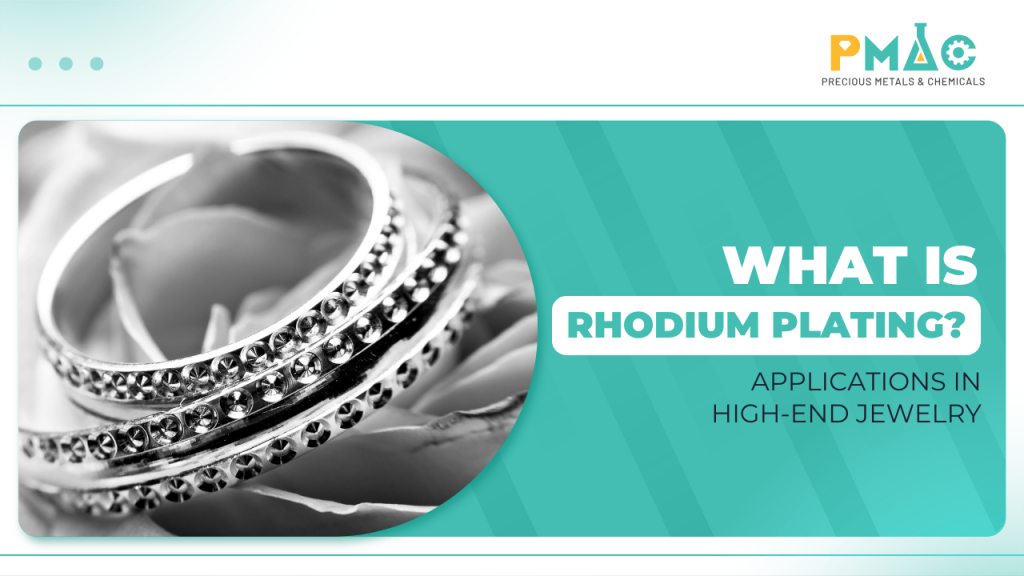
– Aesthetic enhancement: creates a bright, attractive finish in colors such as gold, silver, copper, and chrome.
– Dimensional restoration: rebuilds worn or damaged parts after extended use.
II. Basic components of electroplating chemicals
1. Metal salts
Metal salts are the primary source of metal ions—the “raw material” that directly forms the plated layer. This component represents the largest proportion of the electroplating solution and fundamentally determines the characteristics and properties of the coating.
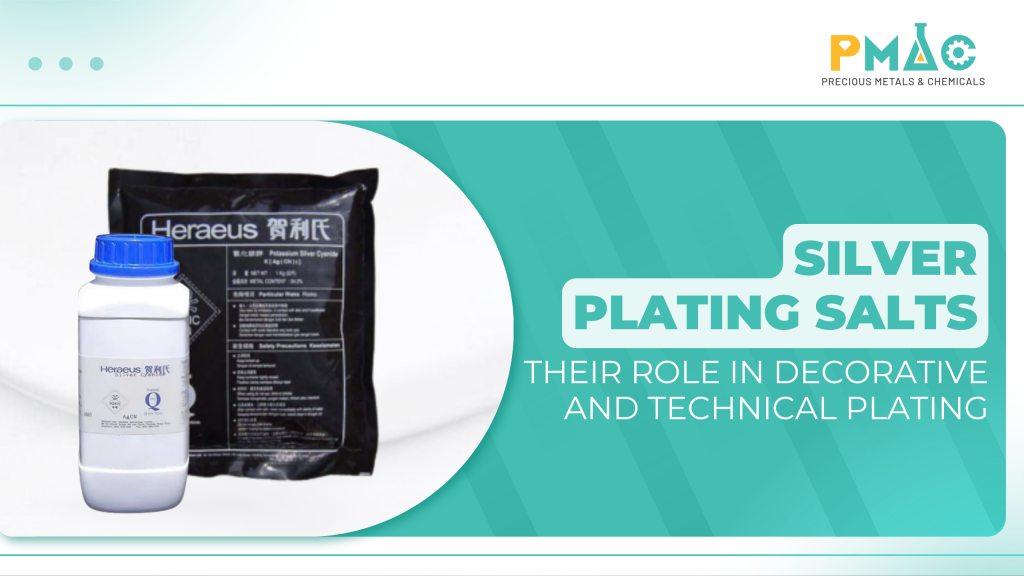
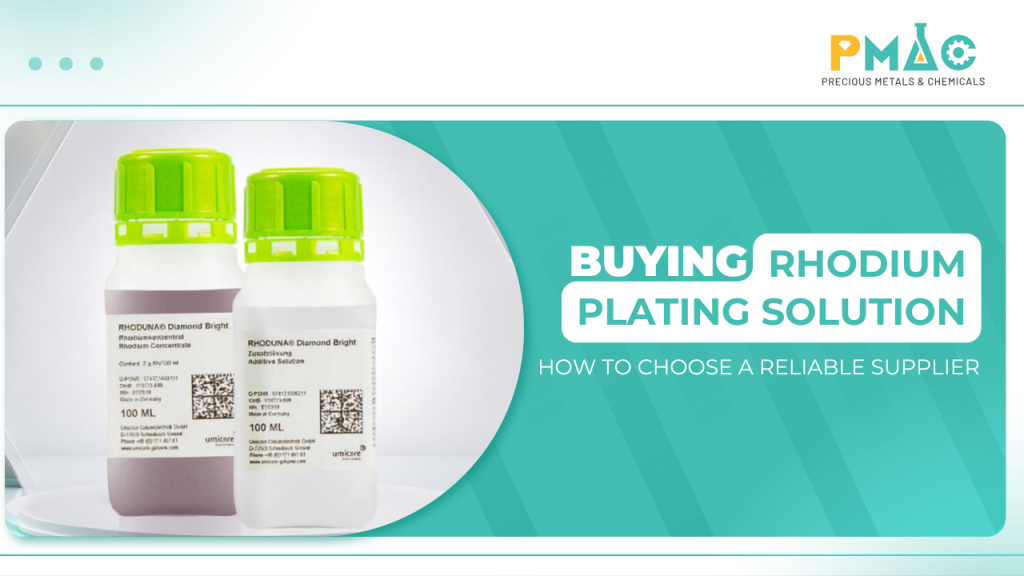
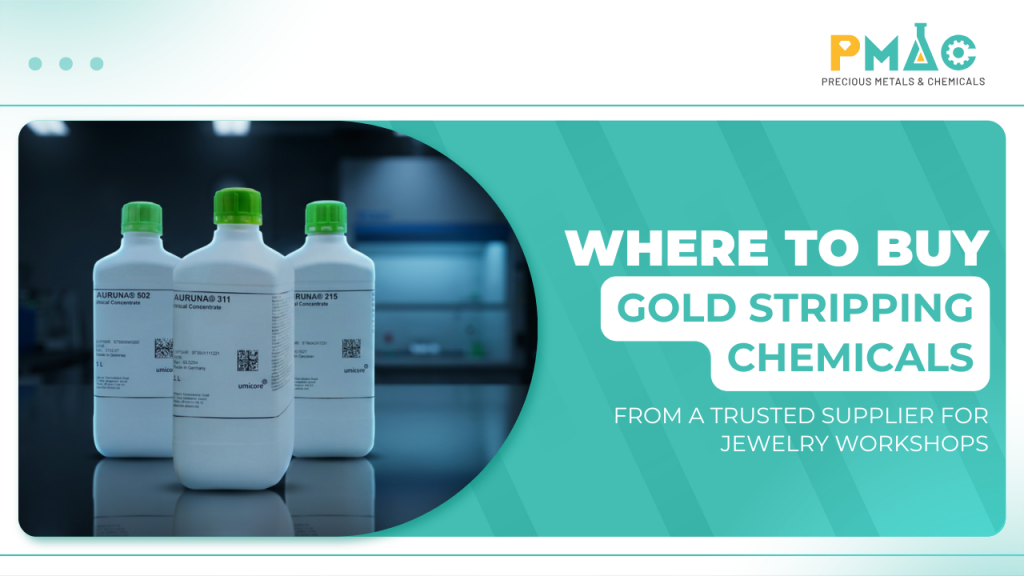
Depending on the plating system, metal salts may exist in different forms, including those used for gold plating, silver plating, rhodium plating, nickel plating, and platinum plating.
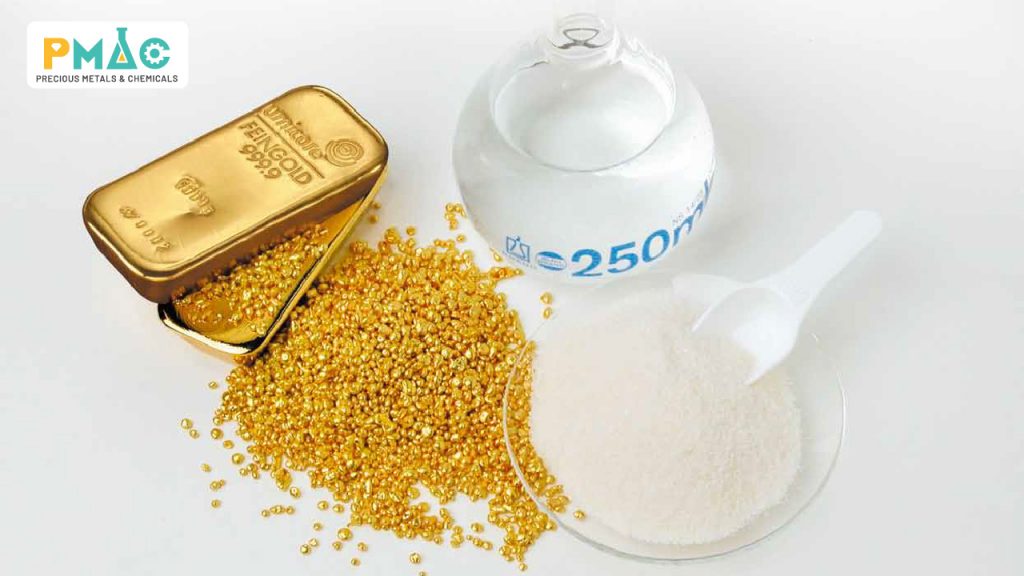
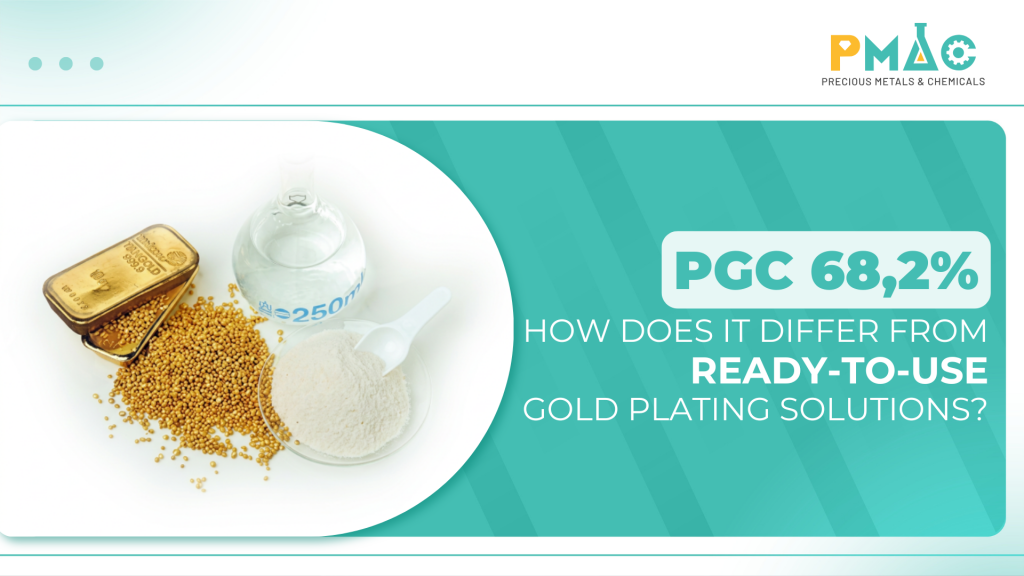
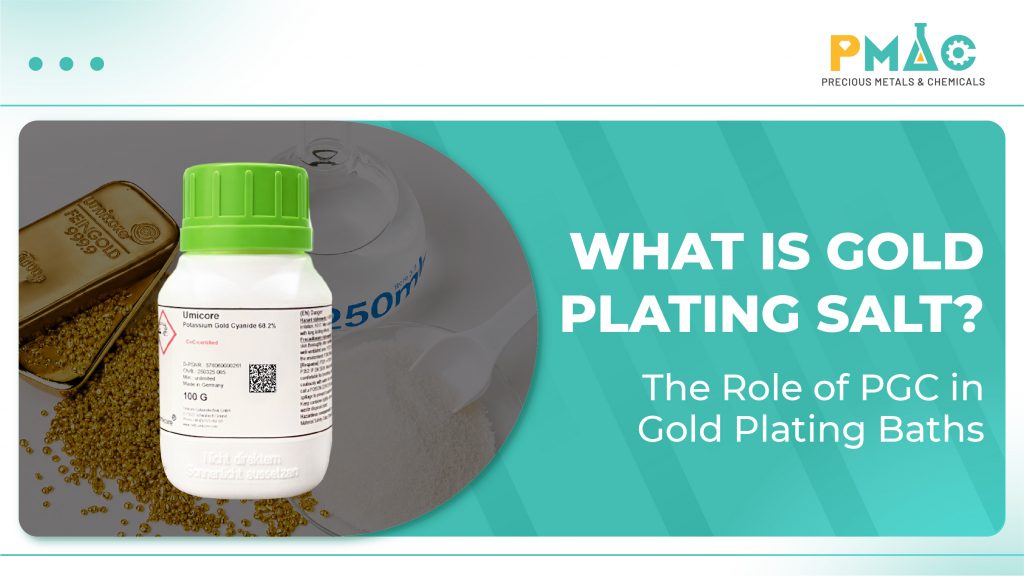
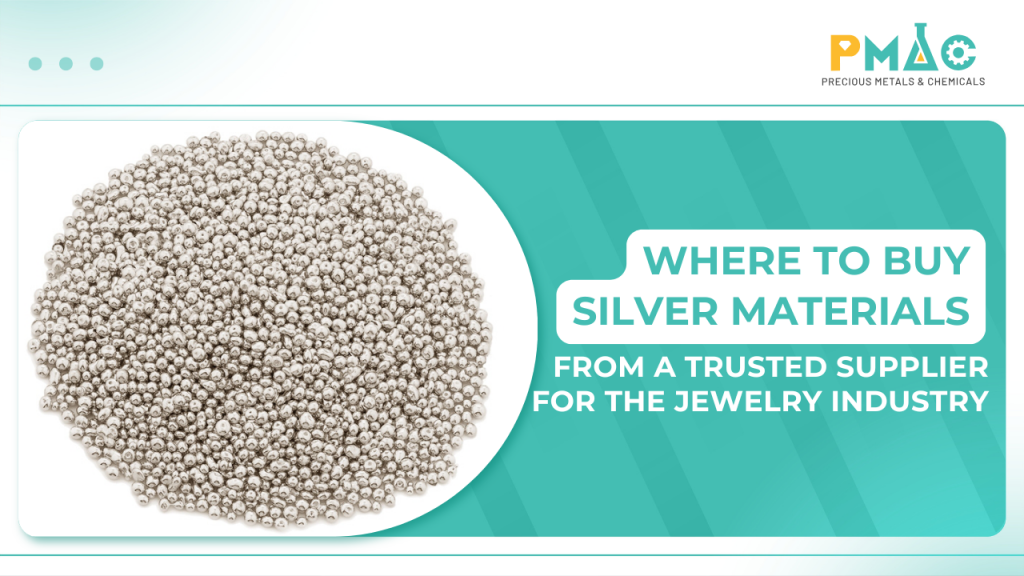
Figure 1: Gold salt powder
2. Conductivity agents
Conductivity agents are used to enhance the electrical conductivity of the electroplating solution, ensuring stable conductivity and controlled pH levels so that the electroplating process can proceed continuously and uniformly.
3. Additives
Although present in small quantities, additives play a critical role in determining surface quality and the durability of the plated layer. They are considered the key factor that creates technological differentiation among electroplating chemical systems.
The main groups of additives include:
Brighteners: produce a bright, smooth surface and enhance aesthetic appearance.
Leveling agents: mask microscopic surface defects and reduce pitting and roughness.
Stress control agents: minimize internal stress, preventing cracking and peeling of the coating.
Solution stabilizers: maintain bath stability and extend the operational lifespan of the plating solution.
>> Read more: Non-cyanide plating chemicals in sustainable manufacturing
III. Common types of electroplating systems today
1. Ruthuna 479 – Pure black ruthenium electrolyte
Ruthuna 479 is an electroplating solution containing pure ruthenium, specifically designed to produce a high-end decorative black coating on metal surfaces. It belongs to the premium segment of decorative electroplating chemicals and is commonly used in jewelry and fashion accessories.
Key characteristics:
– Solution type: strongly acidic electroplating electrolyte
– Ru: approximately 5 g/l (adjustable from 2–10 g/l)
– pH: ~1.2 (strongly acidic)
– Operating temperature: 60–70 °c
– Current density: ~1.5 a/dm²
– Plating rate: ~0.12 μm/min
– Anode: pt/ti or mmo (platinode® 177)
– Coating: 99.9% black ruthenium with good brightness and a characteristic gray-black tone
>> Xem thêm: RUTHUNA® 479 Black Ruthenium Electrolyte
2. Palluna ACF 800 – Pure palladium electrolyte
Palluna ACF-800 is a neutral pure palladium electroplating solution that contains no ammonia or chloride, making it ideal for technical and electronic applications requiring a bright, durable, and high-purity palladium coating.
Key characteristics:
– Electrolyte type: neutral, ammonia-free and chloride-free
– Pd: ~12 g/l (adjustable from 5–30 g/l)
– pH: ~6.5
– Operating temperature: 55–65 °c
– Current density: up to ~25 a/dm²
– Plating rate: ~4 μm/min at 20 a/dm²
– Anode: mmo (platinode® 187 so)
– Coating: 99.9% pure palladium with a bright white appearance
>> Read more: PALLUNA® ACF-800 Pure Palladium Electrolyte
3. Palluna 452 – Palladium electrolyte
Palluna 452 is a pure palladium electroplating solution of the weakly ammoniacal type, optimized for applications that require excellent adhesion and superior soldering and bonding performance. It is widely used in the electronics industry and semiconductor manufacturing.
Key characteristics:
– Electrolyte type: weakly ammoniacal (low ammonia content)
– Pd: ~3 g/l (2.5–7 g/l)
– pH: ~8.0 (7.5–8.4)
– Operating temperature: ~55 °c
– Current density: 1–2 a/dm²
– Plating rate: ~0.25–0.50 μm/min
– Anode: platinode® 167
– Coating: 99.9% pure palladium with a matte white finish
IV. Applications of electroplating chemicals in electronics and micro-mechanical industries
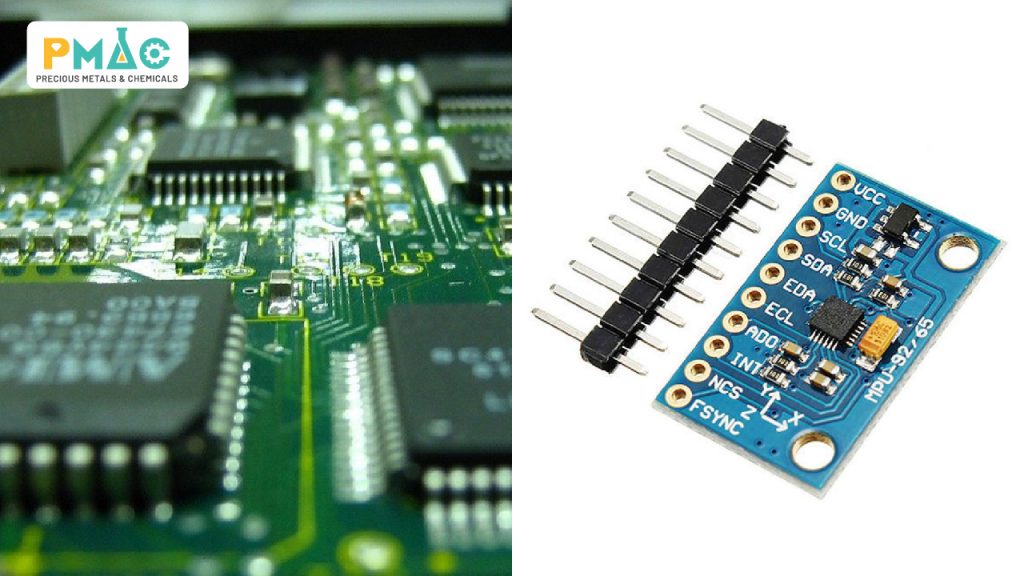
Figure 2: Applications of electroplating chemicals in electronics and mechanical engineering
1. Production of printed circuit boards PCB and connectors
Through-hole copper plating: chemical copper plating solutions are used to form a thin conductive layer inside drilled holes, enabling electrical connection between layers in multilayer printed circuit boards.
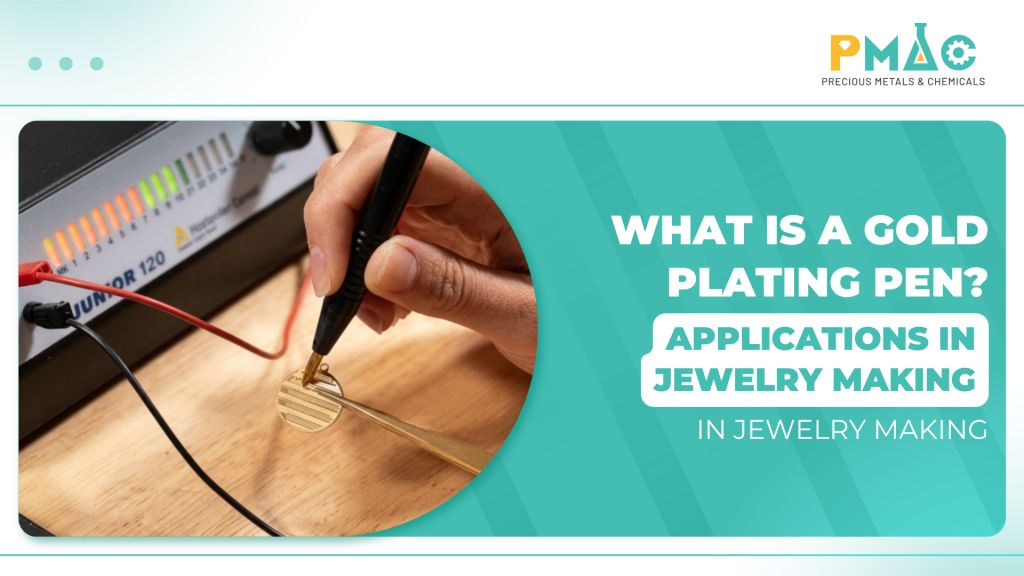
Hard gold and soft gold plating: contact pins, ram slots, or cpu connectors are commonly gold plated using specialized electroplating chemicals to ensure high electrical conductivity and effective oxidation resistance.
2. Electrochemical plating technology in micro-mechanical systems
The micromechanical industry requires the fabrication of ultra-small components such as watch gears, acceleration sensors, and hard disk read heads.
Nickel or nickel–phosphorus electroplating chemicals are used to “mold” micro-metal structures with high mechanical strength and extremely tight dimensional tolerances.
Electroplating enables feature replication at the atomic level, allowing micromechanical components to operate smoothly without the need for traditional lubricants.
3. Protection and performance enhancement for semiconductor components
Lead frames in semiconductor chips are commonly treated using silver alloy electroplating chemical systems.
Good solderability: tin-plated layers produced with specialized chemicals improve adhesion between components and solder joints on printed circuit boards, preventing tin whisker formation that can cause short circuits.
Thermal dissipation: certain specialized electroplating chemicals also enhance heat transfer performance, allowing electronic components to dissipate heat more efficiently during high-intensity operation.
V. Pmac – authorized distributor of genuine electroplating chemicals in vietnam
1. International-standard electroplating consulting process
PMAC implements an electroplating consultation process in accordance with international standards, starting with a thorough analysis of each customer’s actual technical requirements.
PMAC’s electroplating engineers comprehensively assess key factors such as substrate materials, application purpose, required coating thickness, corrosion resistance, and the operating conditions of the production line.
2. Authorized distribution of genuine products
PMAC is an authorized distributor of high-technology electroplating chemicals from globally reputable brands, fully complying with technical standards, traceable origins, and certified quality requirements.
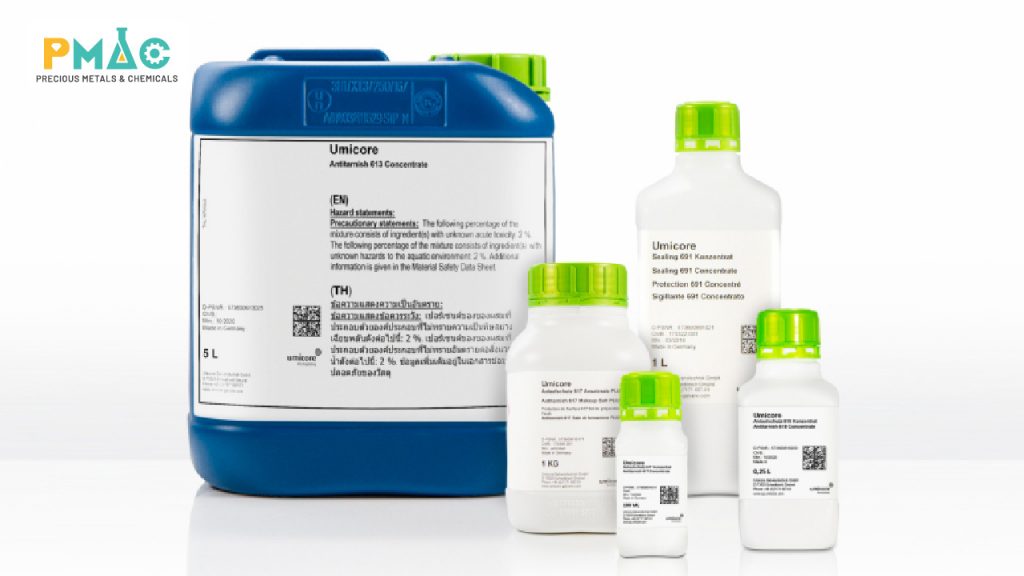
Figure 3: PMAC is a trusted electroplating chemicals supplier in Vietnam
All products supplied by PMAC are accompanied by complete technical documentation and transparent policies, ensuring safety, reliability, and clarity in use.
The use of genuine electroplating chemicals enables manufacturers to precisely control bath composition, solution stability, and coating quality – an especially critical factor in electronics, semiconductor, and precision micromechanical industries.
>> Read more: How chemical plating suppliers determine quality
3. Professional 24/7 technical support services
Beyond product supply, PMAC places strong emphasis on developing advanced after-sales technical services, providing 24/7 support throughout electroplating bath operation. PMAC’s engineering team assists with coating defect troubleshooting, parameter optimization, operator training, and process improvement during production scaling.
This rapid and professional support helps manufacturers minimize downtime, reduce production risks, and maintain consistent coating quality in continuous manufacturing environments.
Conclusion
Electroplating chemicals form an indispensable technological foundation for the electronics, semiconductor, and precision micro-mechanical industries. From selecting appropriate metal salts, conductive agents, and additives to applying the correct plating systems in compliance with technical standards, each factor plays a critical role. With deep technical consulting capabilities, a portfolio of genuine high performance electroplating chemicals, and 24/7 technical support services, PMAC is not merely a supplier but a comprehensive electroplating solutions partner for enterprises in Vietnam. Collaborating with PMAC enables manufacturers to stabilize production processes, reduce technical risks, and enhance long-term competitive strength in high-technology markets.
Learn more:
https://pmac.asia/en/globalization-trends-in-the-electroplating/
https://pmac.asia/en/solution-that-prevents-silver-from-tarnishing/