

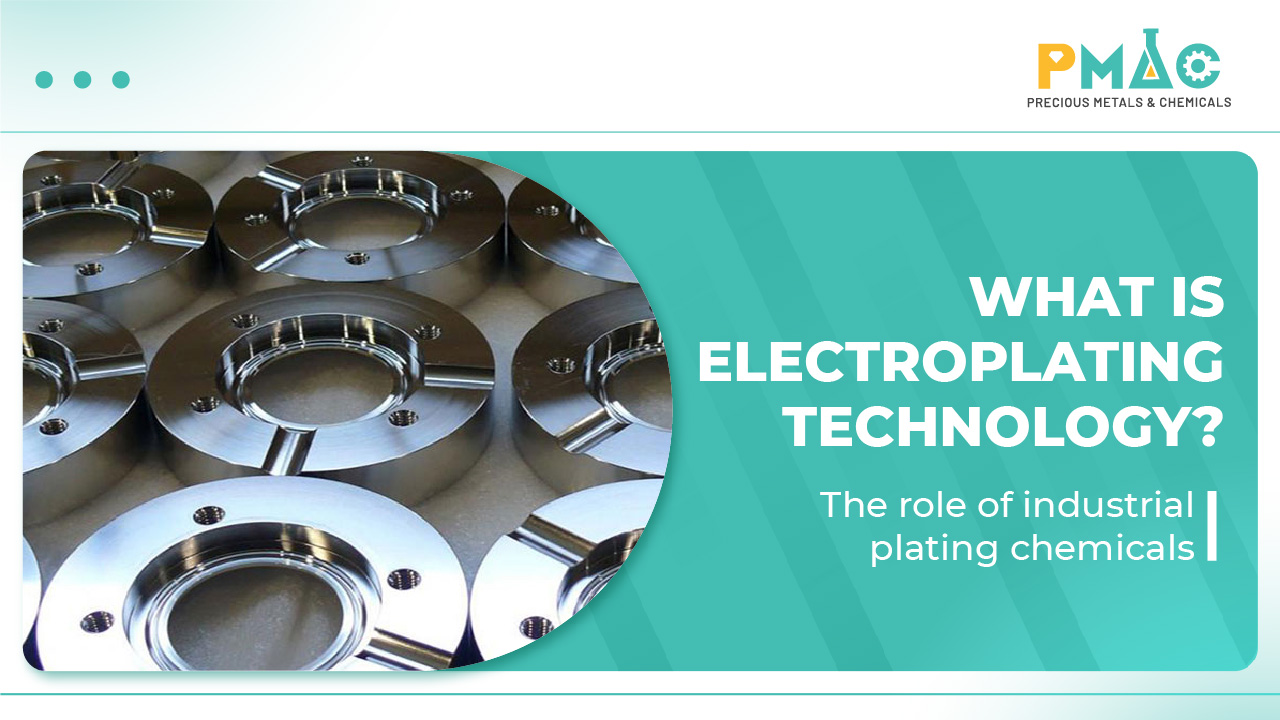
Electroplating plays a pivotal role across multiple industries from precision engineering, electronics, and medical devices to jewelry manufacturing and advanced technology components. In the following article, PMAC provides a comprehensive and accurate overview of technical electroplating according to modern industrial standards.
I. Introduction
1. What is electroplating technology?
Technical electroplating is the process of depositing a thin metal layer onto the surface of a material using a controlled electric current. Its purpose is to enhance the mechanical, physical, and chemical properties of the product, not merely to improve its appearance.
A technical plating layer provides superior corrosion resistance, increased hardness, reduced friction, improved electrical and thermal conductivity, and extended component lifespan in demanding operating environments.
2. Operating principles of electroplating technology
Technical electroplating operates based on the principles of electrolysis. When a direct current is applied to the plating bath, metal ions in the electrolyte migrate and deposit onto the surface of the workpiece, forming a thin, durable metallic layer.
The operating principle of an electroplating system relies entirely on this electrolytic phenomenon. The component to be plated is connected to the cathode of a DC power source, while the anode is typically a metal plate made of the same material as the plating metal. Both electrodes are immersed in an electrolytic solution containing the corresponding metal ions.
As current flows through the solution, positively charged metal ions move toward the negatively charged cathode (the workpiece) and are reduced onto its surface, forming a coherent metal coating. Simultaneously, at the anode, metal atoms undergo oxidation and dissolve into the solution, continuously replenishing the metal ion concentration in the bath and ensuring stable plating performance.

Figure 1: Operating principle of technical electroplating for jewelry
II. Components Found in Industrial Electroplating Chemicals
1. Metal Salts (Ni, Cu, Zn, Cr, Au, Rh, etc.)
These are the primary components that form the plated layer. Each metal requires a specific type of salt depending on its chemical properties and the intended plating application (e.g., Ni, Cu, Zn, Cr, Au, Rh).
Metal salts supply the metal ions in the electrolyte bath, which subsequently deposit onto the surface of the workpiece under the influence of electrical current.
2. Conductivity Agents
These additives increase the electrical conductivity of the solution, ensuring a more uniform current distribution. This results in a brighter, smoother, and more consistent coating, especially on intricate or highly detailed components with complex geometries.
3. pH-Control Additives
These agents help maintain the optimal pH level in the plating bath, preventing issues such as burning, discoloration, or precipitation of metal salts.
pH regulators also assist in controlling hardness, color uniformity, and long-term adhesion of the plated layer.
4. Buffering Agents and Stabilizers
These chemicals maintain the long-term stability of the electrolyte solution, ensuring that the plating bath operates consistently over extended periods.
They help minimize defects, reduce maintenance frequency, and optimize operational cost efficiency.
III. The Role of Electroplating Technology in Industry
1. Enhancing mechanical strength and wear resistance
The plated layer enhances surface hardness, reducing scratches and wear during operation.
For example: hard nickel plating and hard chrome plating are commonly applied to machine components and molding tools.
2. Improving chemical and environmental corrosion resistance
The metallic coating protects components from oxidation and corrosion caused by salts, acids, and alkalis. This protection is especially critical in industries such as mechanical engineering, automotive and motorcycle manufacturing, electronics, and medical devices.

Figure 2: Durability and corrosion resistance of the plated layer
3. Enhancing electrical and thermal conductivity
Some plating metals such as gold, silver, and copper have low electrical resistance, which enhances signal transmission and thermal conductivity.
These coatings are widely applied in everyday technology devices, including charging connectors, electronic contact pins, printed circuit boards, and high-speed interconnect systems.
4. Increasing adhesion for subsequent coatings
Technical electroplating provides a robust base layer that enhances the adhesion of subsequent coatings such as powder coating, decorative plating, PVD coatings, and nano-protective layers. This foundation minimizes delamination and significantly improves the durability and performance of the finished surface.
5. Improving aesthetics: gloss, smoothness, and uniformity
It enhances surface brightness, gloss, and uniformity while helping to conceal minor imperfections of the base metal.
Technical electroplating is widely applied in jewelry, fashion accessories, interior hardware, and high-end components.
IV. Reliable Suppliers of Plating Chemicals
1. Why businesses should choose internationally certified plating chemicals
Using electroplating chemicals that meet international standards brings significant advantages to modern industrial production:
- Ensures consistent coating quality with uniform adhesion
- Minimizes technical defects such as pitting or peeling
- Meets export requirements and international quality standards
- Provides stable bath operation with long service life
- Optimizes overall production and operational costs

Figure 3: International-standard plating layer
2. Consultation for professional electroplating solutions
To ensure stable, durable, and internationally compliant plating bath operations, businesses should choose a reputable supplier that meets the following criteria:
- An authorized partner of global electroplating chemical manufacturers
- Provides technical experts capable of analyzing and optimizing plating baths
- Offers a complete package including chemicals, equipment, and training
- Delivers continuous technical support and consulting
PMAC Joint Stock Company specializes in providing electroplating technologies that meet European standards. All electroplating chemical lines are safe, environmentally friendly, and sourced from Umicore—one of the world’s leading brands in clean technology.
>> Learn more: The world’s leading brand in gold electroplating chemicals
With more than five years of experience, PMAC is committed to supporting customers throughout their operations and growth strategies, offering key advantages:
- A highly skilled technical team with nearly 20 years of experience in jewelry manufacturing and plating equipment
- 24/7 consulting and technical support, always ready to assist with customer inquiries
- A professional operating system and partnerships with top-tier manufacturers to ensure product quality
- Exclusive benefits for loyal customers and official warranty policies
Conclusion
Technical electroplating is no longer merely a supporting process; it has become a strategic factor that enables businesses to enhance product quality, reduce technical defects, and meet increasingly stringent international standards. The selection of high-grade chemicals, the application of proper technical procedures, and the choice of a reliable supplier directly determine the performance of the plating bath and the overall competitiveness of the business in the market.
With proven experience in implementing European electroplating technologies and a team of highly skilled experts, PMAC is committed to supporting businesses at every stage—from consultation and solution design to system operation and cost optimization.
Contact PMAC to receive expert consultation and optimized technology solutions for your operational processes.
PMAC Joint Stock Company
HCM: High-Tech Center, 4th Floor, HUTECH Building, D1 Street, High-Tech Park, Tang Nhon Phu Ward, Ho Chi Minh City
HN: 22B Ơ2 Linh Dam Peninsula, Hoang Liet Ward, Hanoi City
(+84) 938 085 278
References:
https://pmac.asia/en/top-3-eco-friendly-electroplating-chemicals/
https://pmac.asia/en/applications-of-electroplating-chemicals/
https://pmac.asia/en/top-3-most-popular-rhodium-electroplating/
https://pmac.asia/en/how-to-preserve-precious-metals/
https://pmac.asia/en/electroplating-chemicals/
https://pmac.asia/en/international-standard-gold-plating-process-with-specialized-chemicals/