

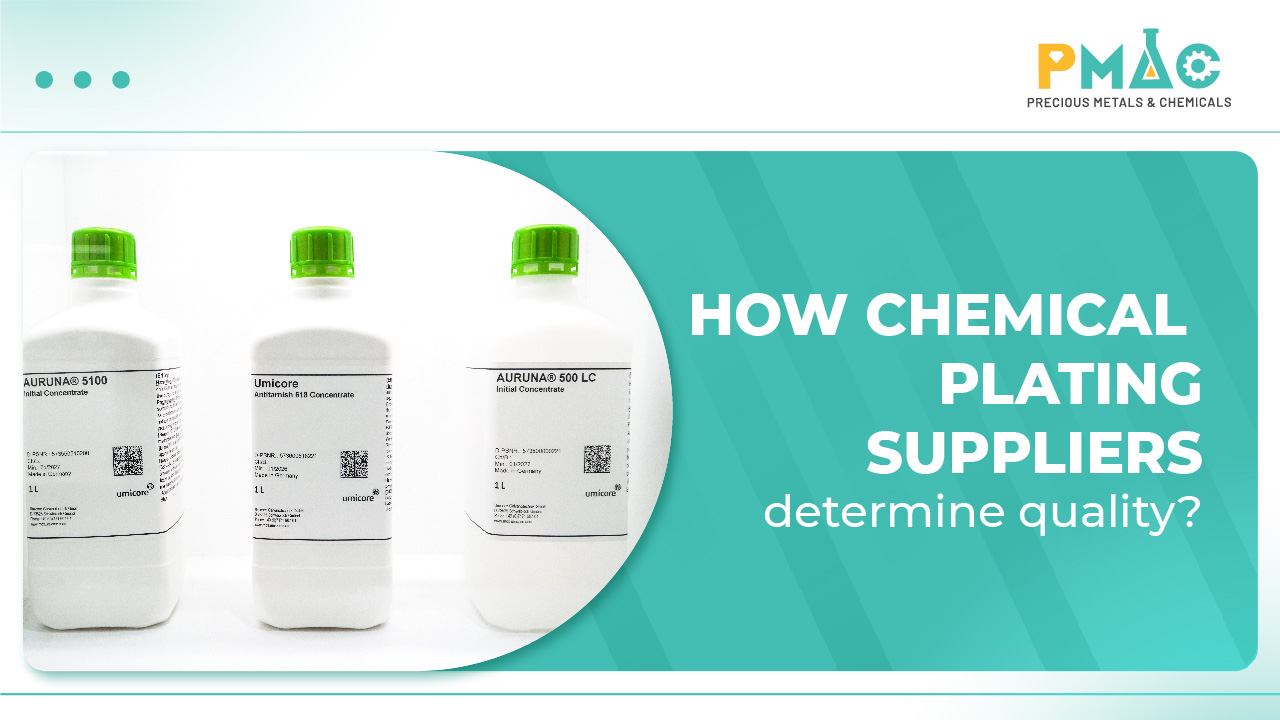
In the plating process, the chemical plating supplier plays a decisive role in determining coating quality, production stability, and overall manufacturing efficiency. Selecting the right chemicals enables manufacturers to control adhesion, color consistency, and product durability. In this article, PMAC analyzes the practical role of plating chemicals and explains why the choice of a chemical plating supplier directly impacts product quality outcomes.
I. Overview of chemical plating
1. What is plating ?
Plating is a surface treatment process that involves coating a base material with a layer of metal or metal compound to provide protection, enhance technical performance, and improve aesthetic appearance. This technology is widely applied in industries such as electronics, mechanical engineering, construction, and jewelry.
2. What are plating chemicals ?
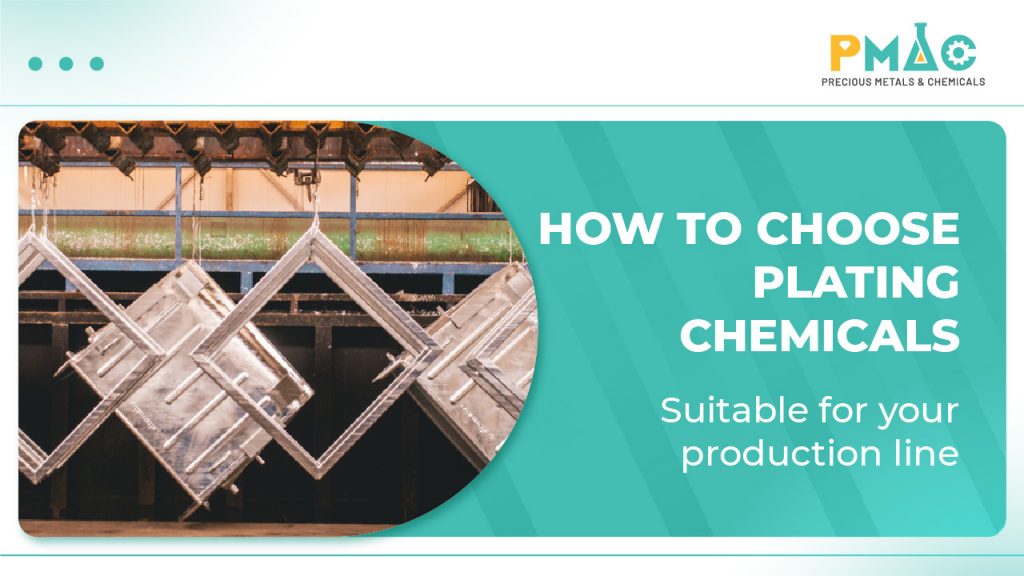
Plating chemicals are specialized chemical compounds used in the plating process to treat surfaces and form a metal coating on the base material.
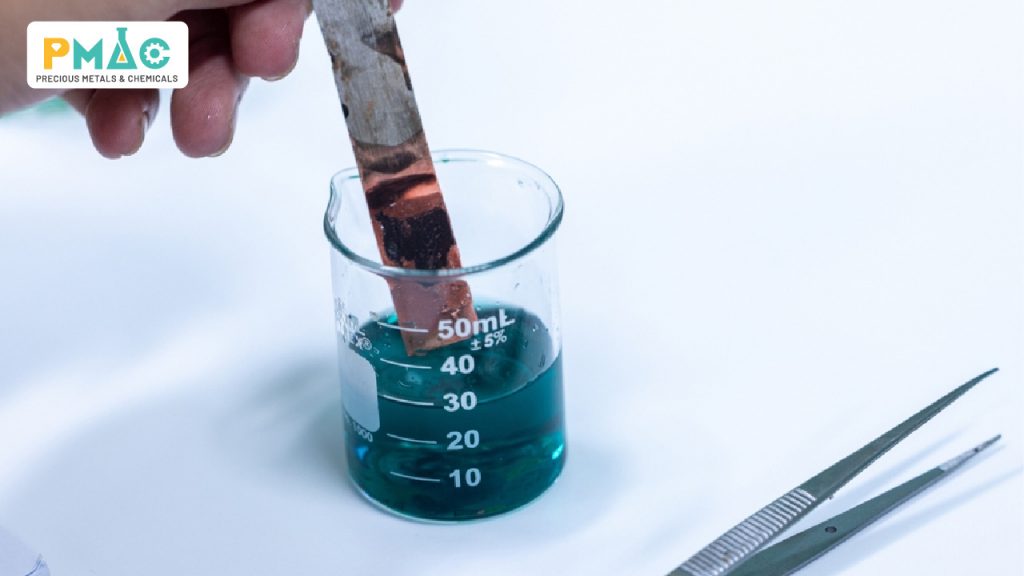
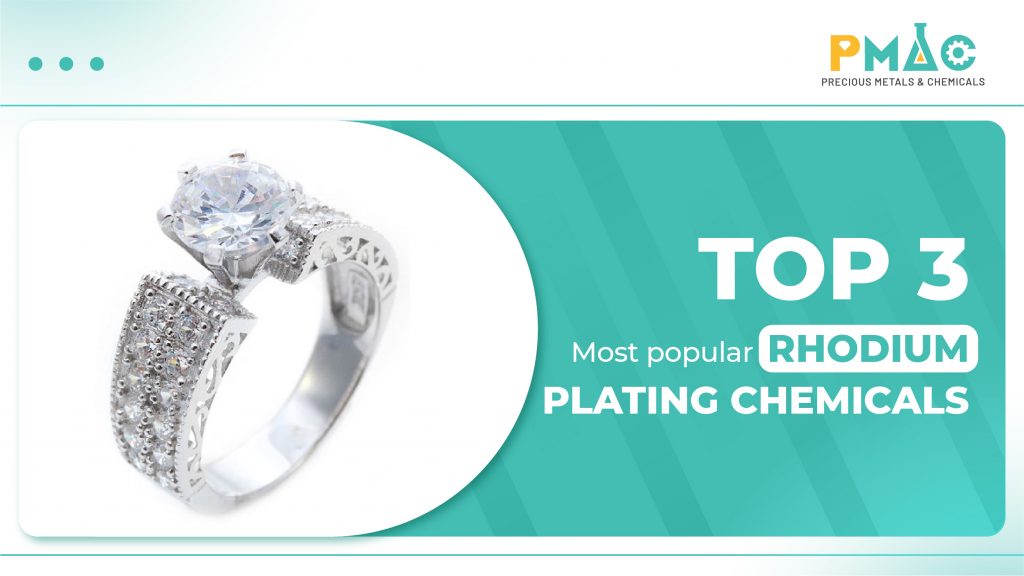
Image 1: Plating chemicals
They play a decisive role in surface cleaning, activation, control of coating formation, and protection of the plated layer against environmental impacts, thereby enhancing durability, functionality, and overall product value.
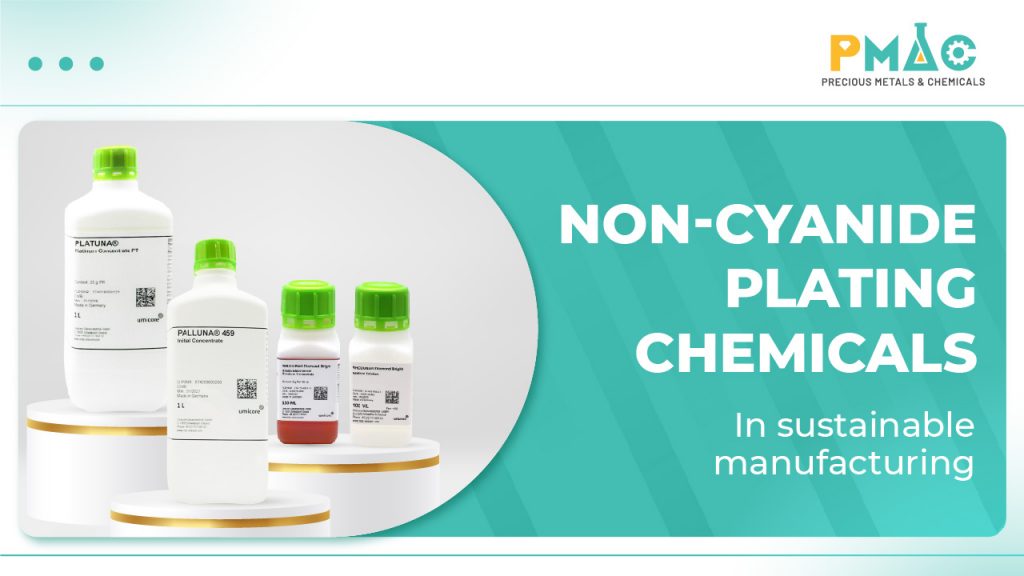
>> See more: Non-cyanide plating chemicals in sustainable manufacturing
II. Functions of plating chemicals
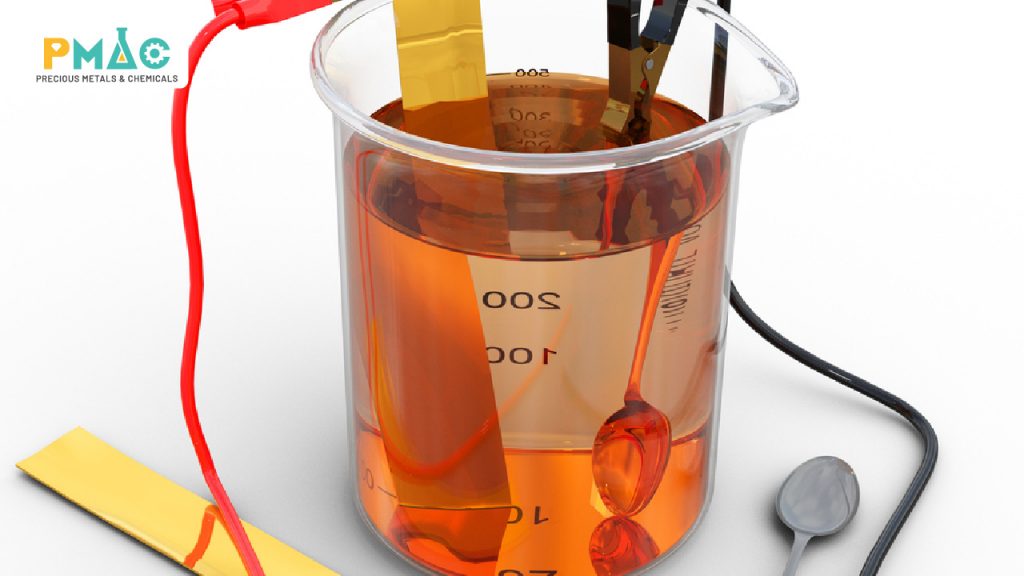
Image 2: Functions of plating chemicals
Plating chemicals are used to clean and prepare material surfaces before plating, creating favorable conditions for forming uniform and well adherent metal coatings. At the same time, they help control the coating formation process, improve durability, corrosion and wear resistance, and enhance the aesthetic quality of finished products.
III. Practical applications of plating chemicals
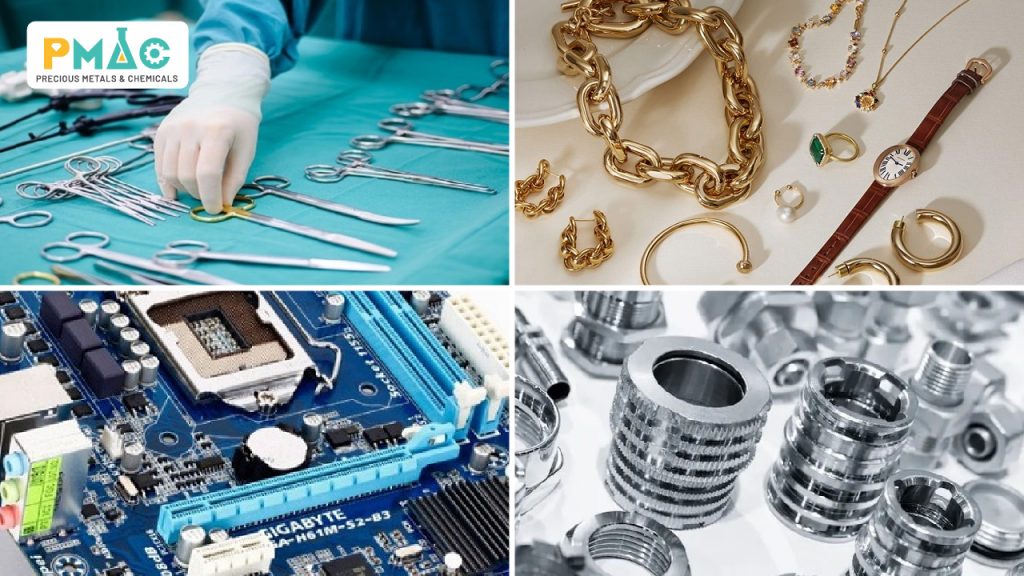
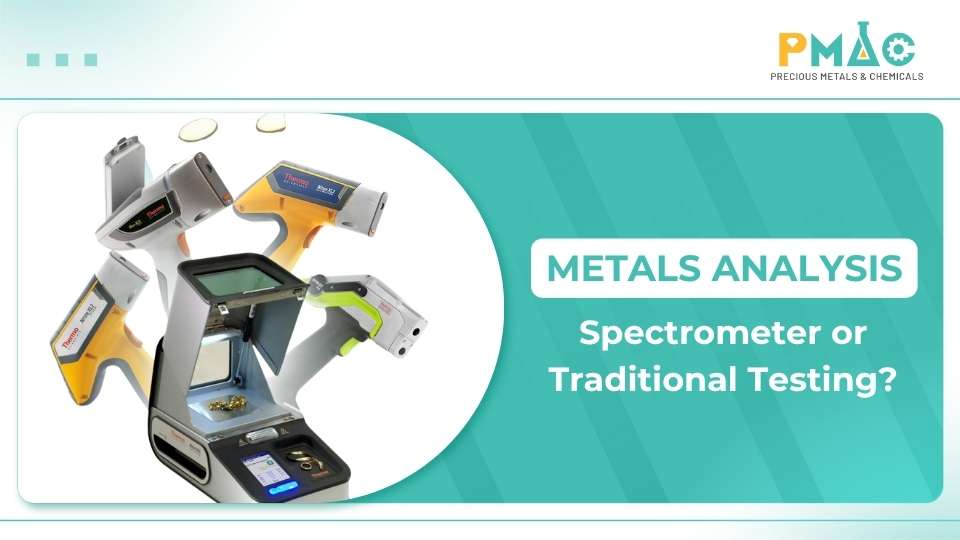
Image 3: Practical applications of plating chemicals
1. Medical industry
Plating chemicals are used in the production of medical devices and surgical instruments to create durable, corrosion resistant coatings that limit bacterial growth and ensure safety when in contact with the human body.
2. Jewelry and fine jewelry
In the jewelry industry, plating chemicals help create bright gold, silver, and rhodium coatings with strong adhesion, improved color durability, and enhanced aesthetic value for jewelry products.
3. Electronics and high technology
Plating chemicals play a critical role in plating electronic components, circuit boards, and microchips by enhancing electrical conductivity, preventing oxidation, and ensuring high precision in manufacturing.
>> See more: Top 3 specialized electroplating chemicals for the electronics industry
4. Mechanical engineering and industrial manufacturing
In mechanical engineering, plating chemicals are applied to protect machine parts, molds, and components, helping increase durability, reduce wear, and extend product service life.
>> See more: Applications of electroplating chemicals in industry
>> See more: Applications of electroplating chemicals in Industry 4.0 manufacturing
IV. How chemical plating suppliers impact the production chain
1. Impact on coating quality and stability
A reputable chemical plating supplier ensures stable chemical compositions, resulting in coatings with strong adhesion, uniform appearance, and reduced risks of peeling or surface pitting during production.
2. Impact on production efficiency and continuity
High quality plating chemicals with stable supply help manufacturers maintain continuous production lines, reduce downtime, and minimize interruptions caused by technical issues.
3. Cost control and defect rate reduction
Using high quality plating chemicals helps reduce material waste, minimize defective products, and optimize long term production costs.
4. Compliance with technical and environmental standards
Professional suppliers typically provide plating chemicals that meet safety, technical, and environmental standards, helping manufacturers reduce legal risks and comply with market requirements.
>> See more: Top 3 eco-friendly electroplating chemicals
5. Technical support and process optimization
Beyond supplying products, chemical plating suppliers also provide technical consulting, support parameter adjustments, and process improvements to enhance overall plating efficiency.
V. Risks of choosing an inappropriate chemical plating supplier
Choosing an unsuitable chemical plating supplier can create significant risks throughout the production chain, from coating quality to operational efficiency. Unstable chemicals or insufficient technical control can lead to poor adhesion, color inconsistencies, surface defects, and higher defect rates.
In addition, inconsistent supply and lack of technical support can disrupt production, increase costs, and affect delivery schedules. In the long term, these risks not only reduce manufacturing efficiency but also negatively impact a company’s reputation and competitive position in the market.
VI. Chemical plating solutions at PMAC
1. Technology foundation from strategic partner Umicore
PMAC is the official distributor of Umicore in Vietnam, a global leader in advanced materials and precious metals. This foundation enables PMAC to provide chemical plating solutions that meet international standards and are suitable for applications requiring high technical performance and stability.
2. Diverse plating chemical portfolio specialized by process stage
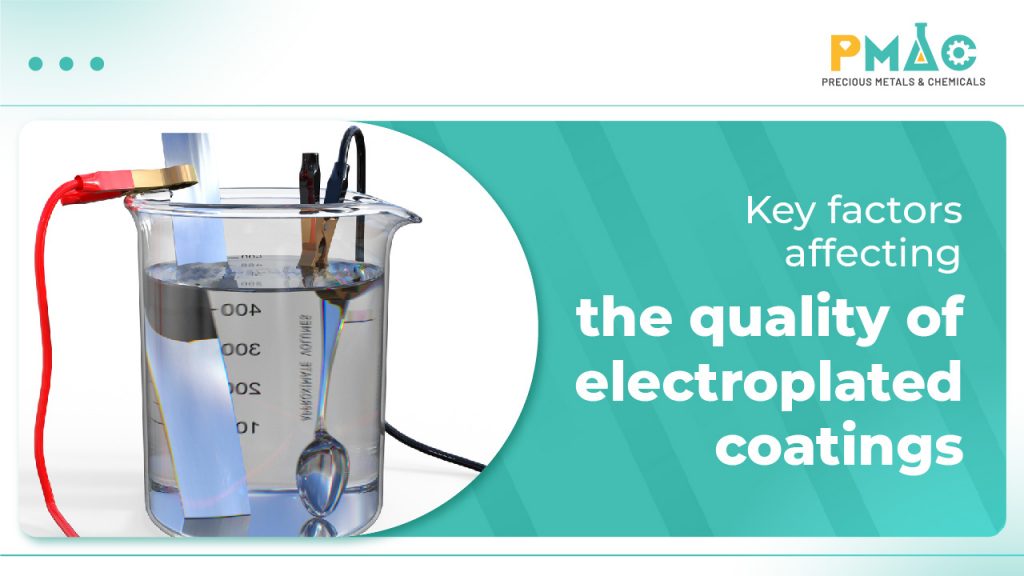
PMAC supplies a comprehensive range of plating chemicals for each process stage, including degreasing and surface cleaning, activation, metal plating solutions such as gold, silver, nickel, copper, and rhodium, as well as post plating treatments. This process based approach helps manufacturers select the correct solutions and reduce implementation errors.
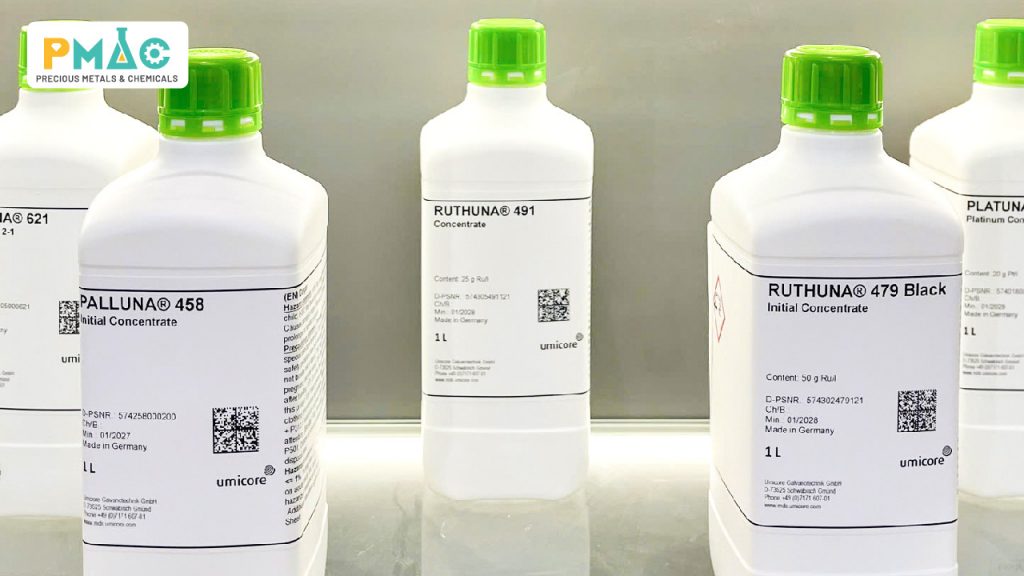
Image 4: Genuine plating chemicals at PMAC
>> See more: Gold electroplating chemicals
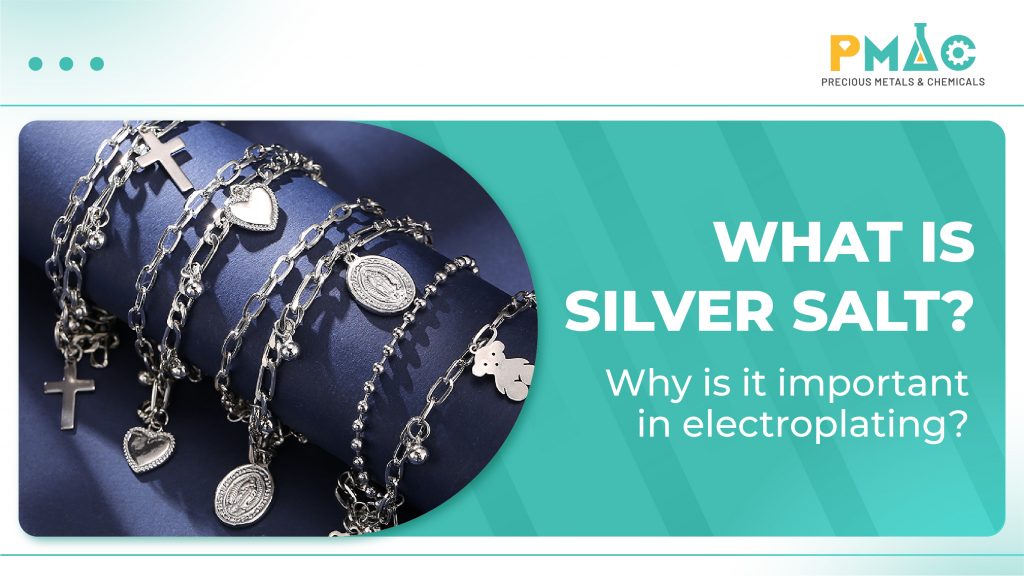
>> See more: Silver electroplating chemicals
>> See more: Rhodium electroplating chemicals
>> See more: Ruthenium electroplating chemicals
>> See more: Platuna electroplating chemicals
3. Stable chemical quality suitable for continuous production
The plating chemicals distributed by PMAC are selected based on high stability criteria, enabling strong adhesion, uniform color, and reduced common defects such as surface pitting, peeling, or discoloration during long term operation.
4. Cost optimization consulting and technical problem solving
With a technical team that has more than 20 years of experience in the plating industry, PMAC advises on selecting suitable plating chemicals based on production scale, base materials, and coating requirements. The team also provides direct support in adjusting operating parameters and resolving issues during production, helping reduce chemical consumption, minimize rework, and optimize long term operating costs.
VII. Conclusion
Chemical plating suppliers play a critical role in ensuring coating quality, production stability, and long term cost efficiency. Choosing a partner with a solid technological foundation and strong technical support capabilities helps manufacturers control risks and optimize plating processes. As the official distributor of Umicore plating chemicals in Vietnam, PMAC delivers solutions that meet international standards and the technical demands of real world manufacturing.
Contact PMAC for international-standard electroplating solutions consultation!
HCM: High-Tech Center, 4th Floor, HUTECH Building, D1 Street, High-Tech Park, Tang Nhon Phu Ward, Ho Chi Minh City
HN: 22B Ơ2 Linh Dam Peninsula, Hoang Liet Ward, Hanoi City
Hotline: (+84) 908 727 235