

Cyanide-free chemicals are the green solution driving competitiveness in the plating sector. Embracing this essential trend, PMAC offers a deep dive into breakthrough green plating technologies that help you solve the environmental puzzle and confidently reach global markets.
I. Overview of plating chemicals
1. Plating chemicals
Plating chemicals are specialized solutions used to deposit a thin metal layer onto a substrate surface. This coating not only enhances the product’s luxurious and glossy appearance but also increases resistance to corrosion, abrasion, and oxidation, thereby extending the product’s lifespan.
Furthermore, owing to the thin yet durable plating layer, plating chemicals facilitate the conservation of precious metals and the reduction of production costs—a critical factor for jewelry workshops and component manufacturing plants.
>> See more: What are plating chemicals?
2. Common types of cyanide-free plating chemicals
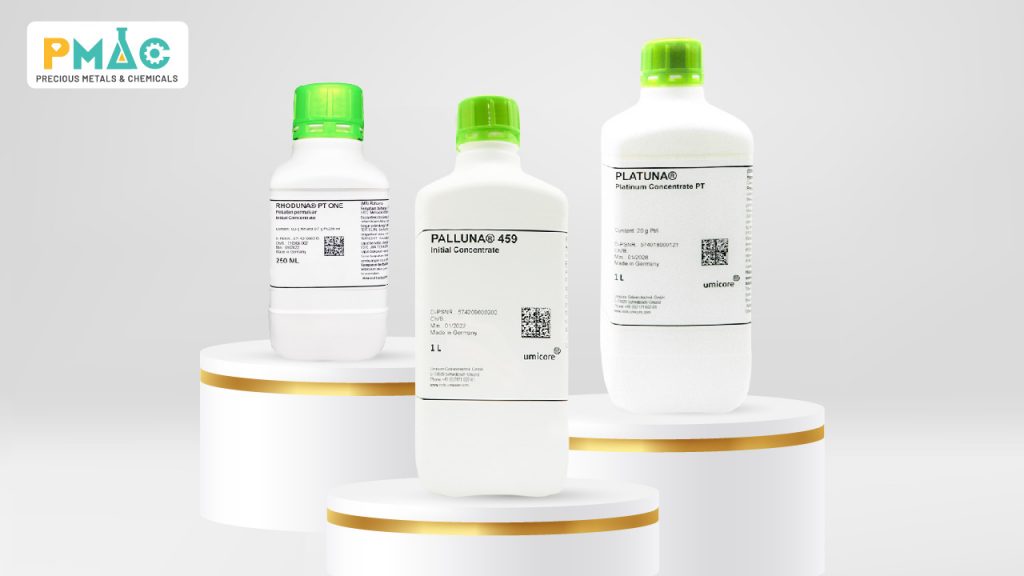
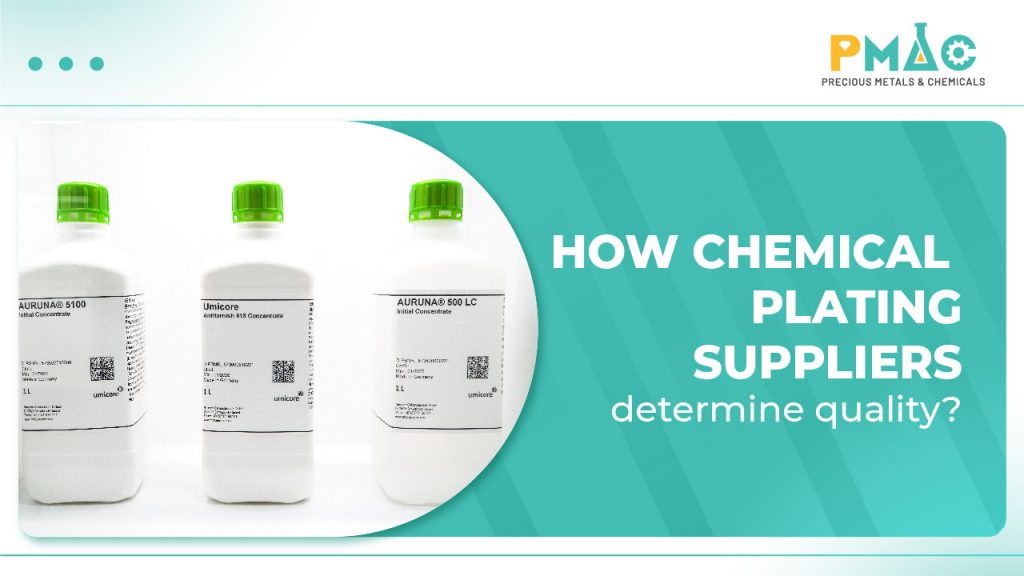
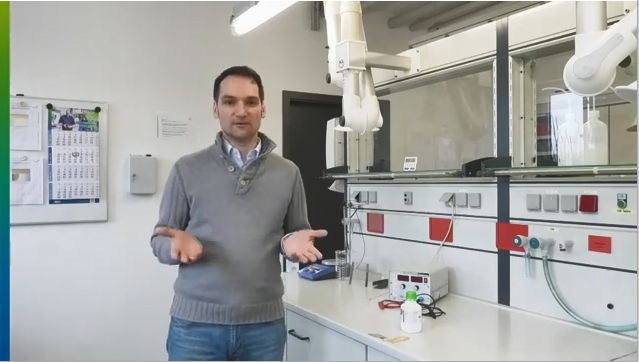
Image 1: Common types of cyanide-free plating chemicals
Unlike traditional gold or silver plating processes, which often rely on cyanide salts to dissolve metals, precious metals belonging to the Platinum Group Metals (PGMs) possess unique chemical properties that allow them to remain stable in strong acidic or mildly alkaline electrolyte systems.
Consequently, the following chemical lines not only deliver premium aesthetic value but are also regarded as natural “green” solutions, ensuring absolute safety for operators and the environment.
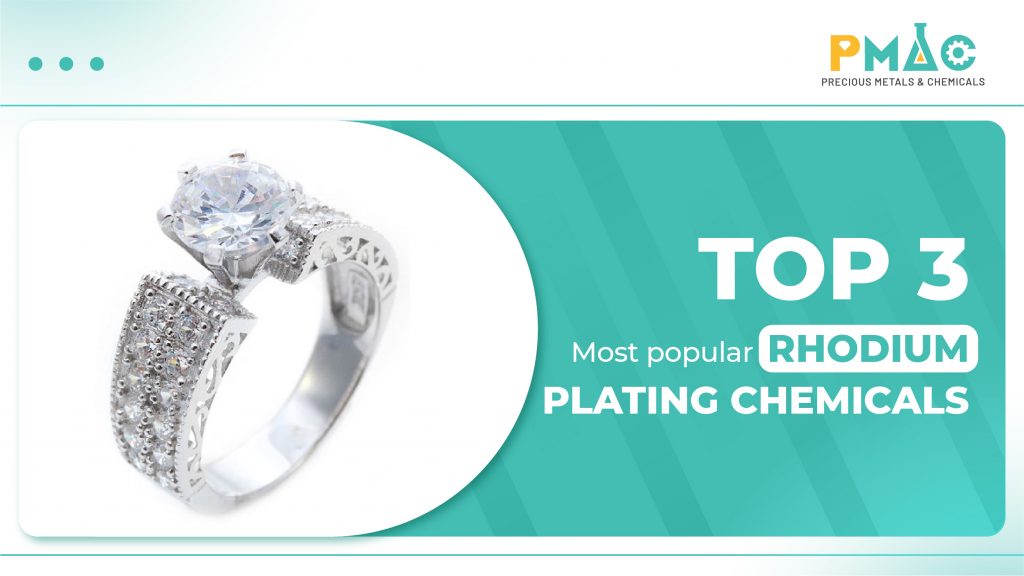
2.1. Rhodium plating
In the jewelry manufacturing industry, Rhodium is dubbed the “queen” of white plating layers due to its superior light reflectivity and very high mechanical hardness. Rhodium plating solutions are typically Sulfate- or Phosphate-based compounds operating in a strongly acidic environment (pH is usually < 1).
Due to operating under acidic conditions, Rhodium plating baths are completely free from cyanide toxins. The resulting plating layer exhibits a characteristic cold white color, brilliant luster, and excellent abrasion resistance, becoming an irreplaceable standard for high-end “white gold” products and gemstone-set jewelry.
>> See more: Top 3 Rhodium Plating Chemicals 2025
2.2. Platinum plating
Platinum plating chemicals (pure platinum) provide a luxurious grayish-white coating with color depth and absolute chemical inertness. Modern Platinum plating systems often utilize complexes that are stable across a wide pH range (from acidic to mildly alkaline) but absolutely do not require the presence of cyanide radicals to maintain bath stability.
Thanks to its high heat resistance and immunity to oxidation or discoloration even under harsh conditions, Platinum plating is not only applied in high-end jewelry to maintain eternal durability but also serves as a critical coating in medical devices and high-tech engineering.
2.3. Palladium and palladium-nickel plating
These are two important economic and technical solutions for replacing Nickel or serving as an underlayer for other precious metals. Palladium plating solutions are typically based on Ammonia or Chloride salt systems, completely eliminating cyanide from the process.
- Palladium Plating: Creates a silvery-white plating layer with good corrosion resistance and low porosity; it is often used as a diffusion barrier underlayer for copper or a finish for mid-range jewelry lines.
- Palladium-Nickel Plating: Considered a “star” alloy in replacing traditional Nickel plating, which is prone to causing allergies (Nickel allergy). This alloy offers high hardness, excellent resistance to sweat corrosion, and complete biocompatibility, meeting strict European safety standards.
2.4. Ruthenium Plating
Ruthenium is a special member of the platinum group, famous for its ability to create plating layers with colors ranging from lead gray to jet black with distinct character. Ruthenium plating chemical systems, such as the Rhoduna® Alloy Black line (Rhodium-Ruthenium alloy), are typically strong acid electrolyte solutions, ensuring a clean and non-toxic operating process.
The Ruthenium plating layer is very hard, highly abrasion-resistant, and color-fast, making it the top choice for modern men’s jewelry designs, high-end eyeglass frames, or decorative details on fashion accessories requiring a strong and mysterious aesthetic.
II. Key benefits of using cyanide-free plating technology
1. Occupational health assurance
The prerequisite benefit of applying cyanide-free chemicals is the ability to completely eliminate dangerous risks for personnel in the production environment.
In traditional plating technology, the existence of Cyanide radicals is always accompanied by the risk of forming highly toxic Hydrogen Cyanide gas if the pH control process encounters issues (especially when pH drops below 10). By eliminating these toxic compounds from the production line, enterprises will thoroughly prevent the risk of acute poisoning and chronic pathologies for the operating technical team.
2. Optimization of waste treatment processes and reduction of operating costs
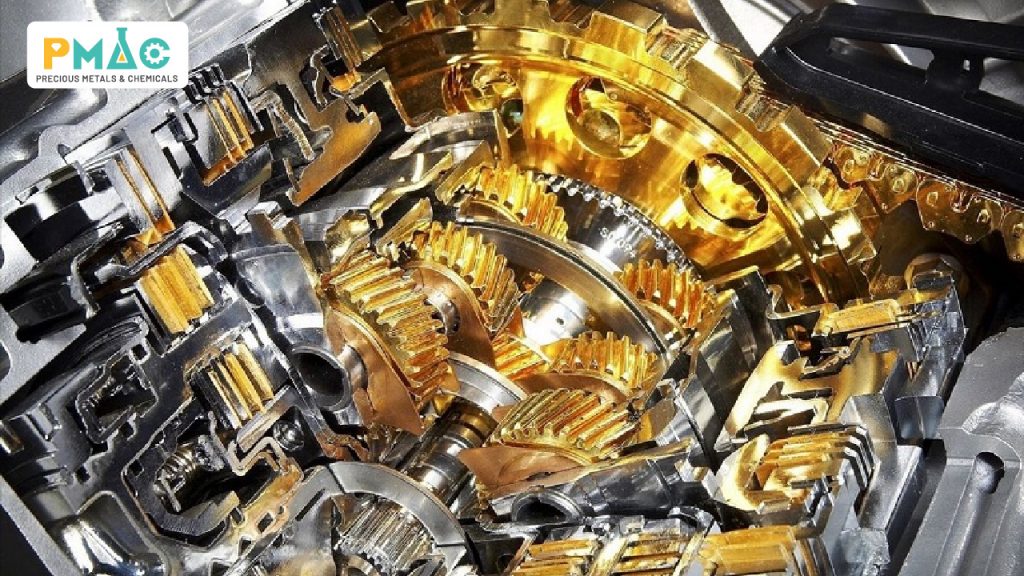
Image 2: Optimizing production with non-cyanide plating chemicals
From an environmental management perspective, cyanide-free technology solves the plating industry’s most thorny issue: wastewater treatment. For wastewater containing Cyanide, enterprises are mandated to execute a two-stage oxidation process using strong oxidizing agents—typically Sodium Hypochlorite in a high-alkaline environment—to break the stable bonds of the complex before neutralization.
Conversely, wastewater from new-generation cyanide-free plating systems is usually based on Sulfite, Acid, or Pyrophosphate foundations, allowing for much simpler treatment through common neutralization and metal hydroxide precipitation methods.
This technical transition not only reduces the volume of hazardous sludge generated but also significantly cuts chemical treatment costs (OPEX), ensuring discharge indices always remain within the safe limits of QCVN (National Technical Regulations) and eliminating legal environmental risks.
3. Adaptation to international standards and enhancement of commercial advantages
Finally, the application of green technology is a prerequisite condition for enterprises to overcome technical trade barriers and penetrate deep into the global supply chain. In the context where key markets such as Europe (EU) and North America are increasingly tightening regulations on chemicals, products using cyanide-free technology easily achieve important certifications such as RoHS (Restriction of Hazardous Substances), REACH, or OEKO-TEX Standard 100 for garment accessories.
This compliance not only plays the role of a “passport” for export activities but also helps enhance credit scores in ESG capability profiles, thereby increasing competitive position and helping enterprises become reliable strategic partners of multinational corporations.
III. Functions of cyanide-free plating chemicals
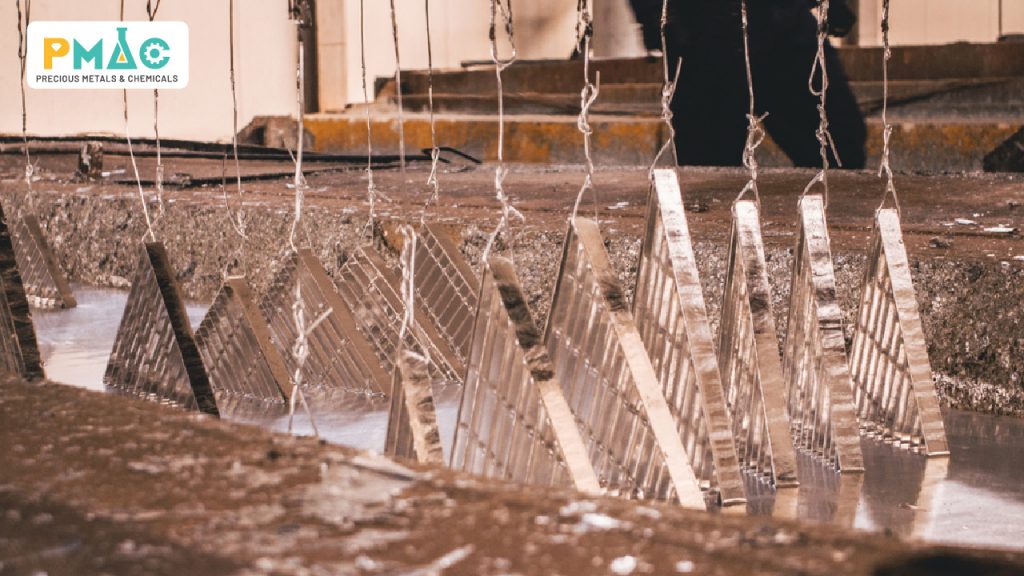
Image 3: Functions of cyanide-free plating chemicals
Regarding fundamental technical principles, both cyanide-free plating chemicals and traditional chemical systems serve a common core purpose: creating a metal coating on the material surface to improve aesthetics, corrosion resistance, hardness, or electrical conductivity. Regardless of which additive system is used, the final result the manufacturer aims for remains a plating layer that meets technical specifications regarding thickness, gloss, and adhesion.
However, the difference lies in the fact that cyanide-free technology allows these results to be achieved in a safer and more sustainable environment, opening up wide application possibilities in industries demanding strict standards regarding human health and friendliness to the ecosystem.
>> See more: Applications in industry 4.0 manufacturing
>> See more: Applications in the jewelry industry
IV. PMAC – The pioneer unit providing green plating solutions in Vietnam
In Vietnam, PMAC is proud to be the leading unit in orienting and transferring “green plating” technology. We do not just sell chemicals; we provide a comprehensive solution for your enterprise:
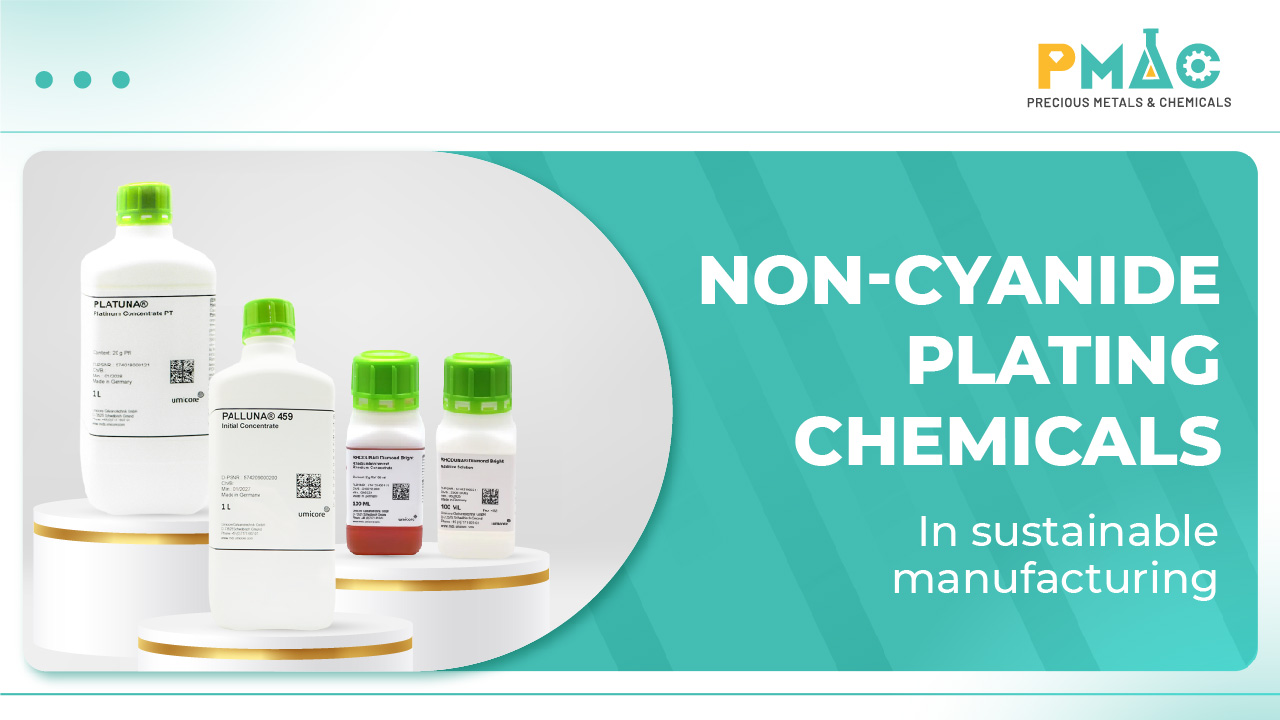
- Strategic Partner of Umicore (Germany): PMAC acts as the authorized distributor for premium chemical lines such as RHODUNA® (Rhodium) and RUTHUNA® (Ruthenium), which are completely cyanide-free, ensuring German standards for Vietnamese products.
- Process Conversion Consultation: PMAC’s team of technicians with over 20 years of experience will enthusiastically consult and support clients throughout the green transition journey.
- ESG Commitment: We help enterprises build a “green” capability profile, creating a competitive advantage when bidding for international orders.
V. Conclusion
Transitioning to cyanide-free plating chemicals is no longer an option, but an inevitable trend of modern industry. It is the passport for Vietnamese enterprises to enter the global supply chain, where ESG standards hold dominant power.
Let PMAC accompany you on the journey of creating sustainable values, bringing exquisite colors to products and absolute peace of mind for the future.
PMAC Joint Stock Company
HCM: High-Tech Center, 4th Floor, HUTECH Building, D1 Street, High-Tech Park, Tang Nhon Phu Ward, Ho Chi Minh City
HN: 22B Ơ2 Linh Dam Peninsula, Hoang Liet Ward, Hanoi City
(+84) 938 085 278
References:
https://pmac.asia/en/top-3-eco-friendly-electroplating-chemicals/