

Many people still believe that investing in high-quality materials alone is enough to create valuable jewelry. However, a piece of jewelry is more likely to attract customers when it also offers outstanding aesthetic appeal. But did you know that behind every beautiful jewelry piece lies a combination of advanced equipment, technical expertise, and, most importantly, gold plating chemicals? These chemicals are considered a key factor in determining the color, durability, and overall quality of the plated layer.
So, what are gold plating chemicals, and what role do they play in the jewelry electroplating process? Let PMAC analyze and explore this topic in the article below.
I. What Are Gold Plating Chemicals?
1. Definition of Gold Plating Chemicals
The electroplating industry utilizes various types of chemicals, including gold, silver, nickel, and rhodium plating solutions. Among them, gold plating chemicals are considered one of the most valuable and widely used solutions in the plating industry.
Gold plating chemicals are specialized solutions used to create a gold coating on metal surfaces.
During the plating process, gold ions in the solution move and deposit onto the product surface, forming a gold layer with excellent brightness and adhesion. Today, gold plating chemicals are widely used in jewelry manufacturing and many other industries that require a high-quality surface finish.
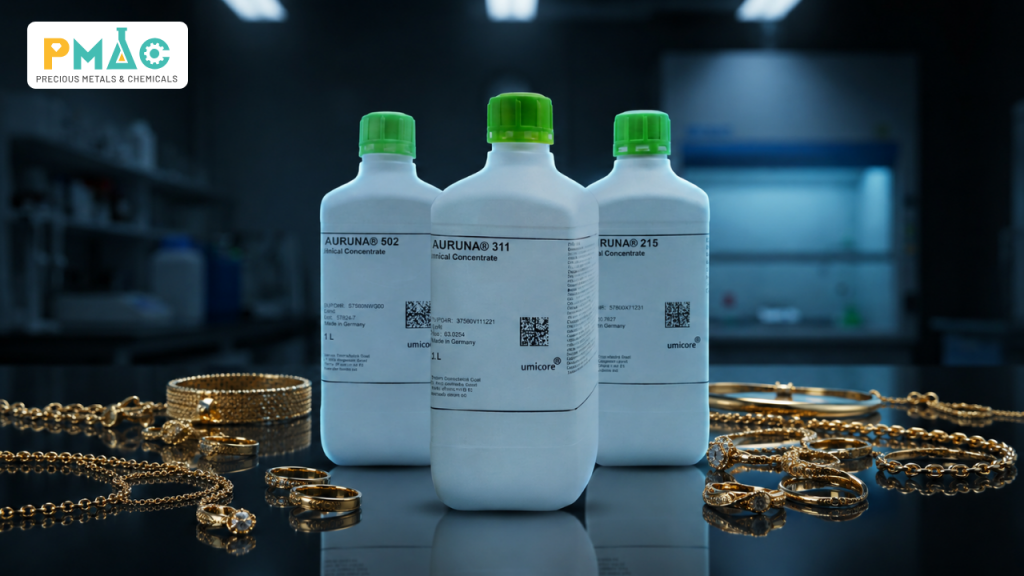
Figure 1: Gold Plating Chemicals
See more: What Is Gold Plating? Applications of Gold Plating in Jewelry Manufacturing
2. Basic Components of Gold Plating Chemicals
A typical gold plating solution includes:
- Gold salts: The core component of the plating solution. They provide the gold ions required to form the coating on the substrate.
- Conductive agents: These increase the electrical conductivity of the plating solution and help maintain proper conductivity and pH levels, ensuring that the gold layer deposits evenly across the surface.
- Additives: These substances enhance the durability and brightness of the plated surface. They may also include color-adjusting agents that create a wide range of plating shades.
See more: Gold Plating Solutions Available at PMAC
The precise combination of these components ensures consistent plating quality and meets the demanding requirements of the jewelry industry.
II. How Gold Plating Chemicals Are Used
The use of gold plating chemicals typically involves three main stages:
1. Surface Preparation
Before gold plating begins, the product surface must be thoroughly cleaned. Technicians use degreasing and cleaning chemicals to completely remove dirt, oil, and other contaminants.
This step ensures that the plated layer adheres evenly and minimizes the risk of peeling during use.
2. Gold Plating Process
This is the stage where the gold plating solution is directly used and is also the most critical part of the process.
Technicians prepare the plating solution according to the product requirements and desired color. The solution must be mixed following the correct procedures and technical specifications.
Under the influence of an electric current, the gold ions in the solution migrate and deposit onto the product surface.
3. Post-Plating Treatment
After plating, each product undergoes a final treatment process.
At this stage, specialized chemicals are used to improve color durability and surface brightness. For certain products, an additional protective or rhodium coating may be applied to enhance oxidation resistance.
III. The Role of Gold Plating Chemicals in the Jewelry Electroplating Process
1. Creating a Gold Coating on the Product Surface
One of the most important requirements for jewelry is its aesthetic appeal. The primary role of gold plating chemicals is to provide gold ions that form the coating layer on the product surface.
Through the electroplating process, a uniform gold coating with excellent adhesion is created.
The additives in gold plating chemicals help control crystal formation, resulting in a smoother surface and better light reflection. Consequently, plated products achieve greater brightness and more consistent color, enhancing both their aesthetic value and commercial appeal.
2. Determining the Color of the Plated Layer
Many people assume that gold plating only produces the traditional yellow-gold color. In reality, the color of the plated layer can vary significantly depending on the additives incorporated into the plating solution.
By adjusting the composition of the solution, manufacturers can create a variety of shades, including:
- Rose gold
- White gold
- Light gold
- Other customized gold tones
This flexibility enables jewelry manufacturers to diversify their product offerings and respond more effectively to market trends.
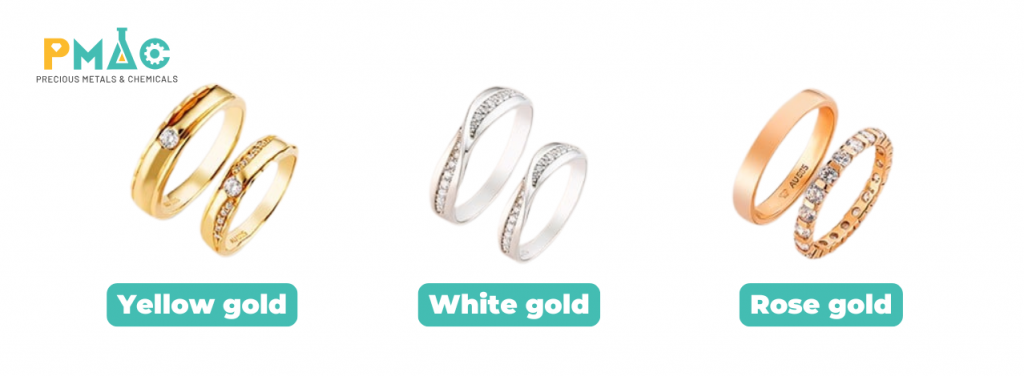
Image 2: The Diverse Colors of Gold Plating
3. Improving Product Durability
The gold coating also acts as a protective barrier for the product.
This layer helps minimize oxidation and tarnishing caused by environmental factors. In addition, it provides protection against wear and abrasion during everyday use.
As a result, jewelry products maintain their appearance and durability for a longer period.
IV. Criteria for Selecting Gold Plating Chemicals
1. High Stability
The plating solution should maintain consistent performance over an extended period and resist significant changes in composition during use.
In addition, the plated layer should be uniform, bright, and resistant to peeling after plating. Color consistency across different production batches is also essential to ensure product uniformity.
2. Operator Safety
While electroplating enhances the appearance of jewelry, it can also have environmental impacts.
Modern plating chemicals are increasingly being developed to minimize environmental effects while ensuring safety for operators and users.
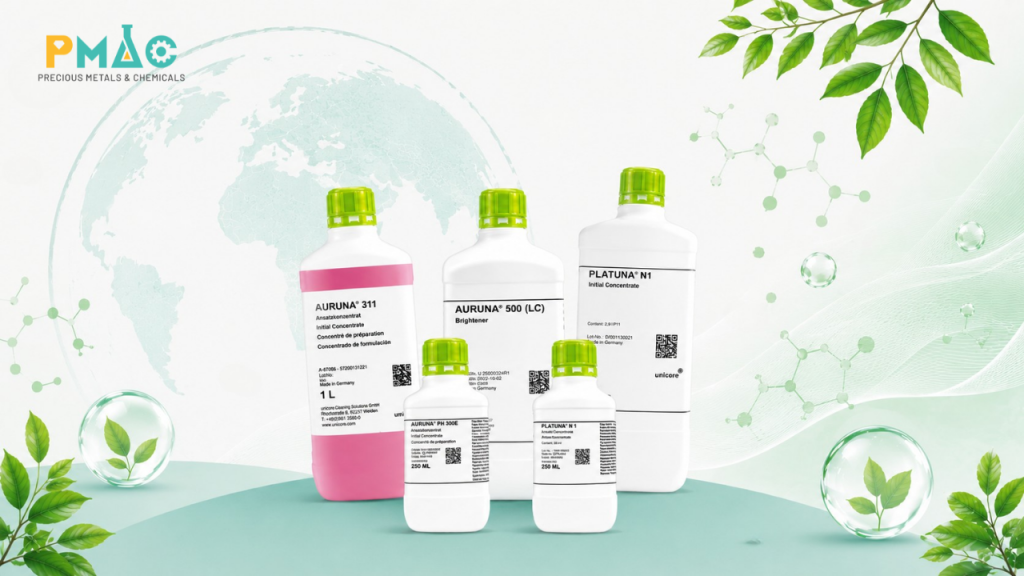
Image 3: High-Safety Gold Plating Product Lines
3. Compatibility with the Plating System
When selecting a plating solution, businesses should not focus solely on chemical quality.
It is equally important to understand production requirements, equipment specifications, and existing operating processes in order to choose the most suitable gold plating solution.
Conclusion
Gold plating chemicals are a critical factor in determining the quality of the jewelry electroplating process. From creating attractive colors and enhancing surface brightness to protecting the product surface, every aspect depends on the quality of the plating solution used.
As the official distributor of Umicore products, PMAC is committed to providing high-quality gold plating chemicals. Choosing the right gold plating solution not only enhances product value but also improves production efficiency, reduces operating costs, and helps businesses meet the increasingly demanding standards of the modern jewelry industry.
See more: Umicore – The World’s Leading Gold Plating Chemical Brand
PMAC Joint Stock Company
Ho Chi Minh City Office:
4th Floor, HUTECH Building, D1 Street, Saigon Hi-Tech Park, Tang Nhon Phu Ward, Ho Chi Minh City, Vietnam
Hanoi Office:
22B O2, Linh Dam Peninsula, Hoang Liet Ward, Hanoi, Vietnam
Hotline: (+84) 908 727 235
Fanpage: PMAC