

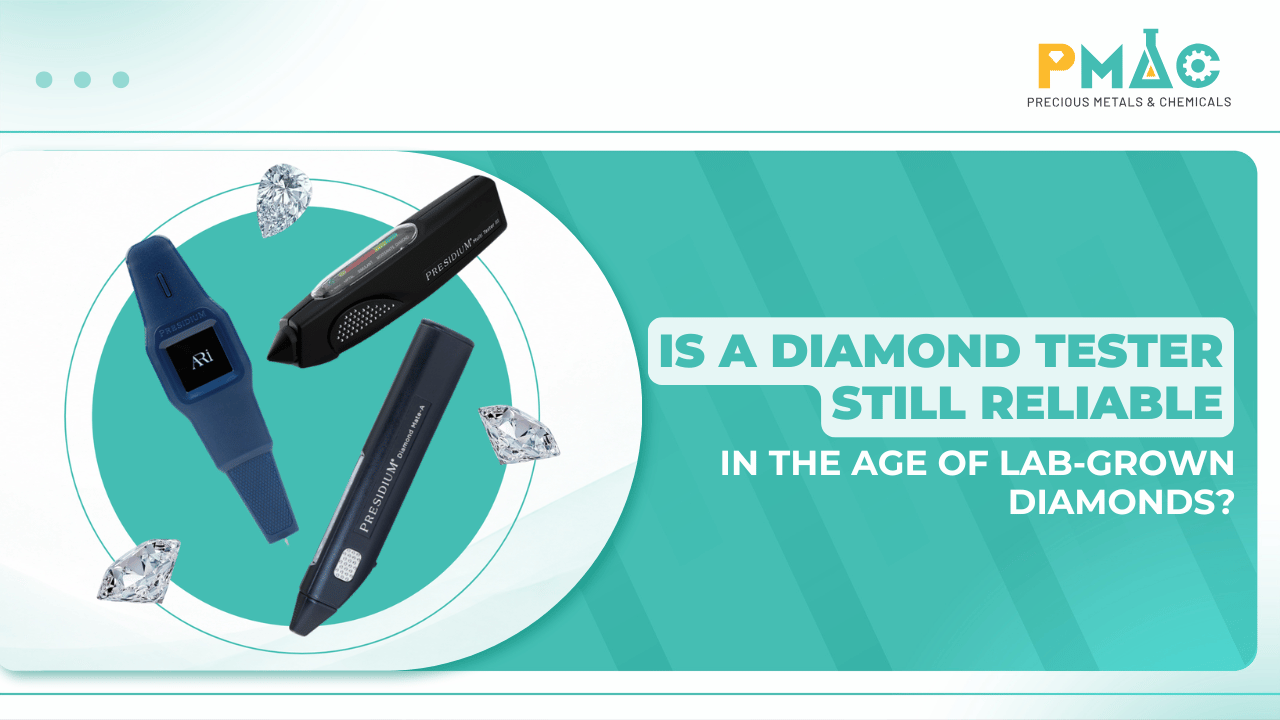
For many years, diamond testers have been one of the most common tools used by jewelry stores, diamond dealers, and gemstone traders for quick verification. With their compact design, ease of use, and near-instant results, these devices allow users to quickly verify a stone before completing a transaction.
However, the rapid growth of lab-grown diamonds (Lab-grown Diamond), especially those produced using CVD and HPHT technologies, has raised an important question: can a handheld diamond tester still distinguish between natural and lab-grown diamonds?
The answer depends on understanding the intended purpose of each device. A diamond tester is not designed to replace advanced diamond screening systems. Instead, it serves as a fast screening tool for high-volume inspections or preliminary verification.
To choose the right solution, it is essential to understand how a diamond tester works, what it can identify, and where its limitations lie.
I. How Does a Diamond Tester Work?
1. Thermal Conductivity Technology
Most diamond testers operate by measuring a material’s thermal conductivity. This property is one of the key factors that distinguishes diamonds from common simulants such as Cubic Zirconia (CZ) and glass.
Natural diamonds have a unique crystal structure that allows them to conduct heat extremely efficiently. When the tester’s probe touches the surface of a diamond, heat is rapidly transferred away from the probe. The device detects this change in temperature and converts it into a test result.
In contrast, diamond simulants have much lower thermal conductivity and retain heat for a longer period. By measuring the rate of heat transfer, the tester can differentiate diamonds from many imitation materials.
2. Electrical Conductivity Technology
In addition to thermal conductivity, some modern diamond testing devices also measure electrical conductivity. Natural diamonds are electrical insulators, while certain gemstones exhibit different electrical properties. Combining both measurement methods improves the device’s ability to identify stones with similar physical characteristics.
However, not all diamond testers offer the same level of detection. Some devices simply determine whether a stone has diamond-like properties, while more advanced models can also distinguish Moissanite, lab-grown diamonds, and other diamond simulants.

Figure 1: Detection capabilities of diamond testers
Read more: What Is a Diamond Tester?
II. What Are the Advantages of a Diamond Tester?
Before lab-grown diamonds became widely available, diamond testing primarily focused on distinguishing diamonds from simulants such as CZ, glass, and other imitation stones.
1. Compact and Easy to Use
In this context, diamond testers became an ideal solution for jewelry stores. Their compact size and simple operation allow users to perform tests directly at the sales counter without sending stones to a gemological laboratory.
2. Fast Testing Speed
For jewelry professionals and diamond dealers, speed is essential. A diamond tester quickly filters out imitation stones, allowing staff to assist customers more efficiently and complete transactions with confidence.
3. Cost-Effective Solution
Another major advantage is affordability. Compared with advanced spectroscopic or fluorescence-based screening systems, diamond testers require a much lower investment, making them suitable for small jewelry stores, dealers, and individuals who frequently inspect gemstones.
III. Are Diamond Testers Still Enough as Lab-Grown Diamonds Become More Common?
The emergence of CVD and HPHT lab-grown diamonds has significantly changed the way the jewelry industry approaches diamond verification.
Unlike traditional diamond simulants, lab-grown diamonds share the same chemical composition and crystal structure as natural diamonds. As a result, many of their physical properties are nearly identical.
This leads to an important fact: not every diamond tester can identify the origin of a diamond.
Many conventional diamond testers are designed only to determine whether a stone exhibits diamond-like properties. When testing a lab-grown diamond, the device may still identify it as a diamond because, from a material standpoint, it truly is a diamond.
This is why the question:
“Can a diamond tester detect lab-grown diamonds?”
does not have a universal answer.
The answer depends on the sensing technology, detection algorithm, and intended purpose of the specific device. New-generation screening instruments may incorporate specialized technologies capable of distinguishing between natural diamonds, CVD/HPHT lab-grown diamonds, and Moissanite.
Simply put, a diamond tester serves as a first-line screening tool, while advanced screening systems provide a higher level of verification when greater confidence is required.
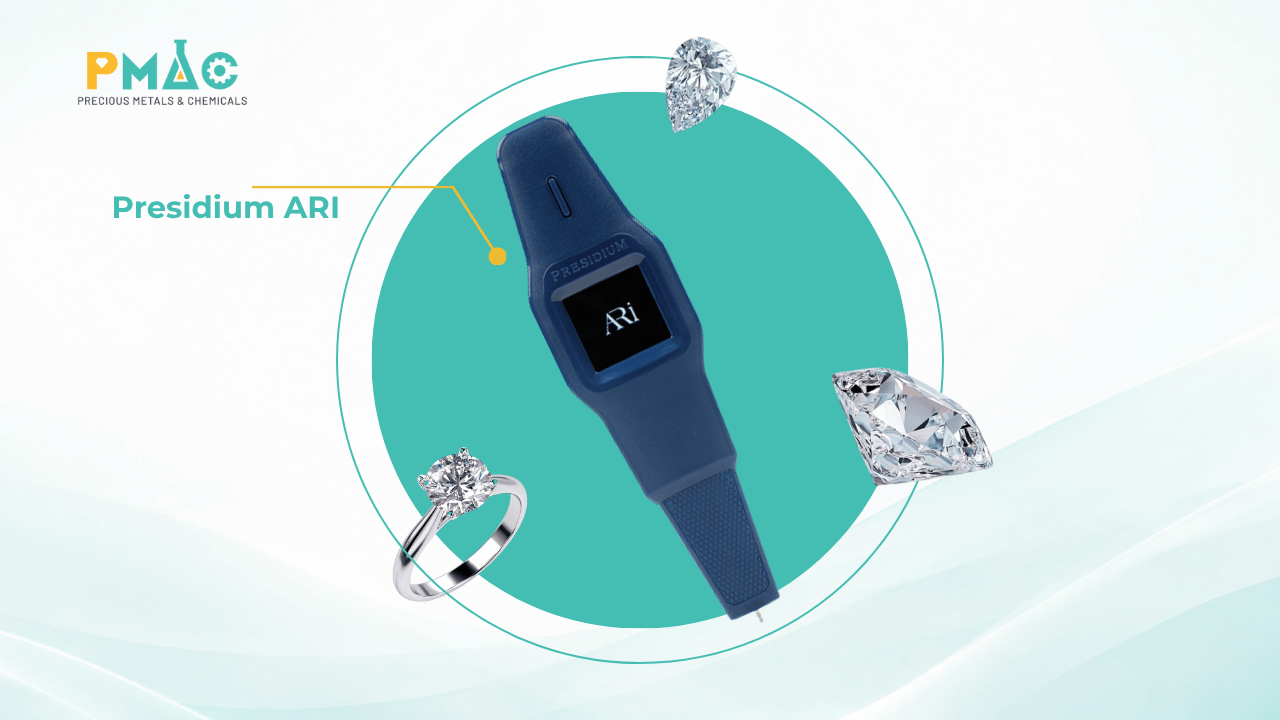
Figure 2: Presidium ARI Diamond Screener
IV. Should Businesses Choose a Diamond Tester or an Advanced Screening System?
The right solution depends on business size, product portfolio, and the level of accuracy required.
| Application | Recommended Solution |
|---|---|
| Quick in-store testing | Handheld diamond tester |
| Testing multiple gemstone types | Diamond tester with thermal and electrical conductivity measurement |
| High-value diamond trading | Natural and lab-grown diamond screening system |
| Gemological laboratories and large enterprises | Advanced diamond verification system |
An effective verification process should not rely on a single device. Diamond testers save time during the initial inspection, while advanced instruments provide more reliable results for high-value or complex cases.
This multi-layer approach is increasingly adopted by jewelry businesses to maintain product quality while improving operational efficiency.
V. Reliable Diamond Testers Available Today
The market offers a wide range of diamond testers, each designed for different applications. Choosing the right device depends on whether you need to identify simulants, distinguish Moissanite, or screen CVD/HPHT lab-grown diamonds.
Among the leading manufacturers, Presidium is widely recognized for producing reliable handheld diamond testing instruments suitable for jewelry retailers and professional businesses alike.
Figure 3: Different Types of Diamond Testers
1. Presidium Diamond Mate Tester A (PDMT-A)
The Presidium Diamond Mate Tester A (PDMT-A) is an entry-level diamond tester designed for rapid verification based on thermal conductivity.
Its retractable probe maintains consistent contact pressure, while the ultra-fine 0.6 mm probe tip enables testing of diamonds as small as 0.02 ct.
Results are displayed using LED indicators and audible alerts, making interpretation straightforward during customer transactions. The PDMT-A can also test both polished and unpolished stones.
While highly effective for preliminary testing, businesses requiring natural versus lab-grown diamond identification should consider combining it with dedicated screening equipment.
2. Presidium Multi Tester III (PMUT III)
The Presidium Multi Tester III (PMUT III) offers enhanced detection by combining thermal and electrical conductivity measurements.
This dual-technology approach improves identification of diamonds, Moissanite, and various diamond simulants.
Another advantage is continuous operation without waiting between tests. Its retractable probe ensures stable contact, while the multi-angle LED display makes results easy to read.
Compared with thermal-only testers, PMUT III is better suited for businesses handling a wider variety of gemstones.
3. Presidium ARI
The Presidium ARI is a next-generation diamond screening device designed to distinguish between natural diamonds, lab-grown diamonds, and Moissanite.
Unlike traditional diamond testers, ARI utilizes specialized screening technology capable of identifying differences among these stone categories. It can test both loose stones and mounted jewelry, delivering results in just a few seconds.
ARI reflects the industry’s evolving needs—not only determining whether a stone is a diamond, but also identifying what type of diamond it is.
Quick Comparison of Diamond Testing Solutions
| Device | Operating Principle | Detection Capability | Target Users | Typical Application |
|---|---|---|---|---|
| PDMT-A | Thermal conductivity | Diamonds and common simulants | Small jewelry stores, dealers | Daily quick testing |
| PMUT III | Thermal + electrical conductivity | Diamonds, Moissanite, simulants | Professional jewelry retailers | Multi-stone verification |
| ARI | Specialized screening technology | Natural diamonds, CVD/HPHT diamonds, Moissanite | Diamond businesses | Diamond origin screening |
As shown above, no single device is suitable for every situation. A diamond tester remains an efficient tool for routine inspections, while businesses dealing with lab-grown diamonds should consider adding dedicated screening systems to their workflow.
Read more: TOP 3 MOST POPULAR DIAMOND TESTING DEVICES IN 2025
VI. PMAC – Your Partner in Diamond Testing Solutions
The growing popularity of lab-grown diamonds is reshaping the jewelry industry. While diamond testing once focused primarily on separating genuine diamonds from simulants, businesses today must also verify a diamond’s origin.
As a provider of professional diamond and gemstone testing solutions, PMAC helps businesses select the most suitable equipment based on their operational needs.
Investing in diamond testing equipment is not simply about purchasing a device—it is about building a reliable quality control process. Since every business has different requirements, choosing the right technology helps optimize investment costs while improving confidence in every transaction.
Conclusion
As lab-grown diamonds continue to gain market share, some people believe that diamond testers are no longer reliable. In reality, this conclusion overlooks the intended role of these devices.
Diamond testers remain highly effective when used for the right purpose. Their ability to quickly assess stones based on thermal or electrical conductivity makes them valuable tools for jewelry stores and diamond businesses, especially when handling large volumes of stones.
With extensive experience in supplying diamond and gemstone testing solutions, PMAC helps businesses choose the right equipment—from handheld diamond testers to advanced screening systems. Our goal is not only to provide instruments, but also to help customers establish efficient, accurate, and future-ready diamond verification processes.
PMAC Joint Stock Company
Ho Chi Minh City: 4th Floor, HUTECH High-Tech Center Building, D1 Street, Saigon Hi-Tech Park, Tang Nhon Phu Ward, Ho Chi Minh City, Vietnam
Hanoi: 22B O2, Linh Dam Peninsula, Hoang Liet Ward, Hanoi, Vietnam
Hotline: 0387 235 878
Facebook: PMAC