

A batch of products meeting specifications does not necessarily mean that a company is managing quality effectively. Today’s results may be acceptable, but the next batch can still deviate if materials change, equipment becomes unstable, production parameters are adjusted, or suppliers modify their processes without the company detecting the change in time.
If every problem is only discovered during final inspection, the company is controlling the product that has already been produced, rather than truly controlling the system that produces it. By the time a deviation is identified, costs may already have accumulated across materials, labor, equipment, work-in-process, production time, and even products that have already been delivered to customers.
This is an important point for understanding ISO 9001. The standard does not simply ask whether the final product meets requirements. It looks more deeply at how an organization designs and controls all the processes that can influence quality.
Therefore, the value of ISO 9001 does not lie in adding another inspection step at the end of the production line. Its core purpose is to build a system capable of consistently delivering results, detecting variation, controlling risks, and improving before the same problem continues to recur.
I. What Is ISO 9001?
1. Definition
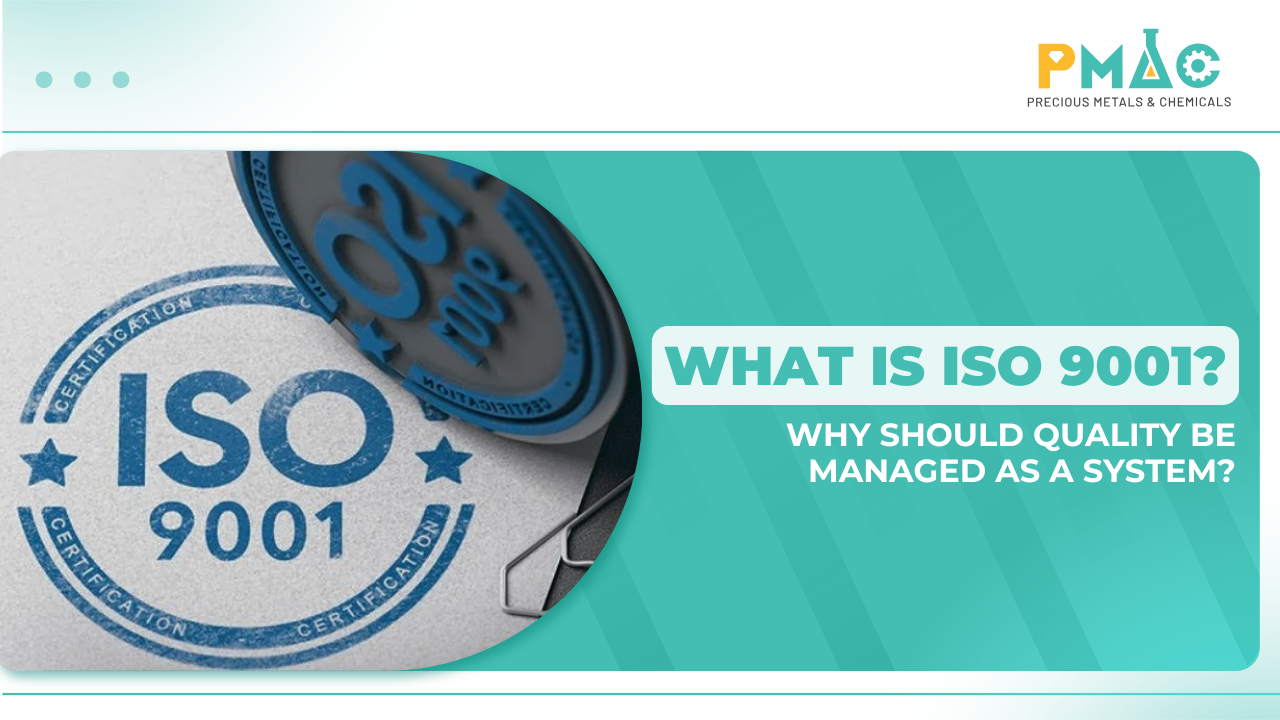
ISO 9001 is an international standard that specifies requirements for an organization’s quality management system. Rather than defining the exact dimensions, composition, or performance of a product, ISO 9001 focuses on how an organization establishes, operates, evaluates, and improves its processes so that customer requirements can be met consistently.
According to ISO – ISO 9001 Quality Management Systems, ISO 9001 is one of the world’s most widely used quality management standards and can be applied to organizations of different sizes and across industries. It is also the standard within the ISO 9000 family that can be used for quality management system certification, although certification is not mandatory in order to apply the standard.
Figure 1. ISO 9001 connects multiple elements within a quality management system
2. ISO 9001 Versions
ISO 9001 has not remained static. Since its first publication, the standard has been revised several times to reflect changes in how organizations manage quality.
ISO 9001:1987 was the first edition, published in March 1987. It was built around a quality assurance model covering design, development, production, installation, and servicing. At that time, the approach placed considerable emphasis on procedures, records, and evidence demonstrating that required activities had been carried out.
ISO 9001:1994 was the second edition. It continued to maintain a relatively structured approach to procedures and documentation while placing greater emphasis on preventing problems rather than only detecting nonconforming products after they had been produced. However, both the 1987 and 1994 editions remained relatively prescriptive in how organizations were expected to establish procedures and retain records.
ISO 9001:2000 marked a major shift. The standard moved toward a process approach, meaning organizations were encouraged to stop managing departments or activities as isolated functions and instead understand how the output of one process becomes the input to another. Customer satisfaction and continual improvement also became more prominent elements of the quality management system.
ISO 9001:2008 maintained the foundation established in the 2000 edition. Rather than introducing a major change in management philosophy, this revision primarily clarified requirements and improved compatibility with other management system standards. The process approach remained central.
Notably, ISO 9001:2015, the fifth edition, introduced more substantial changes. It strengthened the role of leadership, required organizations to understand their operating context, emphasized risk-based thinking, reduced dependence on mandatory procedures, and placed greater focus on the actual results produced by the system. ISO describes this edition as combining the process approach, risk-based thinking, and the Plan–Do–Check–Act cycle.
In February 2024, ISO 9001:2015/Amd 1:2024 was published with additional content relating to climate change. The amendment requires organizations to consider whether climate change is a relevant issue within the context of their management system and whether relevant interested parties have climate-related requirements.
As of September 2026, ISO 9001 is approaching another transition. ISO 9001:2015 together with the 2024 amendment remains the currently published edition, while the sixth edition, ISO 9001:2026, has completed the final draft stage and is awaiting publication. ISO states that the new edition is expected to be officially published on 16 September 2026, after which it will replace ISO 9001:2015. Organizations certified to the 2015 edition will then have a transition period to move to the new version.
Looking across these revisions, ISO 9001 has progressively shifted from a model focused heavily on procedures and documentary evidence toward a broader approach in which organizations must demonstrate that their systems genuinely control processes and consistently produce stable results.
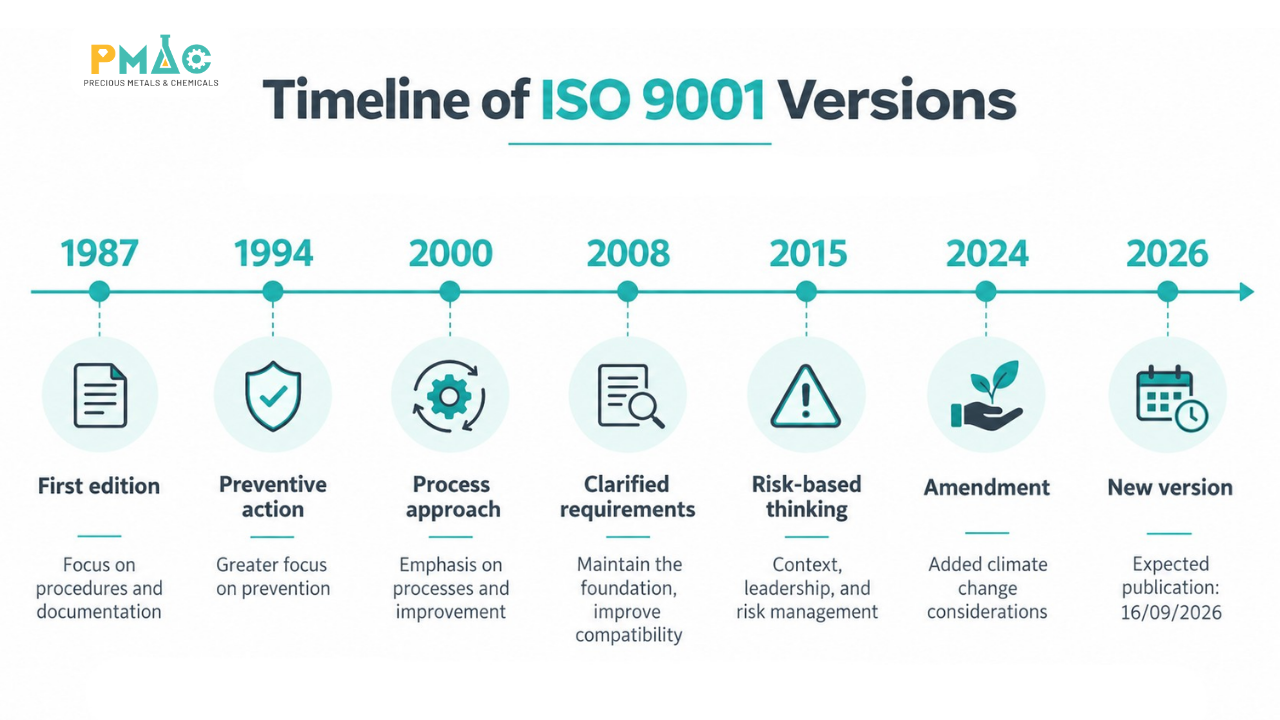
Figure 2. Development roadmap of ISO 9001 versions from 1987 to 2026
II. Final Inspection Detects Deviations but Does Not Control Their Causes
In manufacturing, final-product inspection remains necessary. The problem arises when companies treat it as the primary barrier for ensuring quality.
Consider a factory using connectors with metal coatings. A new material batch may contain a small variation in composition or coating thickness that is not detected during incoming inspection. The connectors then move through assembly and multiple production stages before the abnormality is finally discovered during final inspection.
From a product-control perspective, the quality team can isolate the nonconforming products. From a system perspective, however, the larger questions remain unanswered: which material caused the deviation, which product lots used that material, why incoming inspection failed to detect it, and whether the same issue could recur in the next batch.
If the company simply removes defective products and continues production in the same way, inspection is functioning as a defect filter, not as a quality-control system.
ISO 9001 approaches the issue from an earlier point in the process. The system should be designed to identify which processes affect results, where risks may arise, what data should be monitored, and what actions should be taken when performance begins to move away from the desired state.
The goal of ISO 9001 is therefore not simply to detect more defective products, but to make the system less likely to produce defects in the first place.
III. Quality Is Created Through a Chain of Connected Processes
A product does not begin to acquire quality at the inspection stage. Its quality has already been influenced by many earlier steps.
Customer requirements must first be understood correctly and translated into technical requirements. Those requirements then influence material and supplier selection. Incoming materials must be verified before production. Equipment must remain in a suitable operating condition. Operators must have the required competence. Process parameters must be controlled. Analytical and measurement equipment must provide sufficiently reliable data for the company to understand how the process is performing.
The logic can be represented as:
Customer Requirements → Supplier → Incoming Materials → Production → Analysis & Measurement → Finished Product → Delivery → Feedback → Improvement
The most important part lies in the connections between these stages.
If technical requirements change but purchasing does not receive the information, outdated materials may continue to be ordered. If a supplier changes a formulation but the information does not reach quality control, the inspection plan may remain unchanged. If measurement equipment produces an abnormal result but the data is not linked to a production lot, the company may struggle to determine the scope of impact.
Therefore, finished-product quality is the result of coordination across multiple processes, not the achievement of the quality-control department alone. This is the practical meaning of ISO 9001’s requirement that organizations view their activities as a quality management system, rather than as separate departments operating independently.
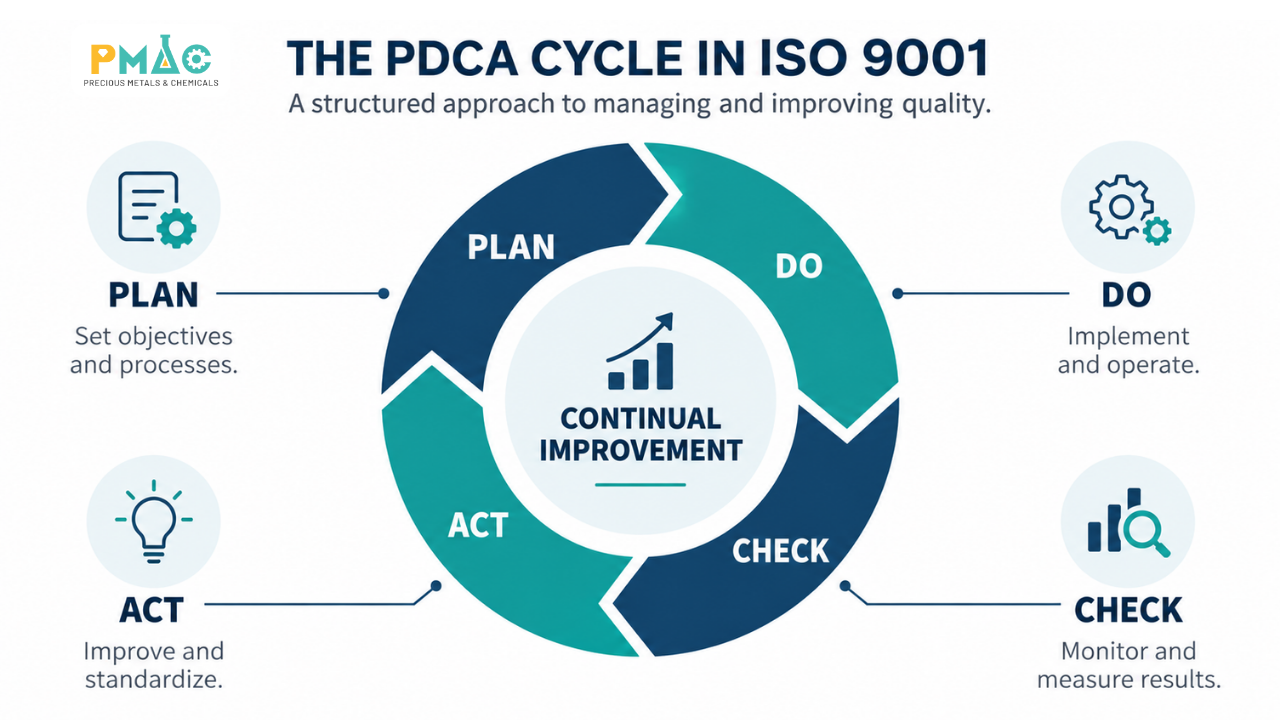
Figure 3. The PDCA cycle in the ISO 9001 quality management system
IV. Risk and Change Control Determine Whether Quality Can Be Sustained
One of the situations most likely to destabilize a quality system is not normal operation, but change.
A supplier may switch its raw-material source. A coating formulation may be modified. Equipment may have just undergone maintenance. A process may be accelerated to meet higher output. A new employee may begin operating a machine. A parameter that had previously remained stable may gradually drift outside its control range.
Each individual change may appear small, but when several changes affect the same process, the final result can shift significantly.
For this reason, the risk-based thinking of ISO 9001 does not mean that every activity must be inspected with the same intensity. The objective is to identify which points are most likely to affect the outcome and what level of control is appropriate to the associated risk.
A new material from a new supplier does not necessarily require the same level of control as a material that has remained stable across hundreds of batches. Likewise, a machine that has just had a critical component replaced should not automatically be treated the same as equipment that has operated consistently for months.
This is particularly important in electronics, semiconductors, electroplating, and other industries involving multiple material layers. A small change in chemicals, surface conditions, metal-layer thickness, or material composition may not immediately create a visible defect, but it can affect downstream processes or long-term product reliability.
V. Data and Traceability Turn “Stable Quality” into Evidence
A company may claim that its products are consistently high quality, but industrial customers need more than a claim.
They need to know how each batch is controlled, where materials come from, which equipment was used, whether process parameters remained within specified ranges, and whether the company can identify affected products when a deviation occurs.
This is why data and traceability are important elements of a quality system.
For example, when analysis shows that a material batch has an abnormal composition, the value of the data does not lie only in the measured number. The information becomes significantly more useful when it can be linked to the material code, batch number, supplier, incoming date, production time, and products that used that material.
In many industrial processes, analytical technologies such as XRF can be positioned at appropriate control points to support material-composition checks, incoming-material screening, or the control of selected metal-layer characteristics. PMAC has discussed the principles and applications of this technology in greater detail in its article on XRF technology and applications in material analysis.
However, measurement equipment by itself does not create a quality system. An analytical result only truly supports ISO 9001 when the company clearly defines what should be measured, why it should be measured, which decisions the result will support, and how the data is connected to the production process.
This is the difference between having inspection equipment and having a data-driven control process.
VI. A Deviation Is Only Truly Resolved When the System Prevents It from Recurring
When a nonconforming product is discovered, the company will normally take immediate action: isolate it, repair it, reclassify it, or scrap it. These actions are necessary, but they address only the consequence.
A quality management system must go further and determine why the deviation occurred.
Did the material change? Did equipment parameters drift? Were operating instructions unclear? Was the operator using the correct document revision? Did the supplier modify its process without notification? Was the inspection method capable of detecting the deviation?
If the root cause lies within the system but the company only repairs the product, the same issue can easily reappear in the next batch.
This is the practical meaning of corrective action under ISO 9001. The objective is not simply to restore one product to a conforming state, but to address the underlying cause within the system and reduce the likelihood of recurrence.
After a change has been implemented, the organization must also verify whether the action was actually effective. If the defect rate does not decrease or the deviation continues to appear in another form, the original cause may not have been fully identified.
A mature quality system is therefore not assessed simply by whether it “handles defects”, but by whether it can learn from them and make subsequent processes more stable.
VII. ISO 9001 Becomes More Important in High-Technology Supply Chains
There is a significant difference between a company that can produce a product that meets specifications and a company that has the capability to become a stable supplier.
Industrial customers do not buy only one successful sample. They need the same level of quality to be maintained across hundreds or thousands of production batches, even when materials, people, equipment, and supply-chain conditions change.
Supplier evaluation therefore goes beyond asking whether today’s product meets specifications.
How does the company control suppliers? Do material changes require prior approval? Is measurement equipment controlled? When an abnormal batch appears, can related products be traced? When customers report a problem, is there sufficient data to identify the root cause?
In electronics and semiconductor supply chains, these capabilities are increasingly important because a defect in one material or component can affect multiple downstream processes. PMAC previously discussed the gap between having a product that meets specifications and being recognized as a capable supplier in its article on Vietnamese companies and the semiconductor supply chain.
ISO 9001 should therefore not be viewed merely as a requirement for “obtaining a certificate.” From a supply-chain perspective, its greater value lies in helping organizations create a system that customers can evaluate, verify, and trust to maintain quality as production scales.
Figure 4. ISO 9001 becomes increasingly important in high-technology supply chains
VIII. Materials, Equipment, and Measurement Must Be Managed Within the Same System
In high-technology manufacturing environments, quality is rarely determined by a single factor.
A high-quality chemical cannot compensate for an uncontrolled process. A highly accurate instrument cannot produce useful data if the measurement method is unsuitable. A measurement result that meets requirements is also insufficient if the company cannot determine which material batch or product it belongs to.
This is particularly evident in surface-treatment and electroplating processes. Chemical composition, surface condition, operating parameters, deposited metal layers, and post-process measurement data are directly connected.
For this reason, PMAC approaches these technologies through the relationship between materials – processes – analysis – measurement, rather than treating each material or instrument as an isolated category. More information is available in PMAC’s article on semiconductor electroplating materials.
This is also the logic PMAC is expanding within its industrial and technology ecosystem: connecting materials, equipment, analysis and measurement, and technical support around the actual requirements of each manufacturing process.
At the internal management level, PMAC is currently developing in alignment with ISO-oriented practices, with process standardization serving as a foundation for improving consistency as the organization and scope of operations continue to expand. This approach reflects the underlying spirit of ISO 9001: the standard does not begin by asking how many additional forms a company needs, but rather how the system should be organized so that it can consistently produce controllable results.
IX. Conclusion
The most important point in understanding what ISO 9001 is does not lie in memorizing every clause of the standard. ISO 9001 changes how organizations think about where quality is created.
Quality does not begin when the finished product is placed on inspection equipment. It begins when customer requirements are defined and continues through supplier selection, incoming materials, process setup, equipment condition, operator competence, measurement methods, and the way the organization controls changes throughout the process.
Inspection remains necessary, but inspection only tells the organization what happened. A strong quality management system must also help explain why it happened, what the scope of impact is, and what needs to change so that the next result is more stable.
That is why quality must be managed as a system. A product that meets requirements today is only a result. The ability to reproduce the same level of quality in the next batch, even when materials, people, equipment, and operating conditions change, is what truly reflects an organization’s quality management capability.
PMAC Joint Stock Company
Ho Chi Minh City: High-Tech Center, 4th Floor, HUTECH Building, D1 Street, Saigon Hi-Tech Park, Tang Nhon Phu Ward, Ho Chi Minh City
Hanoi: 22B O2, Linh Dam Peninsula, Hoang Liet Ward, Hanoi
Hotline: 0387 235 878
Fanpage: PMAC