

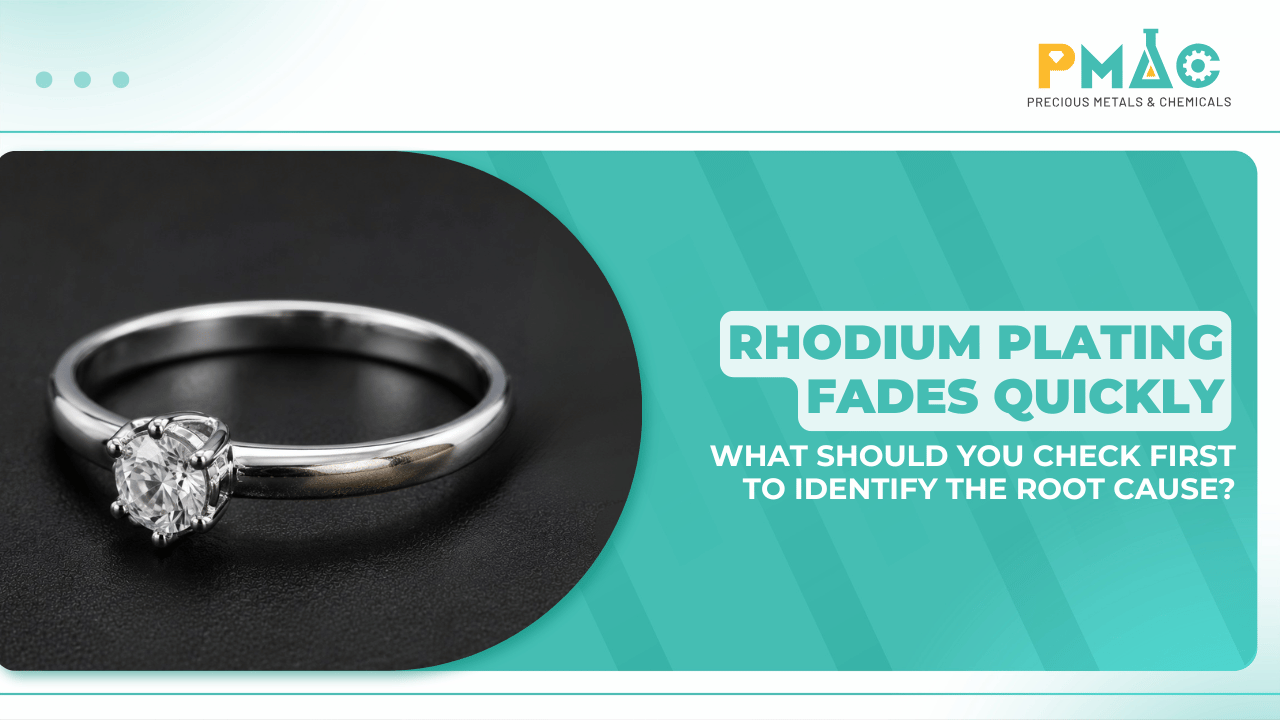
Rhodium plating is widely used in the jewelry and premium accessories industry thanks to its bright white appearance, high reflectivity, and excellent corrosion resistance. However, many manufacturers encounter a common issue: the Rhodium coating loses its color after only a short period of use—or even shortly after the finished product leaves the factory.
In this article, PMAC outlines a layer-by-layer inspection process to help manufacturers accurately identify the root cause of premature Rhodium discoloration. We also explain the role of the Palladium intermediate layer in maintaining the bright white appearance and extending the service life of Rhodium coatings.
I. What Does Rapid Rhodium Discoloration Indicate?
1. Signs of Premature Rhodium Discoloration
Premature Rhodium discoloration is more than just a change in surface appearance. It often indicates that one or more stages of the electroplating process are not operating optimally.
In the early stages, color changes usually occur gradually and may be difficult to detect with the naked eye. However, after a period of use or storage, the product may begin to exhibit noticeable defects.
Common symptoms include:
- Loss of Rhodium’s characteristic bright white appearance.
- Yellowish or grayish discoloration on the surface.
- Uneven color across different areas of the product.
- Rapid loss of surface brightness.
- Reduced aesthetic appeal and commercial value.
For jewelry manufacturers, these defects can directly affect production yield while increasing the costs of polishing, replating, and warranty services.
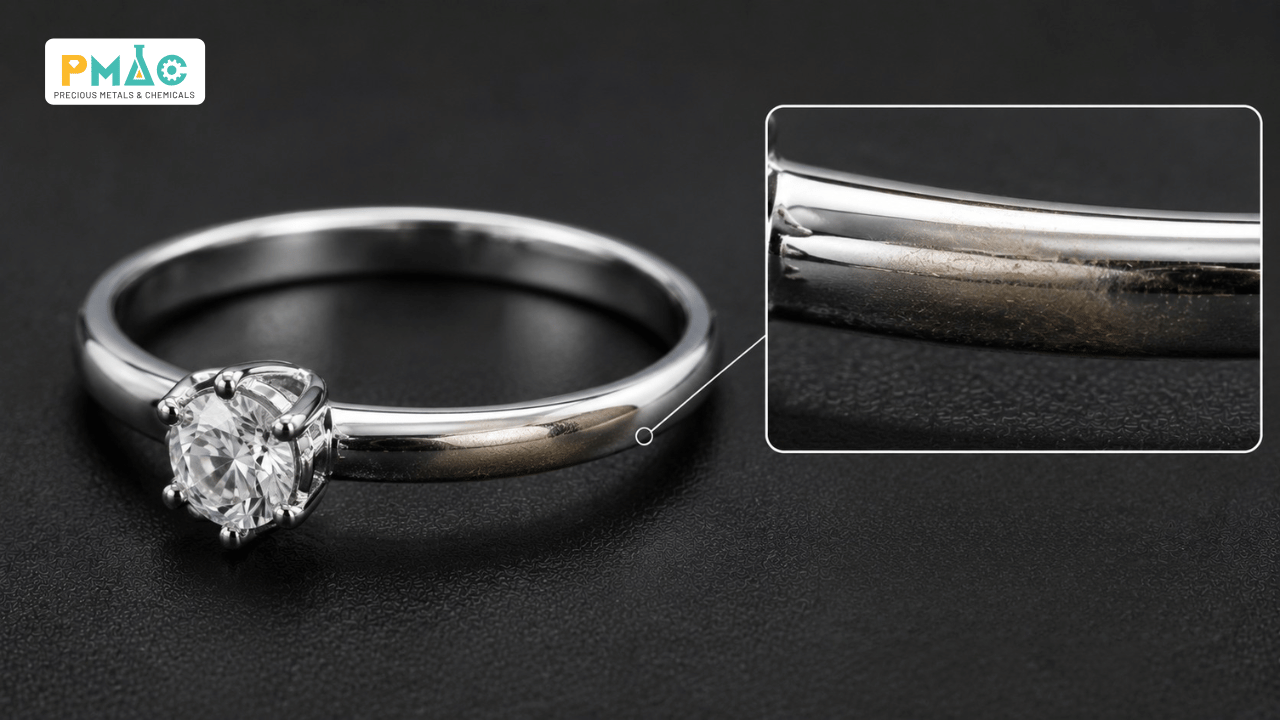
Figure 1. Premature Rhodium Discoloration
2. Why Shouldn’t You Inspect Only the Rhodium Layer?
The reason is simple: Rhodium is only the outermost coating, and it is typically deposited in a very thin layer.
In jewelry applications, Rhodium primarily provides a bright white finish, enhanced wear resistance, and an attractive appearance. However, the coating’s long-term color stability depends heavily on the quality of the underlying layers.
A useful analogy is to think of Rhodium as the final coat of paint on a wall. No matter how high the paint quality is, it will deteriorate quickly if the wall underneath has not been properly prepared.
Therefore, when Rhodium discoloration occurs, the inspection process should begin from the substrate upward, rather than focusing solely on the Rhodium layer.
Read more: Why Does Rhodium Plating Turn Black? Causes and Effective Solutions
3. Recommended Diagnostic Workflow
Rhodium Discoloration
↓
Inspect the Base Metal
↓
Inspect the Palladium Layer
↓
Inspect the Rhodium Layer
↓
Evaluate Operating Parameters
↓
Identify the Root Cause
This systematic approach helps prevent unnecessary chemical changes or process adjustments based on assumptions while significantly reducing troubleshooting time.
II. Layer-by-Layer Inspection Process
Step 1. Inspect the Base Metal
The base metal determines the adhesion performance of the entire coating system. If the substrate is unstable, the upper plating layers cannot perform as intended, even when both the Rhodium electrolyte and plating process fully meet technical specifications.
Different substrate materials exhibit different electrochemical properties, requiring corresponding pretreatment procedures and intermediate plating layers.
Step 2. Inspect the Intermediate Palladium Layer
Once the base metal has been ruled out as the primary cause, the next step is to evaluate the Palladium intermediate layer.
Although it has a significant impact on the stability of the entire coating system, this layer often receives far less attention than the Rhodium topcoat.
The purpose of the Palladium layer is not merely to create an attractive surface before Rhodium plating. More importantly, it acts as a diffusion barrier between the substrate and the outer Rhodium coating.
Read more: What Is Palladium Plating? Applications in the Jewelry Industry
Step 3. Inspect the Rhodium Layer
Only after evaluating both the base metal and the Palladium intermediate layer should attention be focused on the Rhodium coating itself.
As the final decorative layer, Rhodium determines the product’s appearance and bright white color. However, because it is extremely thin, its performance is highly influenced by the quality of the underlying layers.
Inspecting the Rhodium coating involves more than simply observing its color. Manufacturers should also evaluate the coating’s technical characteristics together with the operating conditions of the plating bath.
III. Four Technical Causes of Premature Rhodium Discoloration
In actual production, premature Rhodium discoloration rarely results from a single cause. More often, it is the combined effect of multiple factors within the electroplating process.
Below are the four most common technical causes that manufacturers should investigate first.
1. The Rhodium Layer Is Too Thin
This is one of the most common causes, particularly in production processes where precious metal consumption is minimized to reduce costs.
When the Rhodium coating is thinner than required for its intended application, it becomes more susceptible to:
- Wear caused by daily use.
- Perspiration and environmental chemicals.
- Mechanical abrasion.
- Oxidation of the underlying plating layers.
As a result, the coating quickly loses its characteristic bright white appearance and begins to discolor.
Instead of applying a single coating thickness to every product, manufacturers should establish application-specific thickness specifications based on product requirements.
2. No Intermediate Palladium Layer
This is one of the most common yet frequently overlooked causes.
For many substrate materials—particularly copper and copper-containing alloys—metal atoms can gradually diffuse through the plating system and eventually reach the Rhodium surface. Over time, this diffusion changes the appearance of the coating, even if the Rhodium layer initially met all quality requirements.
An intermediate Palladium layer acts as a diffusion barrier, providing several important benefits:
- Reduces diffusion of substrate metals into the Rhodium coating.
- Improves adhesion between plating layers.
- Enhances corrosion resistance.
- Maintains the bright white appearance of Rhodium for a longer period.
- Extends the service life of the entire plating system.
It is important to note that not every case of Rhodium discoloration is caused by the absence of a Palladium layer. However, for many jewelry and premium accessory applications, incorporating a Palladium intermediate layer has become a widely adopted solution for improving coating stability and long-term color retention.
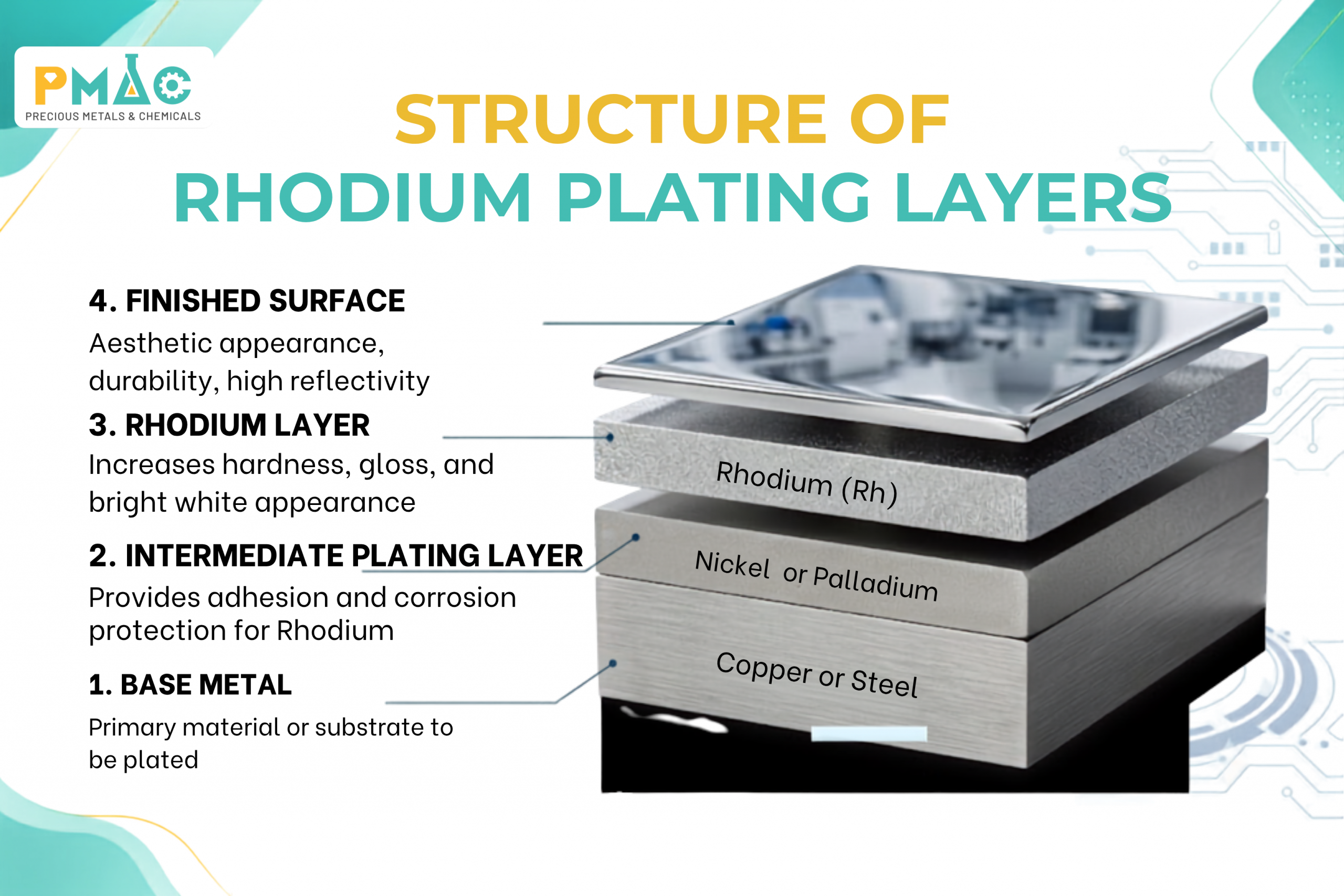
Figure 2. Structure of a Rhodium Plating System
Read more: Palladium vs. Nickel: Which Intermediate Layer Should Be Used Before Rhodium Plating?
3. Improper Current Density
Current density directly affects the crystallization process of the Rhodium deposit.
If the current density is too high, the coating may become burned and develop a grayish appearance. Conversely, if it is too low, the deposition rate decreases and coating coverage may become insufficient.
For this reason, regular calibration of the power supply and routine monitoring of operating parameters are essential to ensure consistent coating quality.
4. Inadequate Pretreatment
Proper surface pretreatment is the foundation of a high-quality plating system.
If contaminants remain on the substrate before plating, the adhesion of the Rhodium coating can be significantly reduced.
In many cases, the plated product appears acceptable immediately after plating, but after only a short period of use or storage, the coating begins to exhibit slight peeling, tarnishing, or uneven discoloration.
This demonstrates that pretreatment should be regarded as a critical part of quality control, rather than focusing exclusively on the Rhodium plating bath itself.
Summary: Causes – Symptoms – Inspection Methods
| Cause | Typical Symptoms | Recommended Inspection Method |
|---|---|---|
| Rhodium coating too thin | Rapid discoloration, reduced brightness | Measure coating thickness using XRF or another suitable method |
| No intermediate Palladium layer | Yellowish tint or discoloration after a period of use | Inspect the coating structure, verify the presence of a Palladium layer, and evaluate its thickness |
| Improper current density | Burned deposits, gray surface, uneven color | Compare current density, voltage, and plating time with the standard operating parameters |
| Inadequate pretreatment | Poor adhesion, localized discoloration, coating peeling | Inspect the degreasing, activation, rinsing processes, and substrate condition before plating |
IV. PALLUNA® 459 – Palladium Intermediate Layer Solution Before Rhodium Plating
In multi-layer plating systems, the Palladium layer is not simply an intermediate coating. It plays a critical role in improving the overall stability and performance of the entire plating system.
One solution widely selected by manufacturers is PALLUNA® 459 from Umicore. This electrolyte has been developed to produce a high-purity Palladium coating of up to 99.9%, meeting the requirements of high-quality Rhodium and gold plating processes.
Rather than simply adding another metal layer, PALLUNA® 459 functions as a diffusion barrier between the substrate and the Rhodium topcoat. This significantly reduces the risk of elements such as copper or nickel migrating to the surface, helping maintain the bright white appearance of Rhodium coatings for a longer period.
Beyond its diffusion barrier function, the Palladium layer produced by PALLUNA® 459 also improves adhesion between plating layers. When the intermediate surface is stable and uniform, the Rhodium layer deposited above can achieve better crystallization, resulting in:
- Higher surface brightness.
- Reduced risk of pinholes.
- Improved corrosion resistance.
For manufacturers of jewelry and premium accessories, another notable advantage of PALLUNA® 459 is its ability to create coatings with:
- High white brightness.
- Low porosity.
- Excellent plating distribution.
These characteristics are particularly valuable for products with complex shapes or intricate details, where uniform coating coverage across the entire surface is required.
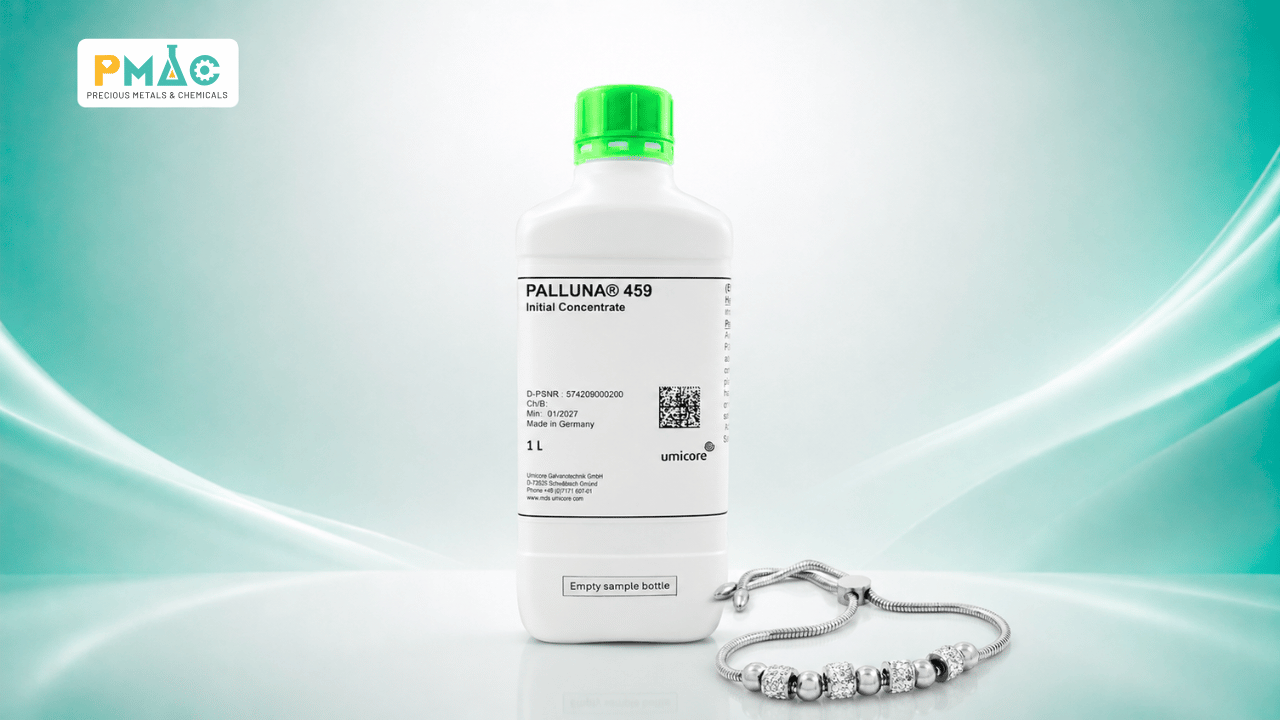
Figure 3. PALLUNA® 459 – Palladium Intermediate Layer Solution Before Rhodium Plating
Read more: What Role Does PALLUNA® 459 Play Before Rhodium Plating?
V. PMAC Supports Rhodium Plating Process Optimization
In actual manufacturing environments, premature Rhodium discoloration rarely originates from a single factor. Replacing the Rhodium electrolyte or adjusting plating parameters without accurately identifying the root cause may increase precious metal consumption, extend troubleshooting time, and still fail to resolve the issue.
With experience in precious metal plating chemicals and surface finishing technologies, PMAC provides more than chemical products—it supports manufacturers throughout the process of defect analysis and plating optimization.
Instead of making conclusions based only on surface appearance, PMAC’s technical team evaluates the entire coating system, including:
- Assessment of the base metal and material composition.
- Evaluation of the pretreatment process.
- Inspection of the intermediate Palladium layer.
- Analysis of the Rhodium coating and plating thickness.
- Review of plating bath operating conditions.
- Recommendation of optimization solutions suitable for each production line.
Through this systematic approach, manufacturers can accurately identify the actual cause of defects, avoid unnecessary chemical adjustments, and optimize the utilization of precious metals.
Conclusion
The issue of Rhodium discoloration should not be evaluated solely by examining the outermost coating layer. In many cases, the actual cause may originate from the base metal, intermediate Palladium layer, pretreatment process, or plating system operating conditions.
Instead of changing the Rhodium electrolyte or adjusting process parameters based on assumptions, manufacturers should follow a structured inspection sequence:
Base metal → Palladium intermediate layer → Rhodium layer → Operating parameters
This approach helps identify the true cause, minimizes unnecessary trial-and-error adjustments, and optimizes production costs.
If your company is experiencing premature Rhodium discoloration, PMAC is ready to support you—from root cause analysis and process evaluation to recommending suitable electroplating solutions.
Identifying the correct cause from the beginning not only improves product quality but also enhances the efficiency of precious metal and chemical usage in production.
PMAC Joint Stock Company
Ho Chi Minh City Office:
4th Floor, HUTECH Building, High-Tech Center, D1 Road, Saigon Hi-Tech Park, Tang Nhon Phu Ward, Ho Chi Minh City, Vietnam
Hanoi Office:
22B O2, Linh Dam Peninsula, Hoang Liet Ward, Hanoi, Vietnam
Hotline: +84 387 235 878
Fanpage: PMAC