

During the gold electroplating process, many manufacturers encounter issues where the plated layer fails to meet quality standards. Common problems include dull finishes, uneven coating thickness, and inconsistent surface appearance. Many assume these issues are caused by the plating solution or operating parameters. In reality, however, the root cause may lie in the gold plating salt itself.
Gold plating salt is a critical yet often overlooked component of the electroplating process. The concentration of gold salt in the plating bath directly affects the quality of the deposited gold layer. Understanding its role not only helps businesses troubleshoot plating defects more effectively but also improves product quality control while optimizing production costs.
I. What Is Gold Plating Salt?
Gold plating salt is a chemical compound containing gold ions (Au⁺ or Au³⁺). It serves as the source of gold during the electroplating process. When electric current passes through the plating bath, gold ions migrate toward the cathode and are deposited onto the workpiece, forming a metallic gold coating.
Simply put, the gold layer on a finished product does not originate from the plating solution itself. Instead, it comes directly from the gold salt dissolved in the plating bath. This makes gold plating salt an essential component of nearly every gold electroplating process, particularly in jewelry manufacturing and other industries requiring high-quality gold coatings.
II. PGC – The Most Commonly Used Gold Plating Salt
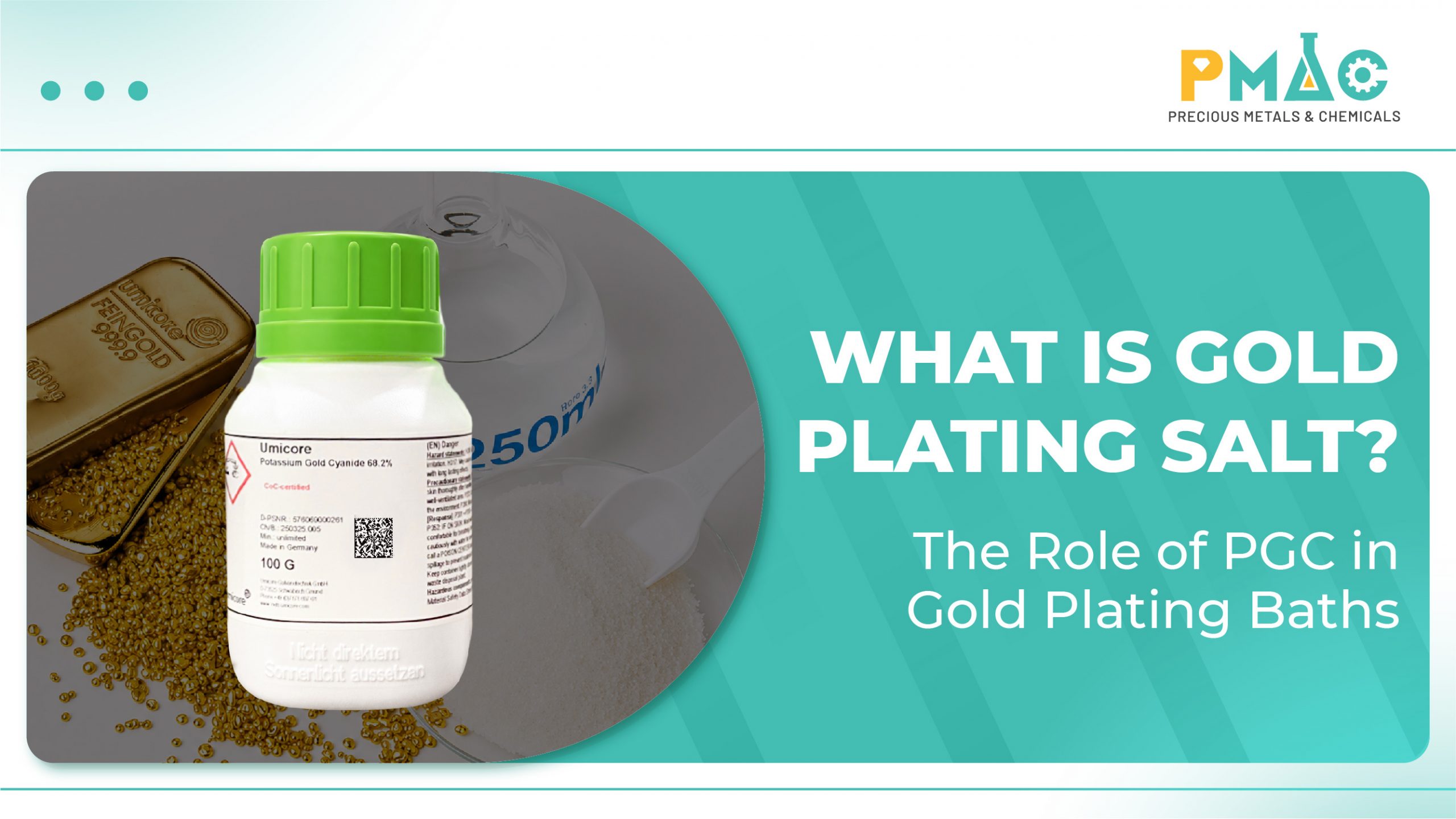
Among various gold compounds used in electroplating, Potassium Gold Cyanide (PGC) is by far the most widely used. Its chemical formula is KAu(CN)₂.
PGC is highly regarded for its excellent solubility, stability in plating solutions, and ability to consistently supply gold ions throughout the electroplating process. With a high gold content of 68.2%, it enables manufacturers to produce durable, attractive gold coatings that meet international quality standards.
Additionally, PGC is compatible with a wide variety of gold plating solutions, ranging from decorative jewelry plating to highly precise technical applications.
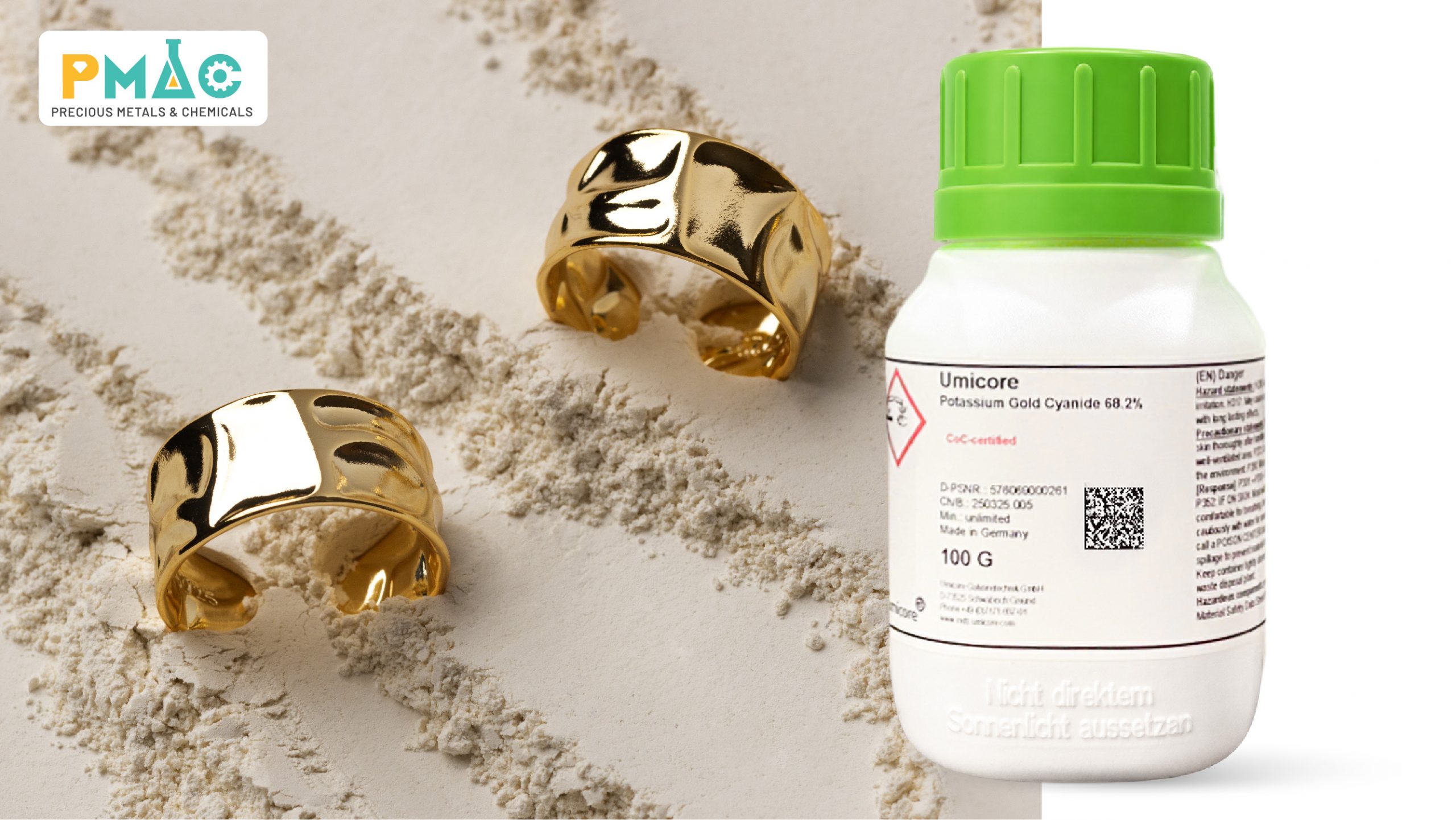
Figure 1. Potassium Gold Cyanide (PGC)
Related article: What Is PGC? Everything You Need to Know About Gold Plating Materials
III. The Role of Gold Plating Salt in a Gold Plating Bath
Gold plating salt is far more than just another chemical additive. It is the component that directly determines whether a gold coating can be successfully formed on the workpiece.
If the plating bath is viewed as an ecosystem, then gold plating salt is the “raw material” that continuously supplies the gold required to build the coating.
In industrial production, maintaining the proper gold salt concentration is one of the most important factors for ensuring consistent plating quality and efficient operation.
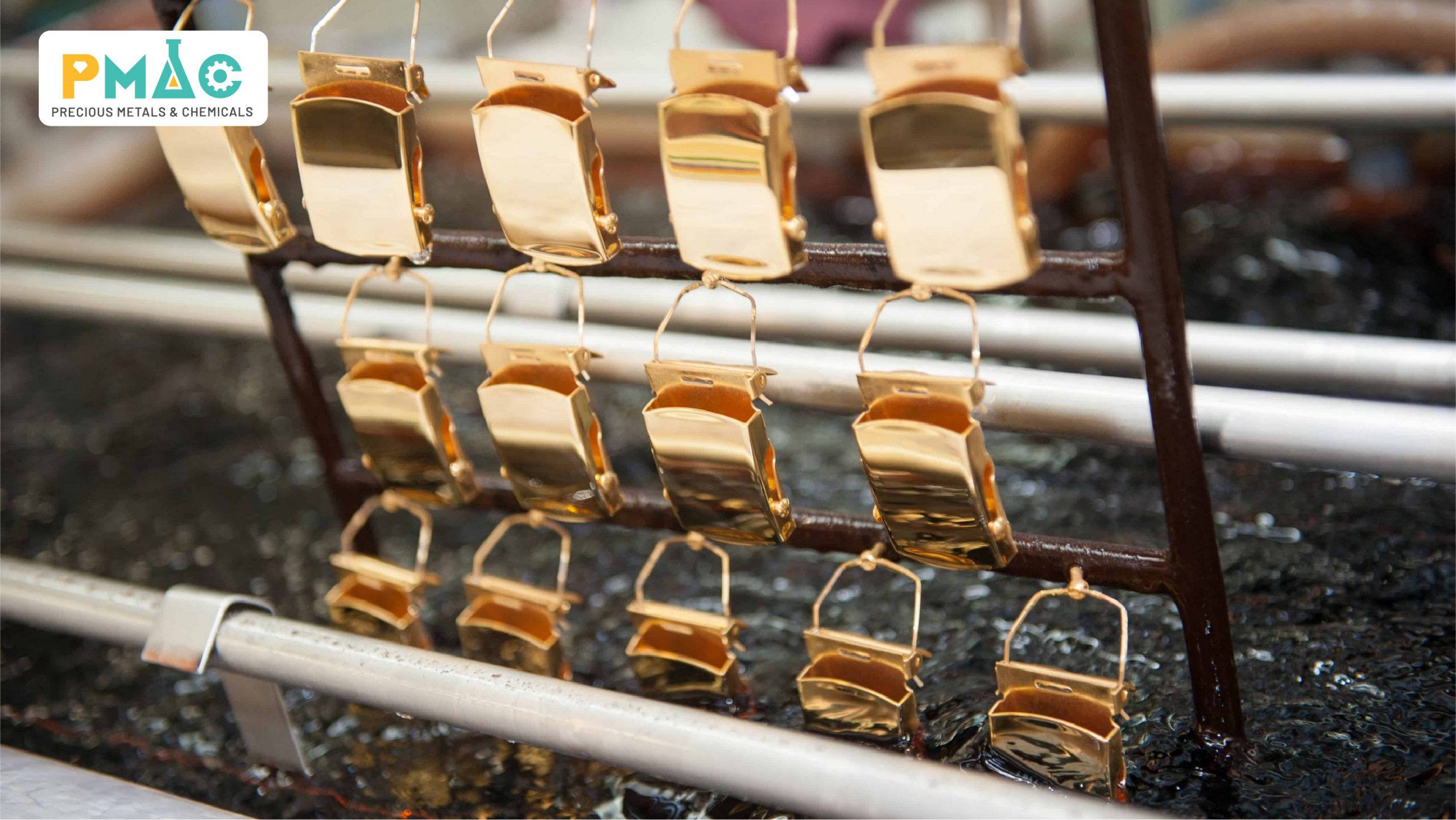
Figure 2. The Role of Gold Plating Salt in a Gold Plating Bath
1. Supplying Gold Ions for Electroplating
The primary function of gold plating salt is to provide gold ions for electrolysis.
When the plating bath is energized, electrical current drives gold ions through the solution toward the workpiece. There, the ions gain electrons and are reduced to metallic gold, forming the plated layer.
This also means that every plated product consumes a certain amount of gold from the solution. Without timely replenishment, the gold ion concentration gradually decreases, directly affecting plating performance.
2. Determining Coating Quality
Beyond supplying gold ions, gold plating salt also has a direct influence on the quality of the finished coating.
When the gold concentration is maintained within the recommended range, the plated layer typically exhibits:
- Uniform color
- High brightness
- Excellent adhesion
Conversely, if the gold concentration fluctuates or the quality of the PGC is inconsistent, manufacturers may experience problems such as:
- Pale gold color
- Insufficient coating thickness
- Reduced plating speed
- Dull surface finish
- Inconsistent quality between production batches
3. Maintaining Plating Bath Performance
Throughout production, gold is continuously consumed as it is deposited onto products.
If only additives or auxiliary chemicals are replenished without replacing the consumed gold plating salt, the performance of the plating bath gradually declines.
For example, a manufacturer may notice that plating speed decreases even though current density, temperature, and other operating parameters remain unchanged. After analysis, the cause may simply be that the gold concentration has fallen below the recommended level.
In such cases, adding the correct amount of PGC restores the gold ion concentration and returns the plating bath to stable operation.
This demonstrates why routine monitoring and replenishment of gold plating salt are essential parts of plating bath management.
4. Helping Control Costs and Reduce Gold Loss
Gold is a high-value material. Efficient use of gold plating salt therefore impacts not only coating quality but also production costs.
Adding too little gold salt can result in poor coating quality and increased product defects.
Adding more than necessary, however, increases the amount of gold tied up in the plating bath, reducing material utilization efficiency.
For this reason, many manufacturers regularly analyze the gold concentration in their plating baths. This allows them to determine the exact amount of PGC required, minimize material waste, and optimize operating costs.
5. Improving Overall Process Stability
When high-quality gold plating salt is supplied consistently and replenished at the appropriate intervals, plating bath parameters remain more stable over time.
As a result, manufacturers can:
- Maintain consistent coating quality across production batches.
- Reduce rework and rejected products.
- Improve overall quality control.
In the jewelry industry, where appearance and color consistency are critical, proper management of gold plating salt is one of the key factors contributing to a stable plating process.
Related article: Gold Plating Chemicals: Their Role in Jewelry Electroplating
IV. What Happens When a Plating Bath Runs Low on Gold Salt?
During production, gold ions are continuously consumed as they are deposited onto product surfaces.
Without timely monitoring and replenishment of gold plating salt, coating quality gradually deteriorates and the overall plating process becomes less efficient.
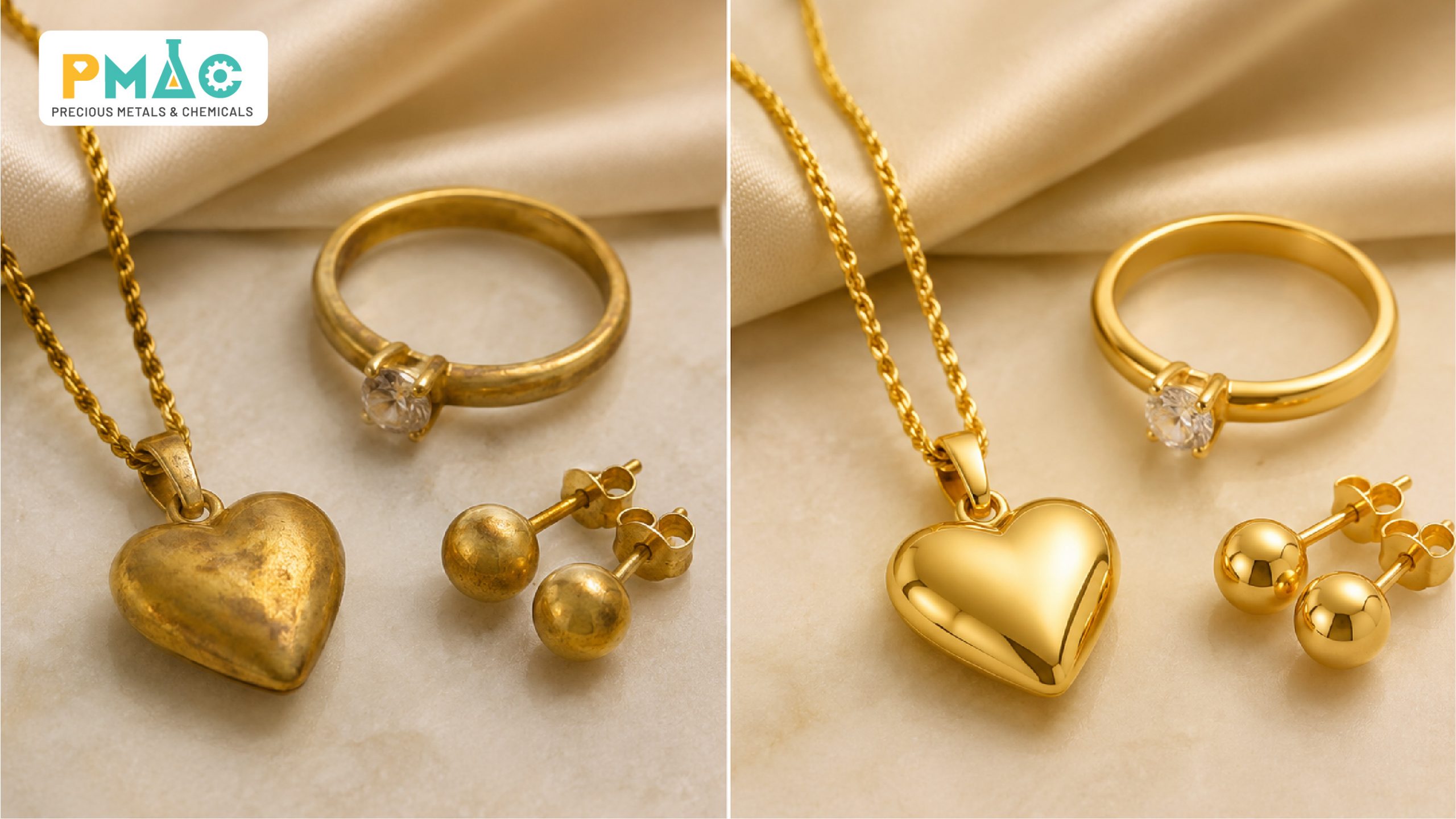
Figure 3. Products Before and After Replenishing Gold Plating Salt
1. Gold Color Does Not Meet Specifications
One of the first signs is a lighter or inconsistent gold color across products.
As the concentration of gold ions decreases, the deposition rate declines. Even if temperature and current density remain unchanged, the appearance of the plated coating may vary significantly.
2. Thin Coatings and Slower Plating
When the gold concentration drops below the recommended level, less gold is deposited during electroplating.
Manufacturers may notice that plating cycles become longer while coating thickness still fails to meet specifications.
If left unresolved, this can reduce wear resistance and shorten product lifespan.
3. Inconsistent Quality Between Production Batches
Fluctuating gold concentrations often lead to inconsistent production results.
Some batches may exhibit the desired color and brightness, while others appear dull or uneven.
This makes quality control more difficult and increases the need for rework.
4. Increased Production Costs
When plating quality becomes inconsistent, manufacturers must spend additional time inspecting products, adjusting process parameters, or replating defective parts.
These corrective actions consume additional labor, electricity, chemicals, and gold.
In many cases, the cost of correcting plating defects exceeds the cost of routine gold concentration monitoring and scheduled PGC replenishment.
Preventive Control Is Better Than Corrective Action
Rather than waiting for plating quality to decline, many manufacturers perform routine gold concentration analysis.
Regular monitoring helps determine the optimal time to replenish PGC, maintain plating bath performance, and ensure consistent product quality throughout production.
Related article: Umicore Gold Plating Chemicals for Premium Plating Quality
V. PMAC – Your Trusted Supplier of Gold Plating Salt
For jewelry manufacturers, choosing a gold plating salt means more than simply selecting a raw material—it also means choosing a technical partner capable of supporting long-term production.
In addition to product quality, businesses should consider technical consultation, operational support, and after-sales service. These factors play an important role in maintaining plating bath stability and minimizing production risks.
With years of experience serving the jewelry industry, PMAC supplies PGC and other gold plating materials while helping customers select suitable products, monitor gold concentration, and resolve technical issues throughout production.
Factors to Consider When Choosing a Supplier
| Criteria | Why It Matters | PMAC |
|---|---|---|
| PGC Quality | Directly affects coating quality and electroplating performance. | Supplies high-purity PGC with consistent quality across production batches. |
| Technical Support | Helps resolve production issues quickly. | Experienced PMAC engineers provide technical analysis and customized solutions. |
| Application Guidance | Reduces trial-and-error and improves plating efficiency. | Offers guidance on product usage, gold concentration control, and product selection. |
| After-Sales Service | Ensures continuous technical support whenever needed. | Provides comprehensive support before, during, and after product delivery. |
Related article: Comparing Electroplating Chemical Suppliers in Vietnam
Conclusion
Gold plating salt is not merely a chemical additive—it is the primary source of gold ions that makes gold electroplating possible.
Maintaining the correct gold salt concentration helps ensure consistent coating color, thickness, and durability while improving production efficiency and minimizing precious metal loss.
Beyond selecting high-quality materials, manufacturers also benefit from working with suppliers who provide technical expertise for process optimization and troubleshooting. Combining premium raw materials with professional support enables more reliable and efficient long-term plating operations.
If your business is looking for information about gold plating salts, needs guidance in selecting Potassium Gold Cyanide (PGC), or wants to optimize its gold plating process, PMAC’s technical team is ready to provide tailored solutions based on your production requirements.
CONTACT PMAC TODAY FOR PROFESSIONAL GOLD PLATING SOLUTIONS
PMAC Joint Stock Company
Ho Chi Minh City Office
4th Floor, HUTECH Building, D1 Road, Saigon Hi-Tech Park, Tang Nhon Phu Ward, Ho Chi Minh City, Vietnam
Hanoi Office
22B O2, Linh Dam Peninsula, Hoang Liet Ward, Hanoi, Vietnam
Hotline: +84 387 235 878
Facebook: PMAC