

In the electrical and electronics industry, silver plating has long been recognized as one of the most important surface finishing solutions due to its outstanding electrical conductivity. However, as electrical systems are increasingly required to operate under more demanding conditions—including high current loads, frequent switching cycles, elevated temperatures, and continuous mechanical friction—pure silver plating is no longer the only solution. This is precisely why silver-graphite plating was developed.
Despite its growing adoption, many questions remain about silver-graphite coatings, such as:
- What is silver-graphite plating?
- What role does graphite play in a silver coating?
- How does silver-graphite differ from pure silver plating?
- Which coating is better suited for electrical connectors, relays, or EV charging connectors?
In reality, no single plating solution is universally superior. Each coating is engineered to address a specific set of engineering requirements. The appropriate choice depends on operating conditions, expected service life, wear resistance, and the electrical performance required by the application.
In this article, PMAC provides a detailed comparison between pure silver plating and silver-graphite plating, helping manufacturers better understand the characteristics of each coating and select the most suitable electroplating solution.
I. What Is Pure Silver Plating?
1. Definition
Pure silver plating is a metallic coating composed primarily of high-purity silver deposited onto the surface of a substrate through an electroplating process. It is one of the oldest and most widely used precious metal coatings in the electrical, electronics, telecommunications, and manufacturing industries.
The primary objectives of pure silver plating are to:
- Improve electrical conductivity
- Reduce contact resistance
- Protect the substrate against oxidation and corrosion under appropriate operating conditions
2. Characteristics of Pure Silver Plating
Silver possesses the highest electrical conductivity of any metal, allowing electrical current to pass through contact surfaces with minimal energy loss.
In addition, silver offers several outstanding properties:
- Excellent thermal conductivity
- Good solderability
- Low contact resistance
- High optical reflectivity
- Ability to produce a smooth and uniform plated surface
These characteristics make pure silver plating the preferred choice for applications requiring stable and efficient electrical current transmission.
3. Advantages of Pure Silver Plating
- Exceptional Electrical Conductivity: The most significant advantage of pure silver plating is its outstanding electrical conductivity. Low contact resistance minimizes heat generation at contact interfaces while improving current transfer efficiency.
- Excellent Thermal Conductivity: Silver dissipates heat efficiently during operation, making it particularly suitable for high-power electrical and electronic components where thermal management is critical.
- Uniform Coating Quality: Pure silver electroplating has been refined over several decades and is considered a highly stable process. When process parameters are properly controlled, it consistently produces coatings with uniform thickness, bright appearance and stable surface quality
- Cost-Effective Initial Investment: Compared with certain composite coatings and specialty plating materials, pure silver plating generally involves a simpler manufacturing process, making it a practical and economical solution for many standard electrical applications.
II. What Is Silver-Graphite Plating?
1. Definition
Silver-graphite plating is a composite electroplated coating in which a metallic silver matrix is combined with finely dispersed graphite particles during the electrodeposition process.
Unlike conventional pure silver plating—which consists solely of metallic silver—silver-graphite plating is specifically engineered to improve the coating’s mechanical and tribological properties while maintaining excellent electrical conductivity suitable for a wide range of industrial applications.
In other words, graphite does not replace silver. Instead, it serves as an additional functional component that enhances the coating’s overall performance under demanding operating conditions.
2. Why Is Graphite Added to Silver Plating?
Electrical contacts operating under high current loads or frequent switching cycles are continuously exposed to:
- Mechanical friction
- Surface wear
- Heat generation at the contact interface
When only pure silver plating is used, these conditions can gradually reduce coating life over time.
Graphite is incorporated specifically to address these challenges.
Because of its layered carbon crystal structure, graphite functions as a solid lubricant. The dispersed graphite particles reduce friction between mating contact surfaces, thereby:
- Minimizing wear
- Extending coating service life
- Reducing the risk of contact welding caused by electrical arcing
This combination of electrical conductivity and enhanced wear performance makes silver-graphite plating particularly suitable for high-duty electrical contact applications.
3. Advantages of Silver-Graphite Plating
Compared with conventional pure silver plating, silver-graphite coatings provide several advantages in demanding operating environments.
- Improved Wear Resistance: The embedded graphite particles reduce surface wear during repeated mechanical contact, helping maintain coating integrity over extended periods.
- Lower Coefficient of Friction: Graphite acts as a built-in solid lubricant, lowering friction between contact surfaces and reducing mechanical degradation.
- Better Resistance to Contact Welding: Electrical arcing can cause contact surfaces to fuse together during switching operations. Silver-graphite plating helps reduce the likelihood of contact welding, improving the long-term reliability of switching devices.
- Longer Switching Life: Because wear is reduced, silver-graphite coatings are capable of withstanding significantly higher switching cycles than conventional pure silver coatings under comparable operating conditions.
- Ideal for Heavy-Duty Electrical Applications: These characteristics make silver-graphite plating especially suitable for High-current electrical connectors, EV charging connectors, Power relays, Heavy-duty switches, Electrical contacts exposed to continuous friction and repeated operation
As electrical systems continue to evolve toward higher power densities and longer service lives, silver-graphite plating has become an increasingly important surface engineering solution for modern electrical and electronic applications.
III. Comparing Pure Silver and Silver-Graphite Plating
After understanding the characteristics of each coating, the next question is: what are the practical differences between pure silver plating and silver-graphite plating?
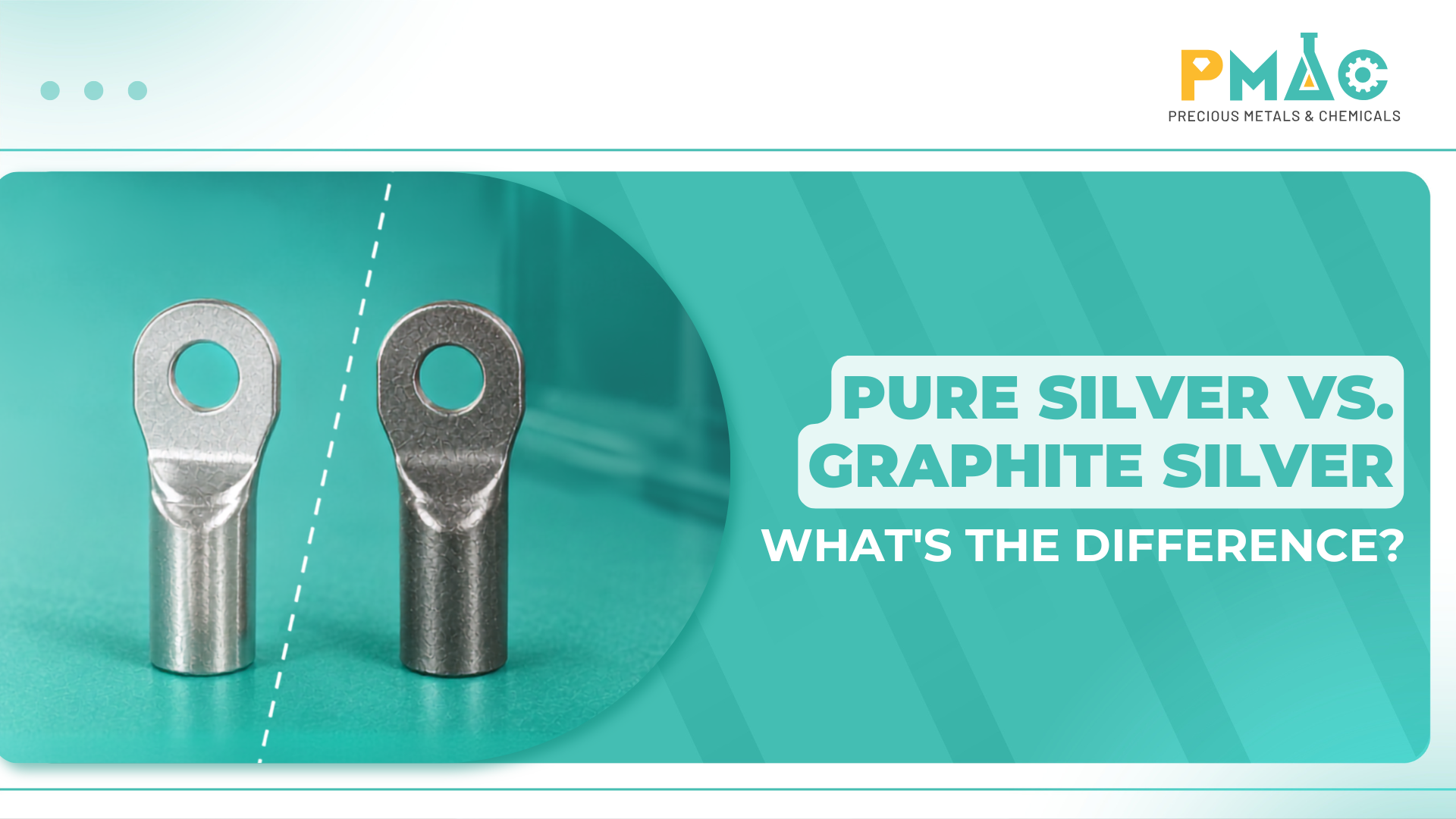
Rather than competing with one another, these two coating systems are designed to meet different engineering requirements. Pure silver plating is intended to maximize electrical conductivity, whereas silver-graphite plating is developed to balance electrical performance with improved mechanical durability in demanding operating environments.
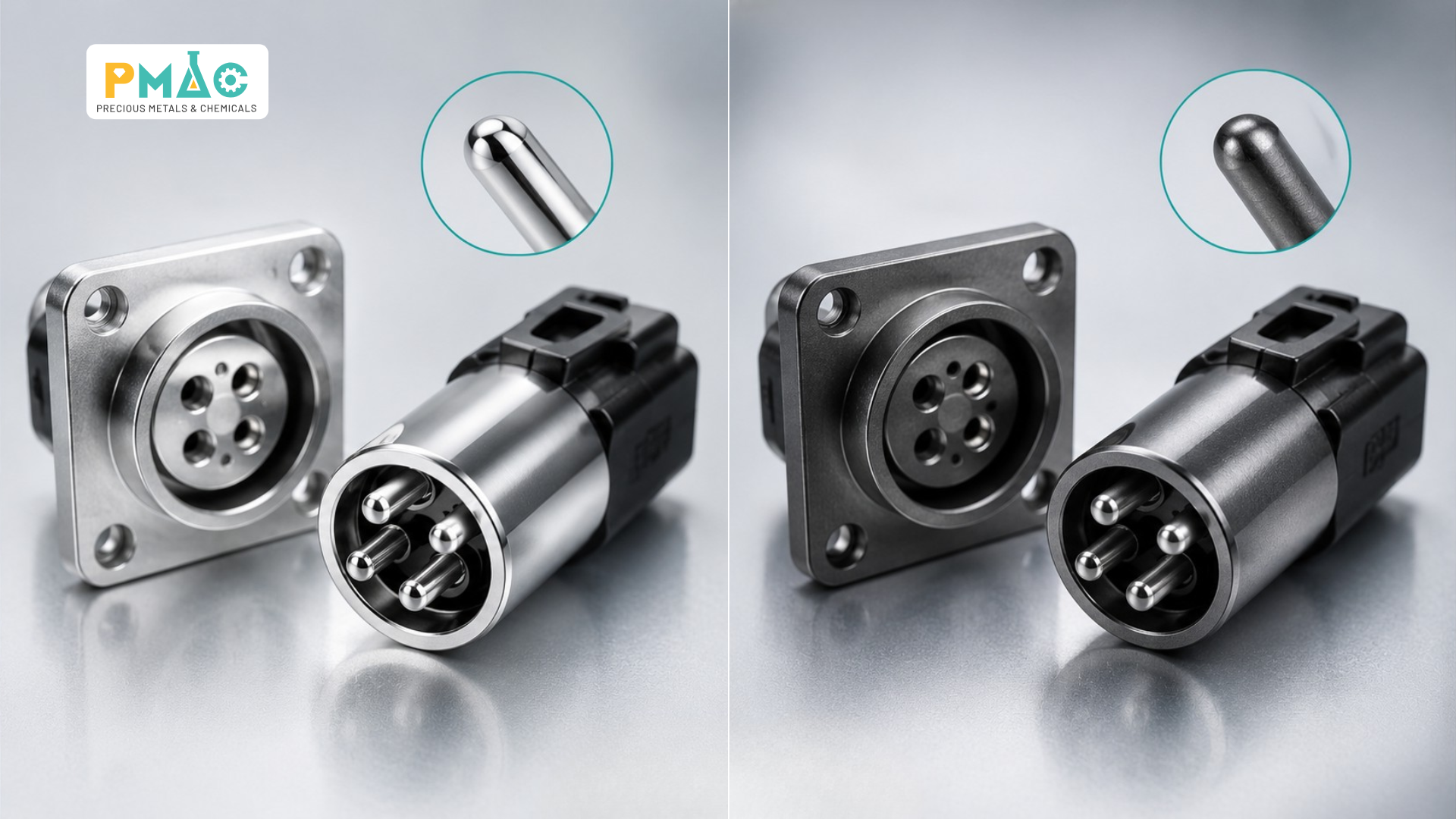
Figure 1. Pure silver plating vs. silver-graphite plating
1. General comparison
| Property | Pure Silver Plating | Silver-Graphite Plating |
|---|---|---|
| Composition | High-purity metallic silver | Silver matrix containing dispersed graphite particles |
| Electrical conductivity | Excellent | Very high, although slightly lower than pure silver depending on graphite content |
| Thermal conductivity | Excellent | High |
| Coefficient of friction | Relatively high | Lower due to the lubricating effect of graphite |
| Wear resistance | Suitable for normal operating conditions | Better suited for high-friction and high-load applications |
| Resistance to contact welding | Moderate | Improved |
| Switching cycle performance | Suitable for moderate switching frequencies | Designed for frequent switching operations |
| Long-term durability | Depends largely on operating conditions | Better performance under demanding service conditions |
| Electroplating process | Mature and relatively straightforward | More complex because graphite particle dispersion must be carefully controlled |
| Typical applications | PCBs, busbars, electrical connectors, electronic components | EV charging connectors, relays, switches, wear-resistant electrical contacts |
The most important distinction lies in the design objective rather than overall performance.
Pure silver plating is optimized for achieving the highest possible electrical conductivity and the lowest contact resistance. Silver-graphite plating, on the other hand, sacrifices a small amount of conductivity to significantly improve wear resistance, friction behavior, and contact durability over long operating cycles.
The optimal choice therefore depends on the application’s electrical and mechanical requirements rather than on the coating alone.
2. Recommended coating based on application requirements
| Operating Requirement | Recommended Coating |
|---|---|
| Maximum electrical conductivity | Pure silver plating |
| Lowest contact resistance | Pure silver plating |
| Continuous mechanical friction | Silver-graphite plating |
| High switching frequency | Silver-graphite plating |
| High-power relays | Silver-graphite plating |
| EV charging connectors | Silver-graphite plating |
| Busbars | Pure silver plating |
| Printed circuit boards (PCB) | Pure silver plating |
| Heavy-duty electrical contacts | Silver-graphite plating |
Although this table provides a useful starting point, coating selection should always consider the complete operating environment, including current load, contact pressure, switching frequency, service life, and manufacturing requirements.
IV. Applications of Pure Silver Plating
Thanks to its outstanding electrical and thermal conductivity, pure silver plating remains one of the most widely used precious metal coatings across the electrical and electronics industries.
It is particularly suitable for applications where electrical performance is more critical than resistance to mechanical wear.
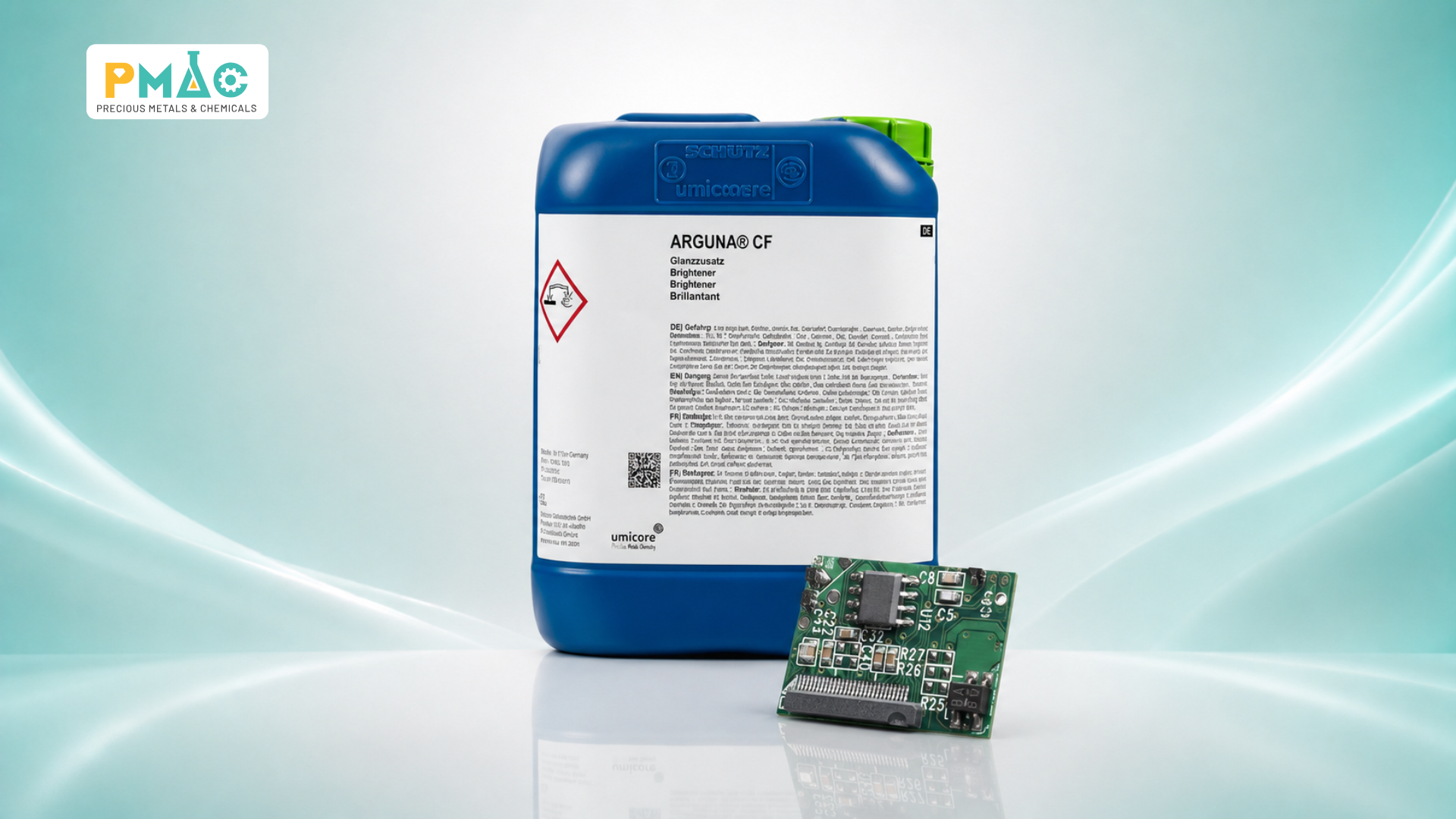
Figure 2. Typical applications of pure silver plating
1. Standard Electrical Contacts
Many electrical devices operate under relatively moderate current loads and switching frequencies.
In these applications, pure silver plating provides low contact resistance while offering an economical and reliable surface finish.
Typical examples include:
- Low-voltage switches
- Standard relays
- Industrial connectors
- Electrical terminals
2. Electrical Connectors
Electrical connectors require stable current or signal transmission throughout their service life.
The excellent conductivity of silver minimizes electrical losses and helps maintain reliable connections over prolonged operation.
Pure silver plating is therefore widely used in connectors where wear is limited and maximum conductivity is required.
3. Printed Circuit Boards and Electronic Components
Silver plating is commonly applied to conductive surfaces in printed circuit boards, sensors, and various electronic components that require accurate signal transmission.
Its high conductivity and mature electroplating process allow manufacturers to achieve consistent coating quality while supporting reliable electrical performance.
4. Busbars
Busbars used in power distribution systems require extremely low electrical resistance in order to minimize energy losses.
Silver plating improves current-carrying capability while increasing the overall efficiency of the electrical system.
For this reason, pure silver plating continues to be one of the preferred surface finishes for high-performance busbars.
Related article: Applications of Electroplating Chemicals in Electronics and Microelectronics
Related article: ARGUNA® CF – High-Purity Silver Electrolyte
V. Applications of Silver-Graphite Plating
While pure silver plating is optimized for electrical conductivity, silver-graphite plating is specifically developed for applications involving repeated mechanical contact, high current density, and demanding operating conditions.
As electrical systems become more compact and operate at higher power levels, the demand for durable composite coatings continues to increase.
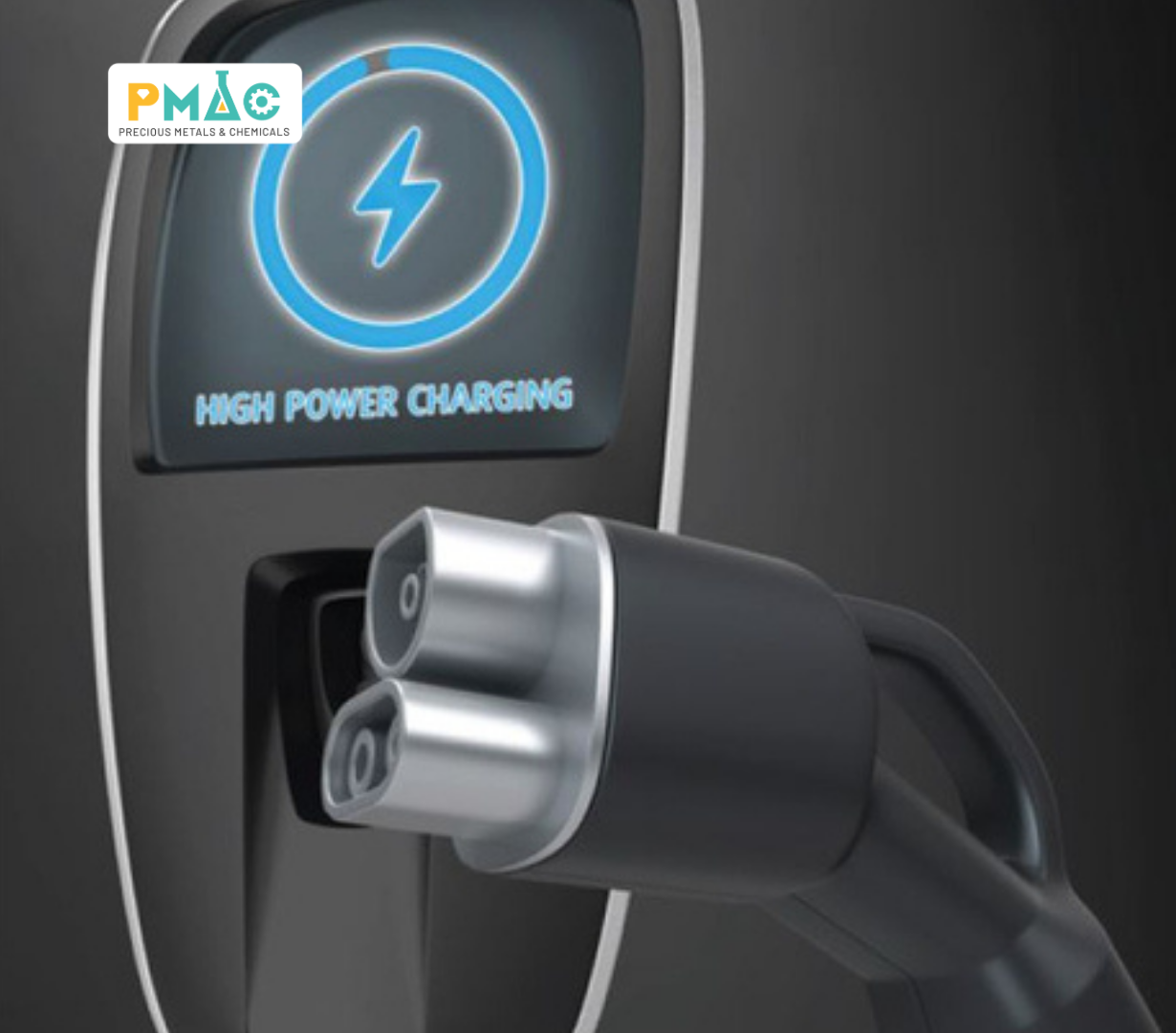
Figure 3. Typical applications of silver-graphite plating
1. EV Charging Connectors
Charging connectors for electric vehicles are exposed to:
- High electrical currents
- Elevated operating temperatures
- Tens of thousands of mating and unmating cycles throughout their service life
Under these conditions, wear resistance and protection against contact welding become critical.
Silver-graphite plating helps maintain stable electrical contact while extending connector service life through reduced friction and improved surface durability.
2. Industrial Relays
Industrial relays perform repeated switching throughout their operating life.
If the contact surface wears rapidly or becomes welded by electrical arcing, relay reliability can deteriorate significantly.
By incorporating graphite into the silver matrix, the coating provides improved resistance to wear and maintains more consistent performance over a large number of switching cycles.
3. Power Switches
Power switches experience repeated mechanical movement every time the contacts open and close.
Silver-graphite plating reduces friction between contact surfaces, helping preserve contact quality and extend component life even under demanding operating conditions.
4. High-Wear Electrical Contacts
Many industrial electrical components are required to deliver both excellent electrical conductivity and superior mechanical durability.
Applications involving continuous sliding, repeated engagement, or high contact pressure particularly benefit from silver-graphite plating, which combines the conductivity of silver with the self-lubricating properties of graphite.
A practical example is ARGUNA® C-100 from Umicore, a precious metal electrolyte developed for depositing silver-graphite coatings on EV charging connectors and other heavy-duty electrical contacts.
The product illustrates the industry’s growing adoption of composite electroplated coatings to meet increasingly stringent requirements for durability, reliability, and long-term electrical performance.
Related article: What Is ARGUNA® C-100? A Silver-Graphite Electrolyte for High-Duty Electrical Contacts
VI. Considerations When Selecting a Silver Plating Solution
Choosing between pure silver plating and silver-graphite plating should be based on engineering requirements rather than on a single performance characteristic. The most suitable coating is the one that delivers the required electrical and mechanical performance throughout the product’s service life.
1. Key Factors to Evaluate
Before selecting a plating solution, manufacturers should assess several aspects of the application, including:
- Operating environment (temperature, humidity, electrical current, and mechanical load)
- Required contact resistance and electrical conductivity
- Expected level of friction and wear
- Target service life
- Initial investment and long-term operating costs
- Compatibility with the existing manufacturing process
Evaluating these factors early in the design stage helps reduce technical risks and supports a more reliable coating selection.
2. A Recommended Selection Process
The following workflow can serve as a practical guideline when evaluating silver plating solutions.
Define technical requirements
↓
Assess operating conditions
↓
Evaluate friction level and expected switching cycles
↓
Determine electrical conductivity and contact resistance requirements
↓
Compare service life and total operating cost
↓
Select the most appropriate plating solution
↓
Validate the coating through application testing
Rather than selecting a coating based solely on industry trends or initial cost, manufacturers should verify its performance under actual operating conditions. Application-specific testing provides a more reliable basis for decision-making than theoretical comparisons alone.
Related article: How to Select the Right Electroplating Chemicals for Your Production Line
VII. How PMAC Supports Silver Plating Selection
In electroplating and surface engineering, selecting a precious metal electrolyte should never be separated from the product’s technical requirements and manufacturing process.
Drawing on extensive experience supporting manufacturers in the electronics, electrical components, and jewelry industries, PMAC works with customers from the initial evaluation stage through process optimization.
PMAC’s technical support includes:
- Recommending suitable precious metal electrolytes for specific applications
- Assessing operating conditions and engineering requirements
- Advising on surface engineering solutions to improve coating performance and service life
- Supporting process trials, validation, and continuous improvement
- Sharing technical knowledge on silver plating technologies and emerging material developments
For applications requiring silver-graphite coatings, PMAC also offers solutions from leading global manufacturers.
One example is ARGUNA® C-100 from Umicore, a silver-graphite electrolyte specifically developed for EV charging connectors and high-duty electrical contacts. It reflects the industry’s growing adoption of composite coating technologies to meet increasingly demanding requirements for durability, reliability, and long-term performance.
PMAC’s objective is not to recommend a universal solution, but to help each customer identify the plating process that best matches the intended application, operating environment, and production requirements.
Related article: From Sample Evaluation to Surface Engineering Solutions: PMAC’s Technical Consulting Process
Conclusion
Pure silver plating and silver-graphite plating are both essential surface finishing technologies for electrical and electronic applications, but each is designed to address different engineering challenges.
Pure silver plating remains the preferred choice where maximum electrical and thermal conductivity is required. Silver-graphite plating, by contrast, provides improved wear resistance, lower friction, and greater durability for applications involving repeated switching, mechanical movement, or high current loads.
Neither coating is inherently superior. The appropriate solution depends on the application’s operating environment, electrical performance requirements, expected service life, wear conditions, and overall cost of ownership.
By evaluating these technical factors during the design stage and validating performance under real operating conditions, manufacturers can improve product reliability, extend component life, and optimize long-term production efficiency.
If your company is evaluating precious metal electroplating solutions or selecting between pure silver and silver-graphite plating for a specific application, PMAC’s technical team is ready to provide engineering support tailored to your production requirements.
Contact PMAC for Technical Consultation
PMAC Joint Stock Company
Ho Chi Minh City Office
4th Floor, HUTECH Building, D1 Street, Saigon Hi-Tech Park, Tang Nhon Phu Ward, Ho Chi Minh City, Vietnam
Hanoi Office
22B O2, Linh Dam Peninsula, Hoang Liet Ward, Hanoi, Vietnam
Hotline: (+84) 387 235 878
Facebook: PMAC