

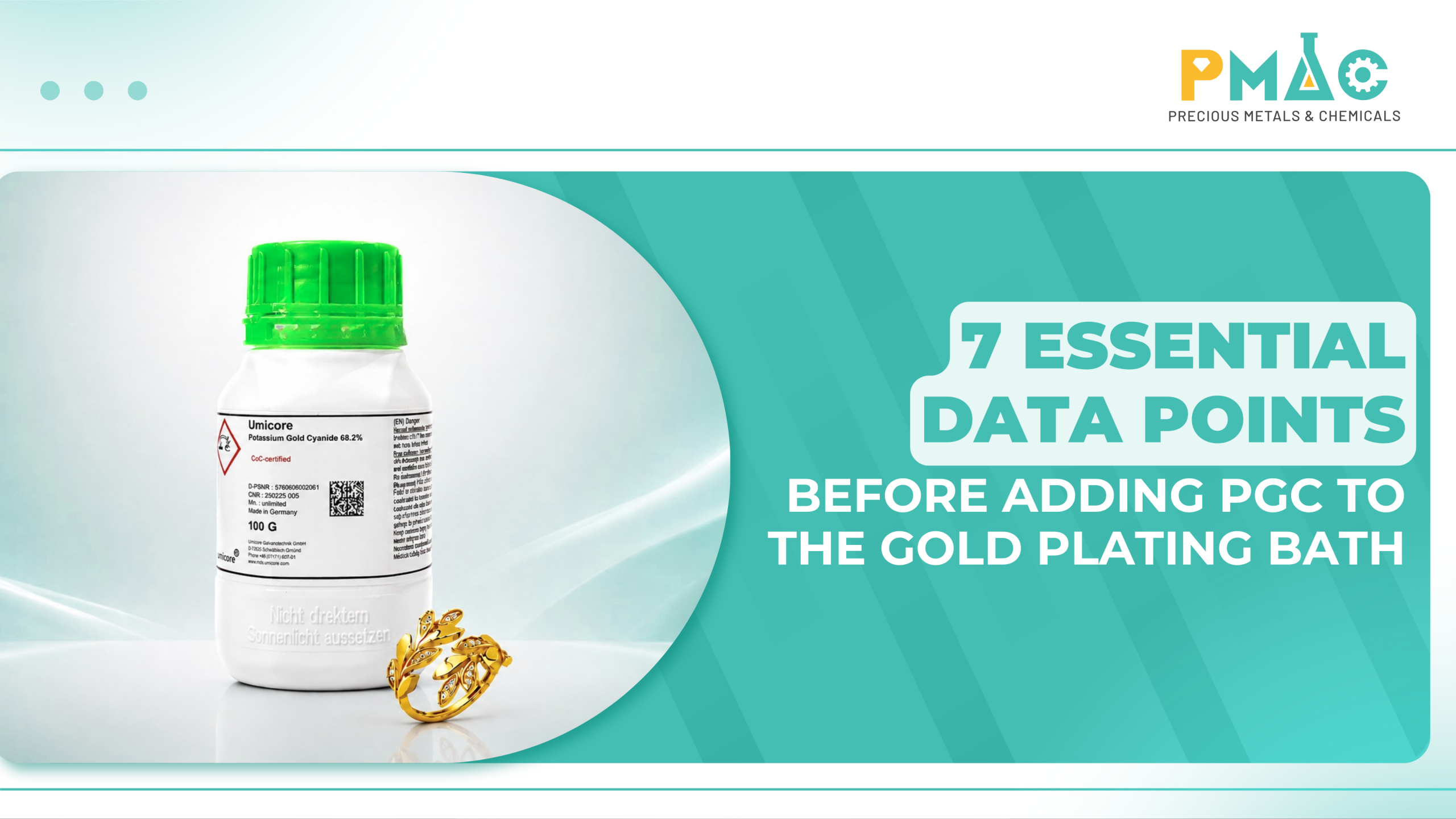
During gold plating operations, many manufacturers choose to add PGC as soon as they notice changes in plating color, reduced coating thickness, or simply assume that the plating bath is “running out of gold.” This practice is particularly common in high-volume jewelry manufacturing.
However, adjusting a plating bath based solely on visual observation or operator experience can lead to inaccurate decisions.
In reality, changes in plating quality are not always caused by insufficient gold concentration. This article explains the role of PGC and outlines the seven critical data points that should be evaluated before adding Potassium Gold Cyanide (PGC), helping manufacturers maintain consistent gold plating quality while optimizing production costs.
I. What Is PGC?
1. Definition
PGC (Potassium Gold Cyanide) is a gold salt widely used in electroplating as the primary source of gold ions in plating electrolytes. It is an essential raw material in many gold plating systems, particularly for high-end jewelry manufacturing, electronic components, electrical connectors, printed circuit boards (PCBs), and semiconductor applications.
2. The Role of PGC in a Gold Plating Bath
Contrary to the common assumption that PGC is simply used to “add more gold,” its actual function is to maintain a stable concentration of gold ions within the plating solution.
During electroplating, gold ions are reduced and deposited onto the workpiece surface, forming a coating with the required color, thickness, and functional properties.
If the gold concentration falls below the operating range specified for a particular plating system, plating performance may deteriorate. However, this does not necessarily mean that PGC should be added immediately whenever plating abnormalities appear.
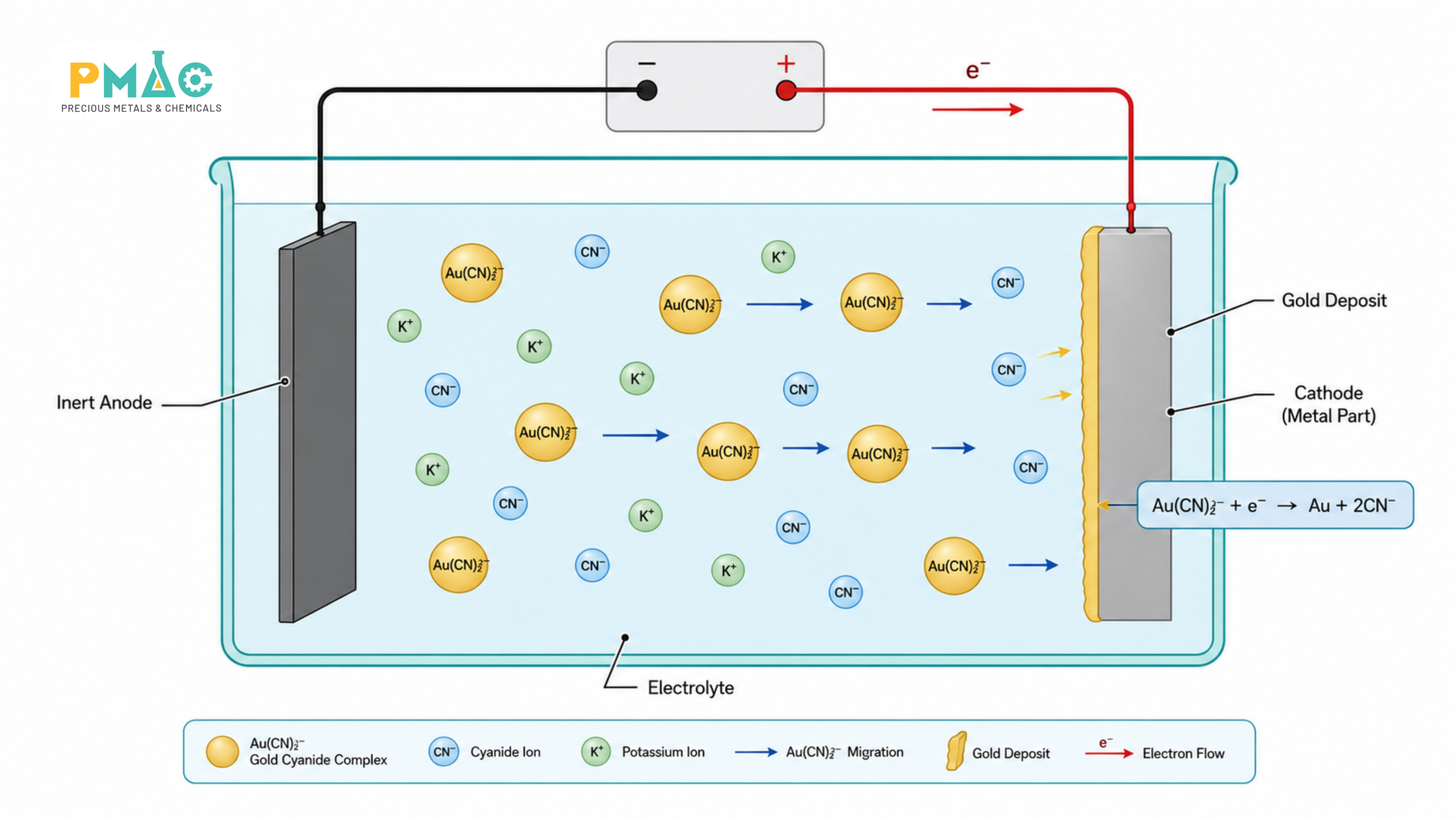
Figure 1. The Role of PGC in a Gold Plating Bath
Related article: What Is Gold Plating Salt? The Role of PGC in Gold Plating Baths
II. Seven Essential Data Points Before Adding PGC
Once the role of Potassium Gold Cyanide (PGC) is understood, the next question becomes:
When should PGC actually be added to a gold plating bath?
The answer lies not in operator experience or visual judgment, but in reliable process data.
Before deciding to replenish gold, manufacturers should collect and evaluate multiple pieces of information regarding bath chemistry, operating conditions, and coating quality. Only by considering the complete picture can PGC be added effectively without disrupting the balance of the plating system.
Seven Data Points to Review Before Adding PGC
| Data to Review | Purpose |
|---|---|
| Current gold concentration | Determine whether the bath is genuinely depleted of gold |
| Production volume and actual gold consumption | Evaluate gold consumption based on production output |
| Chemical replenishment records | Review historical additions and consumption trends |
| Plating bath operating conditions | Verify process parameters affecting plating performance |
| Plating quality | Assess coating abnormalities |
| Plating solution condition | Detect contamination or solution degradation |
| Complete plating bath analysis | Evaluate the entire bath before making adjustments |
1. Current Gold Concentration
This is the single most important piece of information before adding PGC.
Manufacturers should perform routine chemical analysis to determine the actual gold concentration remaining in the plating bath and compare the results with the operating range recommended by the chemical supplier.
The decision should always be based on analytical measurements—not assumptions derived from coating color or the number of production cycles.
2. Production Volume and Actual Gold Consumption
Besides gold concentration, manufacturers should monitor:
- Total production output
- Plated surface area
- Required coating thickness
- Precious metal consumption during each production period
These data reflect the actual demand for gold in the plating bath and provide a much more reliable basis for determining when PGC replenishment is necessary.
Estimating consumption based only on production batches or operating hours often leads to inaccurate calculations. Recording production volume and precious metal usage for every production cycle enables more effective bath management.
3. Chemical Replenishment History
Production records should include:
- Date of replenishment
- Chemicals added
- Quantity added
- Operator responsible
- Purpose of the adjustment
These records allow manufacturers to review operating history and evaluate the effectiveness of previous replenishment activities.
Maintaining complete documentation also makes troubleshooting significantly easier and helps prevent repeated chemical additions without understanding whether they actually solved the problem.
4. Plating Bath Operating Conditions
Process parameters such as:
- Temperature
- pH
- Current density
- Plating time
- Agitation or solution circulation
all directly influence gold deposition rate and coating quality.
Therefore, whenever coating abnormalities occur, manufacturers should first verify these operating conditions before deciding to add PGC, since the root cause may have nothing to do with insufficient gold concentration.
5. Plating Quality
Coating quality should be evaluated based on multiple criteria, including:
- Color
- Brightness
- Thickness
- Uniformity
- Adhesion
rather than relying solely on visual inspection.
Whenever possible, thickness measurement instruments or analytical testing should be used to obtain objective results.
Most importantly, coating color alone should never be considered sufficient evidence that the plating bath lacks gold, as many other process variables can produce similar visual changes.
6. Condition of the Plating Solution
Before replenishing PGC, manufacturers should also evaluate the overall condition of the plating bath, including:
- Contamination level
- Solution cleanliness
- Filtration schedule
- Bath age
- Performance of filtration and circulation systems
In many cases, deteriorating coating quality is caused by contaminated plating solutions rather than insufficient gold concentration.
For this reason, evaluating bath condition is an essential step before making any replenishment decision.
7. Complete Plating Bath Analysis
Instead of analyzing only the gold concentration, manufacturers should evaluate the entire plating bath, including:
- Precious metal concentration
- Additive concentration
- Coloring agents (when applicable)
- Other control parameters specified for the plating system
A comprehensive bath analysis helps identify the actual root cause of plating issues, allowing PGC replenishment decisions to be based on objective data rather than assumptions.
This approach minimizes unnecessary chemical adjustments while optimizing precious metal consumption.
PGC Replenishment Checklist
Before adding 68.2% Potassium Gold Cyanide (PGC) to a gold plating bath, ensure the following steps have been completed:
☐ Current gold concentration has been analyzed.
☐ The measured value has been compared with the recommended operating range.
☐ Production output, plated surface area, and actual gold consumption have been calculated.
☐ Previous chemical replenishment records have been reviewed.
☐ Temperature, pH, current density, and plating time have been verified.
☐ Coating quality has been evaluated using multiple inspection criteria—not color alone.
☐ The plating solution has been checked for contamination and cleanliness.
☐ A comprehensive plating bath analysis has been completed.
☐ The root cause of the abnormality has been identified.
☐ PGC is added only when analytical data confirms that replenishment is the appropriate corrective action.
Note: This checklist is intended to support data-driven plating bath management. It should not replace the technical operating instructions provided for individual plating systems.
III. Inspection Procedure Before Adding PGC
For high-end jewelry manufacturers, adding PGC should not be the first response whenever abnormalities appear in a gold plating bath. Instead, companies should establish a standardized inspection procedure so that every adjustment is based on objective data rather than assumptions.
A typical workflow may include the following steps:
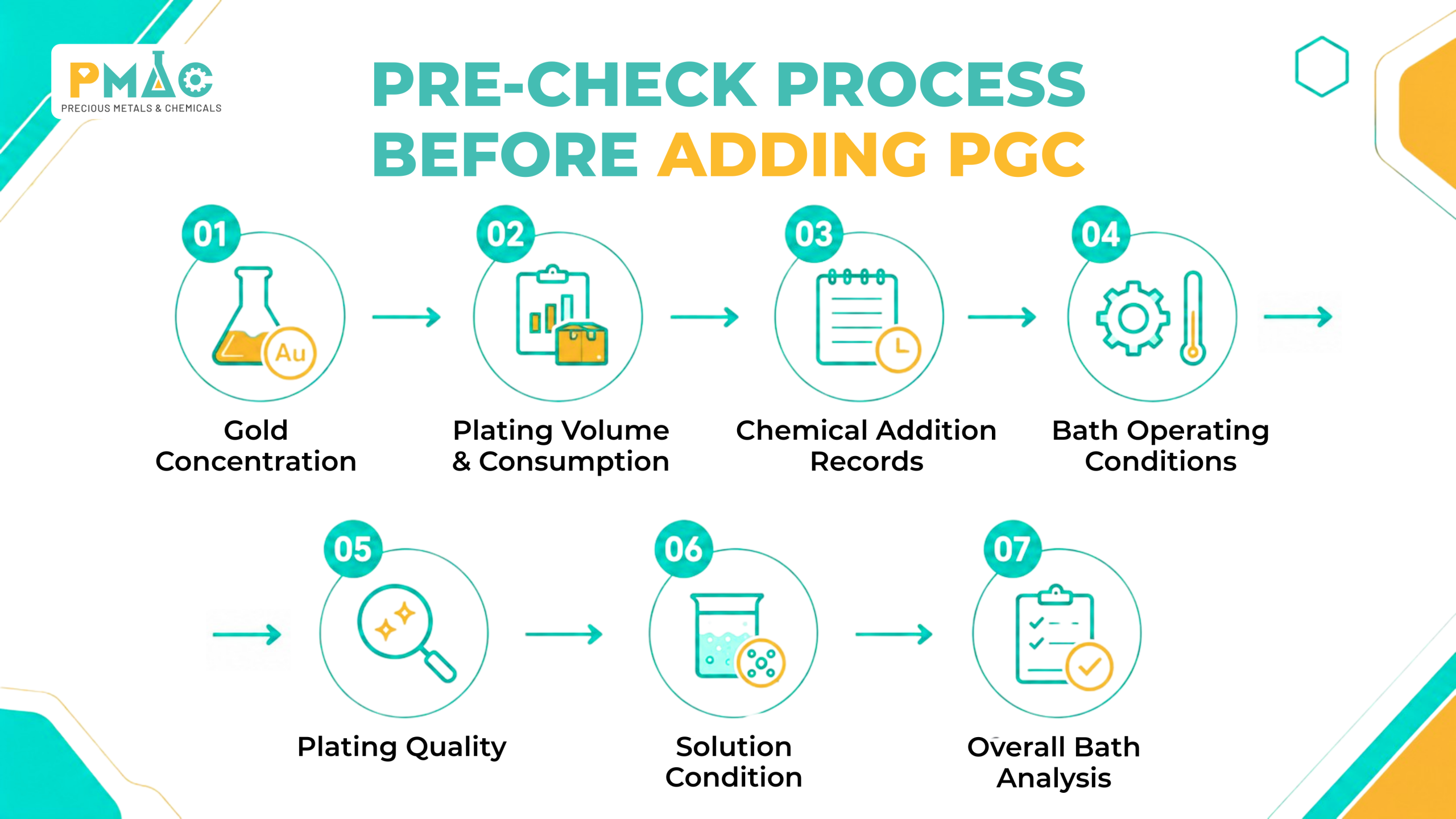
Figure 2. PGC Replenishment Workflow
Following a structured workflow helps manufacturers avoid reacting immediately to visible symptoms. More importantly, it creates a complete data record that can be used for future troubleshooting and continuous process improvement.
IV. Common Mistakes When Adding PGC
Even experienced plating facilities can make mistakes that reduce plating bath stability and increase precious metal consumption.
1. Relying Solely on Plating Color
This is one of the most common mistakes.
Coating color can be influenced by many factors, including operating conditions, additives, coloring agents, and substrate quality. Therefore, plating color should only be considered an indicator—not definitive evidence that the plating bath is low in gold.
2. Adding PGC Without Analyzing Gold Concentration
Some manufacturers replenish PGC according to fixed schedules or operator experience without performing chemical analysis.
This practice may result in gold concentrations exceeding the recommended operating range, increasing precious metal costs without improving coating quality.
Routine bath analysis should always precede any replenishment decision.
3. Repeated Chemical Additions Within a Short Period
When the root cause has not been identified, repeatedly adding chemicals may disturb the chemical balance of the plating bath and make troubleshooting even more difficult.
If plating quality does not improve, it becomes increasingly challenging to determine which adjustment actually caused the change.
A systematic, data-driven approach is therefore much more effective than making multiple uncontrolled corrections.
4. Failing to Maintain Operating Records
Without historical operating data, identifying the source of plating problems becomes significantly more difficult.
A plating bath log should include:
- Bath analysis results
- Operating parameters
- Chemical replenishment history
- Maintenance schedule
- Plating quality inspection results
These records provide valuable information for troubleshooting while supporting long-term process optimization.
5. Focusing Only on Gold Concentration
Every component within a gold plating system interacts with the others.
If attention is given only to gold concentration while ignoring additives, coloring agents, pH, or contamination, the actual root cause may remain unresolved.
As a result, manufacturers may spend considerable time and resources making unnecessary adjustments without solving the underlying problem.
A comprehensive evaluation of the entire plating system is always more effective than focusing on a single parameter.
V. Why Do Many Manufacturers Choose Umicore PGC?
Once the need to replenish PGC has been confirmed, the quality of the raw material becomes another key factor in maintaining a stable gold plating bath.
Umicore’s Potassium Gold Cyanide (PGC) is widely used in gold plating systems for both jewelry and industrial applications due to its technical characteristics that support consistent process control.
1. Consistent Gold Content
Umicore PGC is manufactured to meet strict product specifications, ensuring consistent gold content from batch to batch.
This consistency helps manufacturers maintain stable plating bath chemistry and minimizes process variations caused by fluctuations in raw material quality.
2. High Purity with Low Impurity Levels
Impurities introduced through raw materials can shorten plating bath life and negatively affect coating quality.
Using high-purity gold plating salts helps reduce the risk of contamination, particularly in plating processes that require tight process control and high coating consistency.
3. Excellent Water Solubility
Its high solubility allows plating solutions to be prepared more efficiently while minimizing the possibility of undissolved materials remaining in the bath.
Nevertheless, PGC should always be used in accordance with the technical recommendations of the plating chemistry supplier and the manufacturer’s internal operating procedures.
4. Dust-Free Handling
The dust-free form of Umicore PGC helps reduce material loss during handling while contributing to a cleaner and safer working environment.
For high-value materials such as gold, minimizing handling losses also supports more efficient inventory management.
5. Stable During Storage
Umicore PGC offers excellent storage stability, including:
- Light-insensitive properties
- Resistance to decomposition in air
- Thermal stability up to approximately 200°C
- Easy storage under recommended conditions
These characteristics simplify material storage and inventory management while helping preserve product quality over time.
6. Responsibly Sourced Gold
Beyond technical performance, the origin of precious metals has become increasingly important, particularly for manufacturers participating in global supply chains.
The gold used in Umicore PGC is sourced under the company’s Conflict-Free Gold commitment, which excludes gold originating from conflict-affected regions such as the Democratic Republic of the Congo (DRC).
In addition, Umicore’s supply chain is managed in accordance with the Responsible Jewellery Council (RJC) Chain of Custody standards, helping improve transparency, traceability, and responsible sourcing throughout the value chain.
For jewelry manufacturers targeting international export markets, responsible sourcing is an important consideration when selecting raw material suppliers.
Related article: What Is PGC? Everything You Need to Know About Gold Salts Used in Electroplating
VI. PMAC Supports Manufacturers in Gold Plating Bath Management
In practice, maintaining a stable gold plating bath depends on much more than selecting the right chemicals. It requires effective control of the entire plating process.
As the official distributor of Umicore in Vietnam, PMAC provides:
- Genuine Umicore Potassium Gold Cyanide (PGC)
- Precious metal electroplating chemicals
- Plating bath analysis and evaluation solutions
- Technical consultation for jewelry and industrial manufacturers
- Process optimization support to improve plating bath stability
Rather than simply supplying raw materials, PMAC works alongside manufacturers to analyze production data, identify root causes, and optimize plating bath performance based on actual operating conditions.
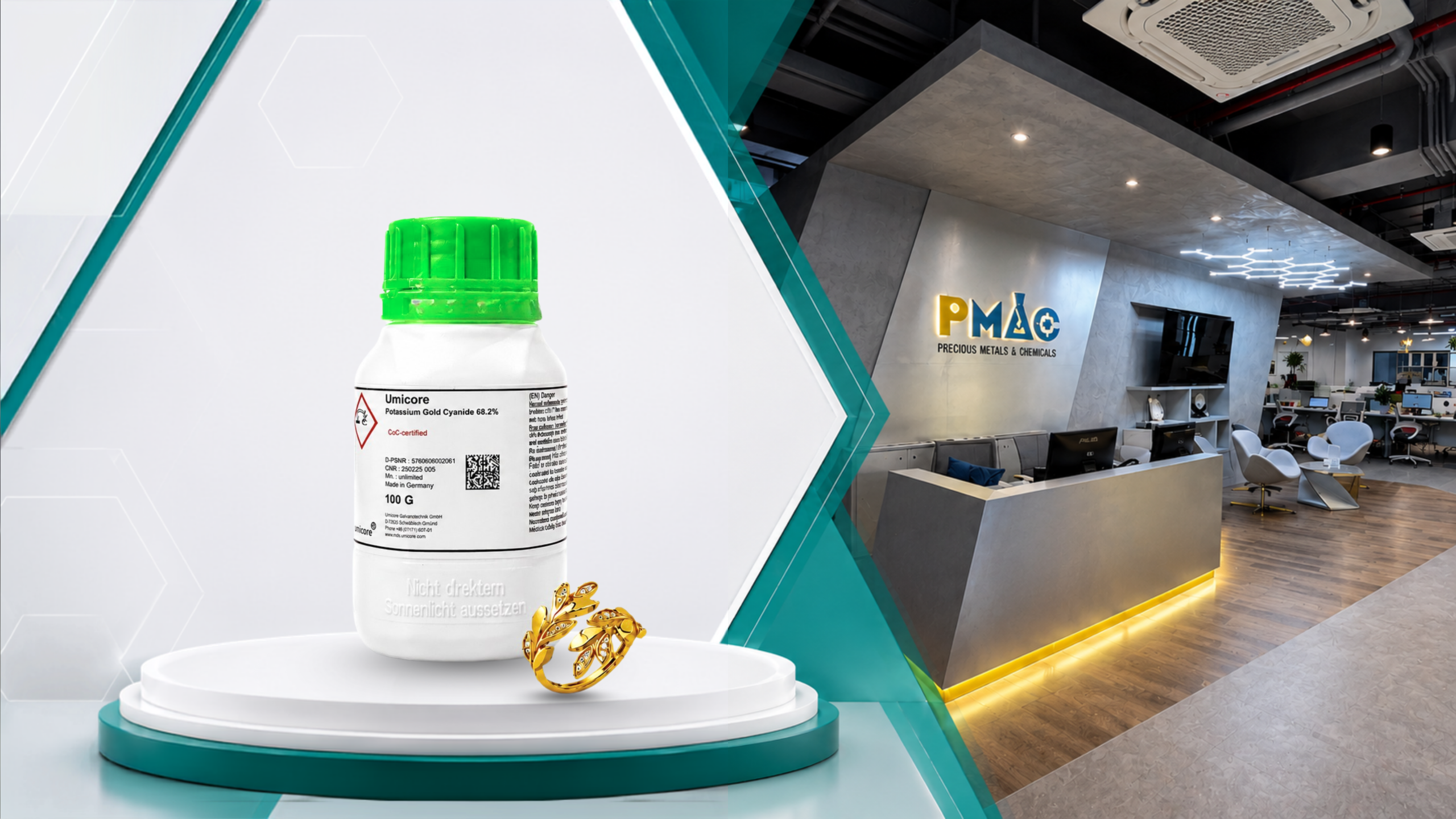
Figure 3. PMAC – Official Supplier of Genuine Umicore PGC
Related article: PMAC CX HUB – Your One-Stop Technical Support Center for Electroplating and Precious Metal Materials
Conclusion
Adding PGC should not be considered the first corrective action whenever abnormalities appear in a gold plating bath.
A data-driven approach to plating bath management enables manufacturers to make more accurate decisions, maintain consistent coating quality, and optimize production efficiency over the long term.
If your company is looking for genuine Umicore PGC or requires technical support for plating bath analysis, evaluation, and process optimization, PMAC’s technical team is ready to provide solutions tailored to your specific manufacturing requirements.
Our goal is not only to supply high-quality plating materials, but also to help manufacturers achieve more stable, efficient, and data-driven plating operations.
Contact PMAC
PMAC Joint Stock Company
Ho Chi Minh City Office
4th Floor, HUTECH Building, D1 Road, Saigon Hi-Tech Park, Tang Nhon Phu Ward, Ho Chi Minh City, Vietnam
Hanoi Office
22B O2, Linh Dam Peninsula, Hoang Liet Ward, Hanoi, Vietnam
Hotline: +84 387 235 878
Facebook: PMAC