

In gold electroplating, the gold source plays a critical role in building and maintaining the plating electrolyte. Today, manufacturers generally consider two common options: using PGC 68.2% (Potassium Gold Cyanide) as the gold source to formulate their own plating solution, or using a ready-to-use gold plating solution that has already been prepared by the manufacturer.
Each option offers distinct advantages. Ready-to-use solutions reduce preparation time, while PGC 68.2% provides greater flexibility in controlling the bath composition and developing a plating process tailored to specific production requirements.
So, what exactly is PGC 68.2%, how does it differ from ready-to-use gold plating solutions, and which option is more suitable for your manufacturing process? This article explains the differences based on electroplating principles to help you make an informed decision.
I. What Is PGC 68.2%?
1. Definition
PGC 68.2% is Potassium Gold Cyanide (PGC), a gold salt used as a source of gold ions in various gold plating electrolytes. It is an essential raw material for formulating both neutral gold plating and acid gold plating solutions.
Manufactured by Umicore, PGC 68.2% contains 68.2% gold and complies with the specified gold content standard. It is also produced under the Conflict-free Gold initiative, giving manufacturers greater confidence in sourcing gold from transparent and responsible supply chains.
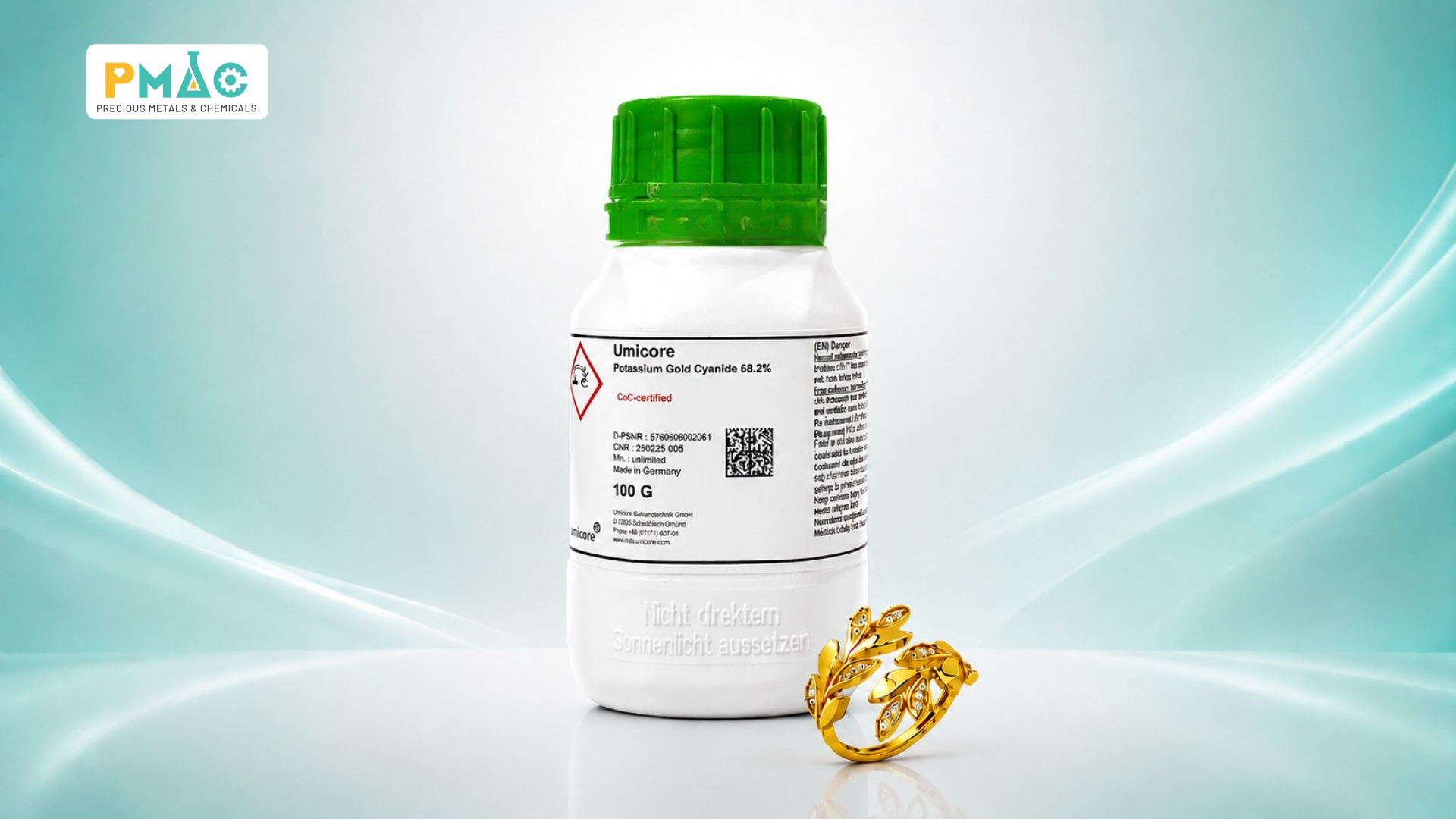
Figure 1: PGC 68.2% Gold Salt
>>> Related article: What Is Gold Plating Salt? The Role of PGC in Gold Plating Baths
2. Characteristics and Usage
Unlike a complete plating bath, PGC 68.2% is not a ready-to-use electrolyte. Instead, it serves as the gold source that is combined with other chemical components to formulate a gold plating solution suitable for specific plating processes.
PGC 68.2% dissolves rapidly in water, generates no dust, is not light-sensitive, and does not decompose in air. These characteristics make storage and handling more convenient during solution preparation.
In addition, the product features tightly controlled impurity levels:
| Element | Content | Equivalent |
|---|---|---|
| Ag | 0.002% | 20 ppm |
| Cu | 0.0001% | 1 ppm |
| Cr | 0.0002% | 2 ppm |
| Fe | 0.0001% | 1 ppm |
| Na | 0.04% | 400 ppm |
| Ni | 0.0002% | 2 ppm |
| Pb | 0.0003% | 3 ppm |
Controlling impurities in raw materials is an important consideration when formulating plating electrolytes, as the quality of incoming materials can influence bath consistency and overall process control.
3. Applications of PGC 68.2%
PGC 68.2% is used to formulate gold plating electrolytes for a wide range of industries, including:
- Neutral gold plating
- Acid gold plating
- PCB plating
- Connector plating
- Semiconductor plating
- Costume jewellery
- Premium writing instruments
Its versatility makes Potassium Gold Cyanide suitable for both technical electronic applications and decorative gold plating.
II. What Is a Ready-to-Use Gold Plating Solution?
1. Definition
A ready-to-use gold plating solution is a gold electrolyte that has already been formulated by the manufacturer. The gold source, chemical additives, and operating parameters are incorporated into a proprietary formulation designed for immediate use.
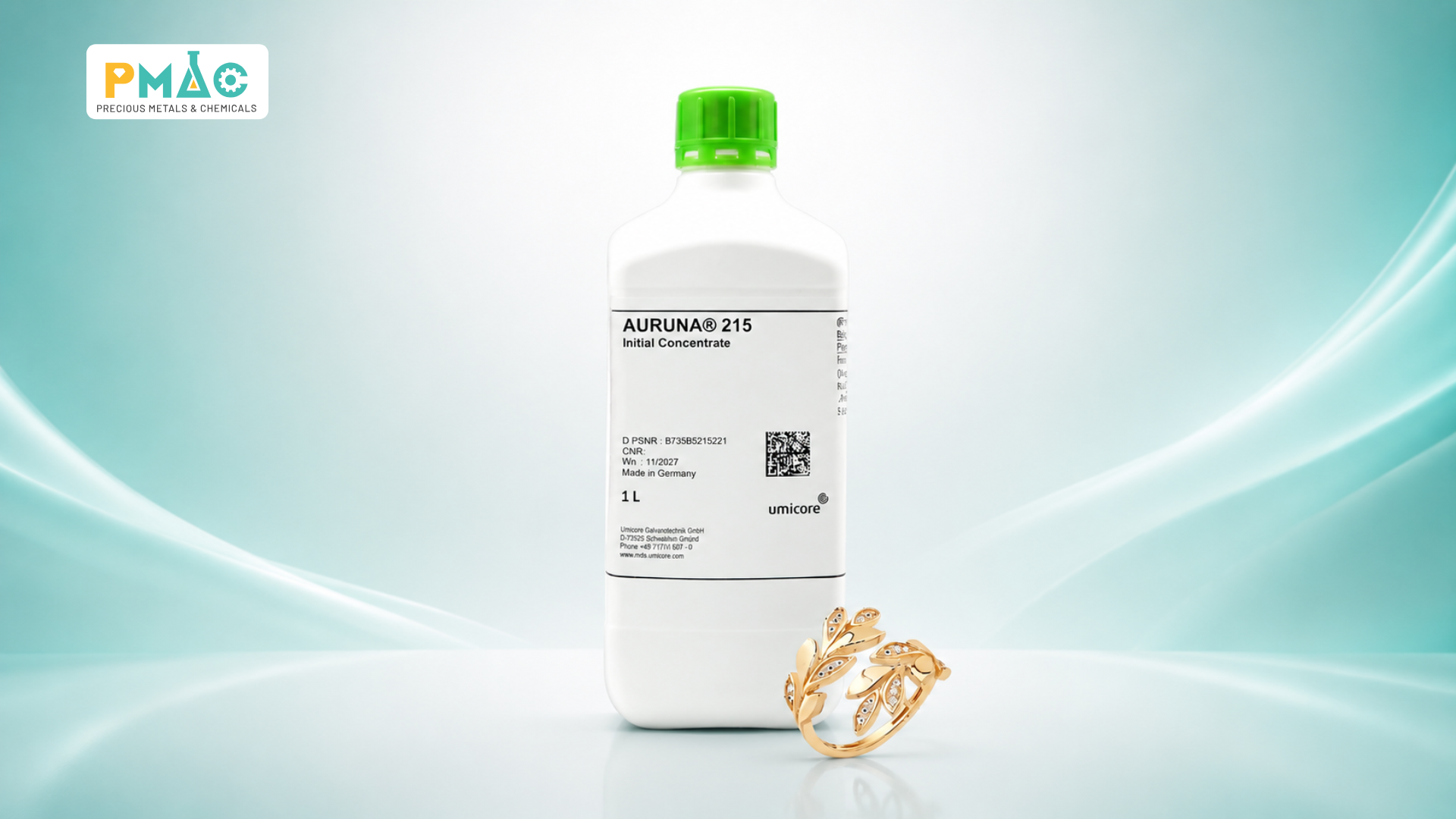
Figure 2: Ready-to-Use Gold Plating Solution
2. Characteristics and Usage
Instead of preparing the bath from raw materials such as gold salts, users simply introduce the ready-made solution into the plating tank according to the supplier’s instructions. This minimizes preparation work and is well suited to manufacturers that do not require in-house electrolyte formulation.
Another advantage of ready-to-use solutions is batch-to-batch consistency, as the formulation has already been standardized by the supplier. However, customization options are generally limited because the composition depends on the manufacturer’s proprietary formula.
If a manufacturer needs to modify the electrolyte to meet specific production requirements, a ready-made solution may offer less flexibility than starting with a raw material such as PGC 68.2%.
>>> Related article: Gold Plating Chemicals: Their Role in Jewellery Electroplating
Therefore, the choice between a ready-to-use gold plating solution and Potassium Gold Cyanide should not be based on which product is “better.” Instead, it should depend on production objectives, process control requirements, and the company’s technical capabilities.
III. Comparing PGC 68.2% with Ready-to-Use Gold Plating Solutions
| Criteria | PGC 68.2% | Ready-to-Use Gold Plating Solution |
|---|---|---|
| Composition | Potassium Gold Cyanide used as the gold source | Fully formulated gold plating electrolyte |
| Usage | Mixed with other chemicals to prepare the plating bath | Used according to the supplier’s instructions |
| Customization | High flexibility in formulating the electrolyte | Limited to the supplier’s formulation |
| Gold Content | Standardized gold content of 68.2% | Depends on the specific product |
| Flexibility | Suitable for developing customized plating processes | Suitable for quick implementation |
| Inventory Management | Raw material inventory | Finished electrolyte inventory |
| Process Optimization | Easier to modify according to production goals | Changes generally depend on the supplier |
| Suitable Users | Manufacturers with technical expertise or customized process requirements | Manufacturers seeking a ready-to-use solution |
The comparison shows that these two options serve different production needs.
If fast deployment and minimal preparation are the priorities, a ready-to-use gold plating solution may be the appropriate choice.
On the other hand, manufacturers seeking greater control over bath composition, customized formulations, or process optimization for PCB plating, connector plating, semiconductor plating, or jewellery applications may benefit from using PGC 68.2% as the gold source.
Rather than competing solutions, they represent two different approaches to gold electroplating. The right choice depends on production scale, technical capabilities, and long-term manufacturing objectives.
IV. Key Advantages of PGC 68.2%
1. Conflict-free Gold Supports a Transparent Supply Chain
One of the distinguishing features of PGC 68.2% is that it is produced under the Conflict-free Gold initiative.
This means the gold originates from responsibly sourced supply chains rather than conflict-affected mining regions. As more manufacturers emphasize sustainability and responsible sourcing, this has become an increasingly important selection criterion.
For jewellery manufacturers and electronics suppliers serving international markets, transparent sourcing can also facilitate communication with customers and business partners.
2. Standardized Gold Content Enables Better Process Control
PGC contains 68.2% gold according to the product specification.
Knowing the precise gold content allows engineers to accurately calculate the amount of material required when preparing plating electrolytes. This also provides a reliable basis for controlling gold concentration throughout the plating process.
For companies developing their own plating systems, consistent raw material composition supports stable and repeatable production.
3. Rapid Dissolution Improves Preparation Efficiency
PGC 68.2% dissolves quickly in water.
Fast dissolution simplifies electrolyte preparation and promotes uniform distribution throughout the solution.
This characteristic is especially beneficial for facilities that frequently prepare new plating baths or replenish existing ones.
4. Low Impurity Levels Support Bath Quality Management
Besides its standardized gold content, PGC 68.2% features controlled levels of Ag, Cu, Cr, Fe, Na, Ni, and Pb.
In electroplating, raw material quality is one of the factors influencing electrolyte management. Using materials with controlled impurity levels helps manufacturers establish more consistent quality control procedures.
This is particularly valuable in industries such as electronics and jewellery manufacturing, where product consistency is essential.
V. Practical Applications of PGC 68.2%
As a gold ion source, PGC 68.2% is used in numerous gold plating applications across different industries.
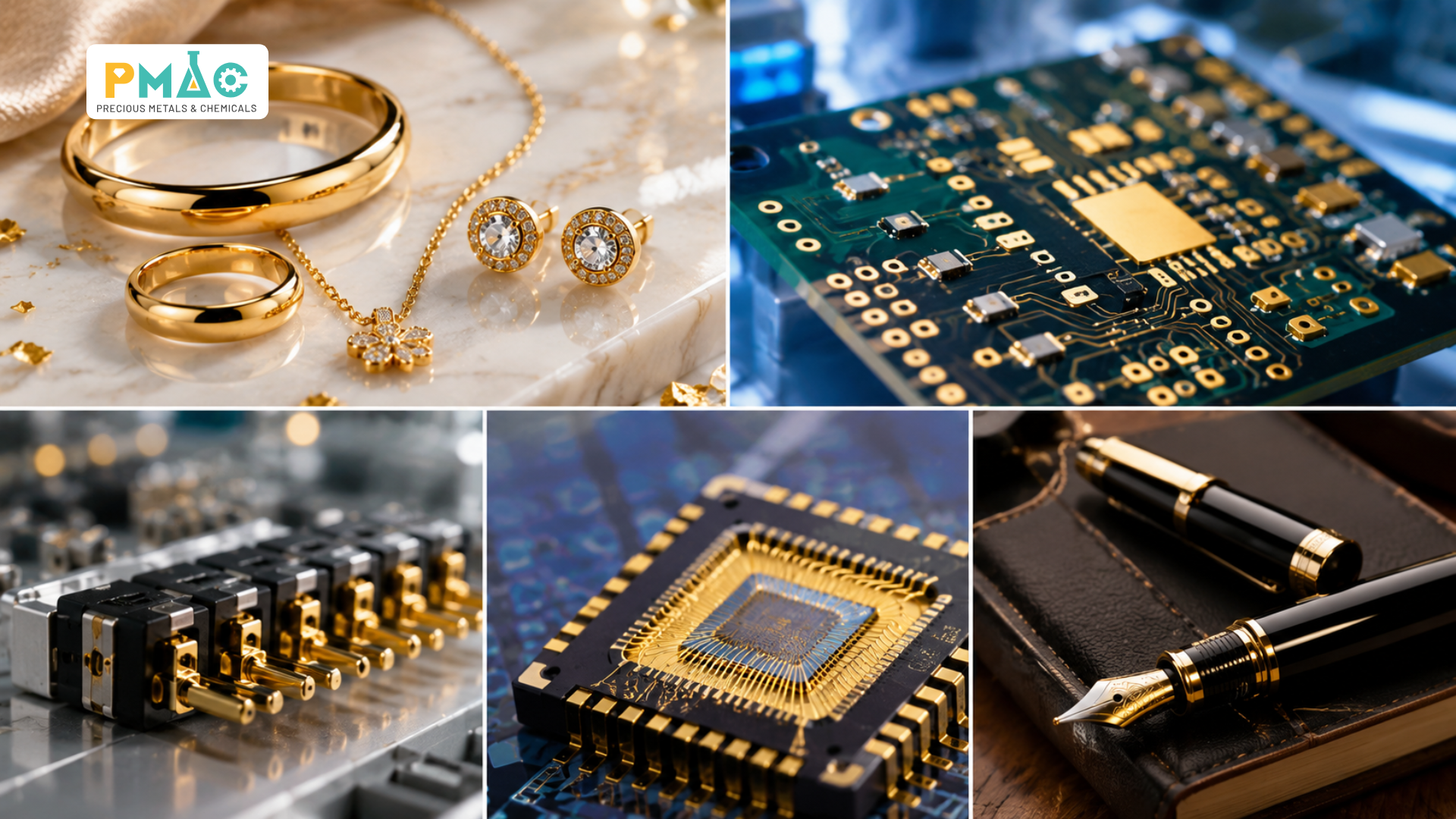
Figure 3: Applications of PGC Gold Salt
1. PCB Plating
Gold plating is used on selected areas of printed circuit boards to meet manufacturing requirements.
PGC 68.2% serves as the gold source for electrolytes used in PCB plating.
2. Connector Plating
Electrical connectors often require gold plating to satisfy technical performance requirements.
PGC 68.2% is widely used in electrolytes developed for connector plating applications.
3. Semiconductor Plating
Semiconductor manufacturing requires tightly controlled production processes.
Potassium Gold Cyanide is one of the raw materials used to formulate gold plating electrolytes for semiconductor applications.
4. Jewellery Plating
In costume jewellery manufacturing, appearance and coating consistency are important quality considerations.
PGC 68.2% is used to formulate gold plating solutions tailored to specific jewellery production processes.
5. Premium Writing Instruments
Gold-plated finishes are commonly applied to premium writing instruments to enhance their appearance.
PGC 68.2% serves as one of the raw materials used in electrolytes for these decorative plating applications.
VI. When Should You Choose PGC 68.2%?
Every manufacturer has different production objectives. Therefore, choosing between PGC 68.2% and a ready-to-use gold plating solution should be based on operational requirements rather than the product itself.
PGC 68.2% is generally suitable when your company wants to:
- Formulate gold plating solutions in-house.
- Maintain an engineering team capable of preparing and controlling plating electrolytes.
- Customize bath composition for specific applications.
- Optimize production processes over the long term.
- Control raw material quality from the very beginning.
Conversely, if rapid implementation and simplified operation are the priorities, a ready-to-use gold plating solution may be the more practical option.
Both solutions address different manufacturing needs. The best choice depends on your production strategy, technical resources, and process requirements.
>>> Related article: What Is PGC? Everything You Need to Know About Gold Salts for Electroplating
VII. Why Do Manufacturers Choose PMAC for PGC 68.2%?
When selecting Potassium Gold Cyanide, product quality is only part of the overall solution. Manufacturers also need technical support when developing and optimizing plating electrolytes.
PMAC supplies genuine Umicore PGC 68.2% with clear product traceability and complete technical documentation provided by the manufacturer.
Beyond supplying chemicals, PMAC supports customers with technical consultation, assistance in gold plating solution formulation, and guidance on optimizing plating processes according to specific production requirements.
For manufacturers transitioning from ready-to-use gold plating solutions to customized electrolyte systems, or those selecting the right solution for a new project, PMAC provides technical expertise throughout the implementation process.
>>> Related article: From Product Samples to Electroplating Solutions: PMAC’s Technical Consultation Process
>>> Related article: PMAC CX HUB: One Contact Point for Electroplating and Precious Metal Solutions
Conclusion
Both PGC 68.2% and ready-to-use gold plating solutions are widely used in gold electroplating, but each serves different manufacturing objectives.
Ready-to-use solutions are suitable for companies seeking convenience and rapid implementation. In contrast, manufacturers requiring greater control over bath composition, customized formulations, and long-term process development may find PGC 68.2% to be the more flexible option because it serves as the primary gold source for building plating electrolytes.
If you are looking for genuine Umicore PGC 68.2% or need professional guidance in selecting the most suitable gold plating solution, PMAC is ready to support you with both product supply and technical consultation.
CONTACT PMAC TODAY FOR TECHNICAL CONSULTATION AND A FREE QUOTATION FOR PGC GOLD SALT!
PMAC Joint Stock Company
Ho Chi Minh City Office:
4th Floor, HUTECH Building, D1 Road, Saigon Hi-Tech Park, Tang Nhon Phu Ward, Ho Chi Minh City, Vietnam
Hanoi Office:
22B O2, Linh Dam Peninsula, Hoang Liet Ward, Hanoi, Vietnam
Hotline: +84 387 235 878
Facebook: PMAC